Bulls logo

Chicago Bulls Odds

4th in Central Division

Next Bulls Game

Game Details
vs Philadelphia 76ers
Philadelphia
location pin
Sun 11/088:30 PM

Bulls Injuries

All NBA Injuries

There are no injuries for this team currently.

Bulls 2026 Schedule & Betting Odds

dateopponentscorespreadover/undermoneyline
Nov 14thATL----
Nov 12thSAS----
Nov 8thPHI----
Nov 5th@NYKL 105-135+11.5 LO 234NYK +440
Nov 3rd@PHIL 107-126+10.5 LU 240.5PHI +392
Oct 30th@BOSL 111-125+14.5 WU 236.5BOS +550
Oct 29thNYKL 127-133+7.5 WO 232.5NYK +225
Oct 26th@BOSL 99-134+14.5 LU 233BOS +525
Oct 25thWASL 120-124-1.5 LU 244.5WAS -120
Oct 23rd@MILW 132-125+1.5 WO 241CHI +104

Chicago Bulls Player Stats

  • scoring
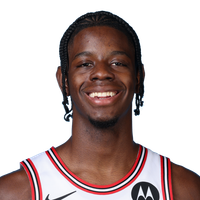
    Caleb Wilson logo
    Caleb Wilson
    19.5
    ppg
  • rebounding
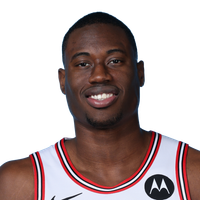
    Jalen Smith logo
    Jalen Smith
    7.8
    rpg
  • assists
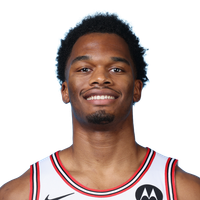
    Josh Giddey logo
    Josh Giddey
    7.6
    apg
  • shooting
    Tobe Awaka logo
    Tobe Awaka
    75
    fg%
News
  • Bulls vs Knicks: Expect Chicago to Bounce Back article feature image

    Bulls vs Knicks: Expect Chicago to Bounce Back

    Action Network Staff•
    Nov 4, 2026 UTC
  • Bulls vs 76ers: Edgecombe's Rebounding is Key for Philly article feature image

    Bulls vs 76ers: Edgecombe's Rebounding is Key for Philly

    Bryan Fonseca•
    Nov 2, 2026 UTC
  • 11 NBA Best Bets for Monday article feature image

    11 NBA Best Bets for Monday

    Action Network Staff•
    Nov 2, 2026 UTC
  • Bulls vs Celtics: Back This Role Player to Perform article feature image

    Bulls vs Celtics: Back This Role Player to Perform

    Action Network Staff•
    Oct 30, 2026 UTC

Chicago Bulls Odds & Betting Guide: 2026-27 Season

The Bulls arrive at 2026-27 as one of the clearest rebuilds in the league, and the betting market has priced them accordingly. Chicago went 31-51 last season, finished 12th in the East and missed the play-in, with a defense that ranked 28th by points allowed at 121.5 per game. A 5-0 start faded into an 11-game February losing streak that set a franchise record for a winless month. For the latest line on any night, start with the live NBA odds.

The offseason reset the whole operation. Billy Donovan stepped down, and the Bulls hired Tiago Splitter as head coach in June, his first permanent NBA head-coaching job after a strong interim run in Portland last season. A new front office led by Bryson Graham leaned into the word Donovan avoided: rebuild. Chicago let Collin Sexton and Anfernee Simons walk, then reshaped the roster around Josh Giddey, adding All-Star guard Norman Powell, center Nic Claxton and shooter Buddy Hield. The headline, though, is No. 4 pick Caleb Wilson, the rookie the market treats as the reason to watch.

For bettors, a coaching change plus heavy roster turnover means last year's team-level numbers carry limited signal. Splitter's pace, rotations and defensive scheme are unknowns in Chicago, and preseason lines on a reset roster tend to be softer than usual because the books have less to go on. That uncertainty is the opportunity.

It also makes the injury report essential. Star availability moves NBA lines more than any other input, and on a thin roster leaning on young players, one ruling on Giddey or Powell can swing a spread several points. Check the latest injuries before you bet a Bulls number.

Eastern Conference and Central Division context

Seeding in the East runs on record, not division titles, so the number that matters for Chicago is the 7-through-10 play-in line. The Bulls project below it. The market has them closer to the lottery than the postseason, which puts their season-long betting value in individual spreads and totals rather than a playoff push.

The Central is a split picture. The Cleveland Cavaliers and Indiana Pacers sit well ahead of Chicago, the Milwaukee Bucks occupy the middle, and the Detroit Pistons are the closest rival on the projection board. Chicago plays each of these four teams four times, 16 of its 82 games, so those matchups shape the season record more than any other block on the schedule.

Chicago Bulls 2026-27 win total

FanDuel posted the Bulls' win total at 29.5, with other books landing between 27.5 and 29.5. That slots Chicago among the five lowest totals in the league.

The Bulls angle: our projection models frame the debate cleanly. Chicago won 31 games last season with an injury-wrecked roster and a lame-duck coach, then upgraded the supporting cast with Powell and Claxton. The counter is a bottom-three defense that scored 116.3 points per game while allowing 121.5, a scoring margin that argues the 31 wins were close to the ceiling. The new 3-2-1 lottery format that begins with the 2027 draft also gives the fourth-worst record better odds than the three worst, which reshapes the incentives at the bottom of the standings. Weigh the roster upgrade against the schedule before taking a side.

That schedule does the under no favors early. Chicago faces the defending champion Knicks, the 76ers and the Celtics twice apiece within its first 12 games.

Chicago Bulls 2026-27 futures odds

Chicago sits among the longest shots on the board: triple-digit NBA Finals odds and a Central Division price deep in longshot territory. Making the playoffs trades around +1000. None of these are plays on merit. They are lottery tickets.

The live futures ticket is Caleb Wilson for Rookie of the Year, offered around +400. One rule governs that bet: games played. The NBA's standard award-eligibility rule asks for 65 qualified games, subject to playing-time requirements and a narrow extraordinary-circumstances exception, so a minutes restriction or an injury can threaten Wilson's candidacy regardless of production. A rebuilding team with no reason to rush a rookie back raises that risk. Price it in. See the rest of the futures board for the full market.

Chicago also draws a soft NBA Cup group. Group C pairs them with the Celtics, Hawks, Hornets and Wizards, with Cup games at Boston, home against Atlanta, home against Washington and at Charlotte. Those four count in the standings, so they matter to the win total as much as to the Cup.

Betting Chicago Bulls point spreads

Books set a point spread to turn an uneven matchup into a roughly even bet. The favorite gives points, the underdog takes them. As a rebuilding team, Chicago lands on the underdog side most nights.

Cavaliers -6.5 (-110) / Bulls +6.5 (-110)

Chicago covers by winning outright or losing by six or fewer. Cleveland covers by winning by seven or more. The half-point means neither side can push. A winning $100 bet at -110 returns $190.91: the $100 stake plus $90.91 in profit. Both sides here are priced at -110, and that is where the book earns, since you risk $110 to win $100 either way. When books post a whole number instead, a game decided by exactly that margin pushes and both sides get their stake back. Track cover rates on the against the spread standings.

Betting Chicago Bulls totals

Books set a total for the combined points both teams score, then let bettors take a side. Say books post Bulls vs. Pistons at 231.5. The over cashes if the teams combine for 232 or more. The under cashes at 231 or fewer. A half-point total cannot push.

Why Bulls totals move: NBA totals follow pace, and possessions matter more to the number than either team's shooting percentage. Chicago's profile points up. A bottom-three defense that allowed 121.5 per game last season gives opponents clean looks, and the Bulls played fast enough to post 116.3 themselves. If Splitter keeps the tempo high, Chicago stays a team worth checking on the over, especially on the road, where a larger share of their games cleared the total last season. Our nightly picks flag the spots where the number is soft.

Betting the Chicago Bulls moneyline

The moneyline asks one question: who wins. Points do not matter.

Bulls +200 / Cavaliers -240

Minus marks the favorite, plus the underdog. At +200 you risk $100 to win $200. At -240 you risk $240 to win $100. Converting to implied probability makes the pricing clearer. The +200 underdog implies 33.3%, the -240 favorite implies 70.6%, and those sum to 103.9% rather than 100%. The extra 3.9 points are the book's margin, collected whichever side wins.

One thing worth getting straight: a short price is not automatically a bad bet. Bettors call heavy favorites bad value out of habit, but value is the gap between real probability and priced probability, and the size of the number tells you nothing on its own. If the favorite truly wins 75% of the time, -240 is a price worth taking, because it implies only 70.6%. The reverse is the Bulls' case this season: as frequent underdogs, they are only worth backing when their real chance to win clears the implied number on the plus side.

When one side carries heavier juice, that tells you where money is landing, not which side is correct. If a Bulls price drifts from +200 to +180, bettors backed Chicago and the book adjusted its exposure. The team did not get better. Learn how the moneyline works if you want the full mechanics.

Chicago Bulls player props

The NBA is the most player-driven betting market in US sports, and props are where a rebuilding roster gets interesting. A player prop prices one player's production in one game.

Josh Giddey points: 21.5 (over -115, under -105)

The over needs 22. The under needs 21 or fewer. Giddey is the engine of this offense, and his playmaking makes his assist and rebound lines, along with triple-double markets, the most active Bulls props on a given night. Our prop projections are the tool for those, measured against the posted line rather than a gut read: on a team projected to score near 29.5 wins' worth of games, usage concentrates heavily on Giddey and Powell, which lifts their counting-stat lines and thins everyone else's.

Props respond to availability more than anything else. When a teammate is ruled out, his minutes and shots flow to whoever is still on the floor, and books adjust within minutes of the news. That effect is magnified on a shallow roster: a single Chicago scratch can swing Giddey's and Powell's numbers meaningfully. Check the injury report before betting a prop, and check each book's rules for a player who does not suit up, because they differ. For the wider board, see NBA player props.

Chicago Bulls public betting splits

Splits break ticket count out from money handled, and the gap is the useful part. The public-betting page reports bet percentage, the share of tickets, separately from money percentage, the share of dollars. If 70% of tickets sit on a Bulls over but only 45% of the dollars do, the larger bets are on the under, and that divergence often points where the sharper money sits.

Chicago is a large, loyal market, so recreational tickets pile onto the Bulls at home regardless of matchup, which is exactly the setup where ticket share and money share separate. Tie it back to the totals section: when a line carries uneven juice, the splits tell you whether that pricing reflects public ticket volume or genuine sharp money. Read the ticket and money percentages before you bet a heavily public Bulls number, and when you are ready to pick a book, compare the best sportsbooks or check the current theScore Bet promo code for a new-account offer.

Next Bulls Game

Game Details
vs Philadelphia 76ers
Philadelphia
location pin
Sun 11/088:30 PM

Bulls Injuries

All NBA Injuries

There are no injuries for this team currently.

Chicago Bulls Transactions 2026

Right Arrow
  • October

    • 17th

      The Chicago Bulls waived (G) Brandon Boston.

    • 17th

      The Chicago Bulls waived (F) Jalen Bridges.

    • 17th

      The Chicago Bulls waived (C) Orlando Robinson.

    • 17th

      The Chicago Bulls waived (F) Drew Peterson.

    • 6th

      The Chicago Bulls waived (G) Isaiah Stevens.

    • 5th

      The Chicago Bulls signed (G) Jordan Hawkins to a two-way contract.

    • 2nd

      The Chicago Bulls waived (G) Peter Suder.

    • 2nd

      The Chicago Bulls signed (G) Isaiah Stevens.

    • 1st

      The Chicago Bulls waived (F) Marquel Sutton.

    • 1st

      The Chicago Bulls signed (F) Jalen Bridges.

  • September

    • 26th

      The Chicago Bulls traded (G) Rob Dillingham to the Charlotte Hornets.

    • 26th

      The Charlotte Hornets traded (G) Buddy Hield to the Chicago Bulls.

    • 25th

      The Chicago Bulls signed (G) Brandon Boston Jr. to a training camp deal.

    • 25th

      The Chicago Bulls signed (C) Orlando Robinson to a training camp deal.

    • 25th

      The Chicago Bulls signed (F) Drew Peterson to a training camp deal.

    • 22nd

      The Chicago Bulls signed (G) Peter Suder to a training camp deal.

  • July

    • 10th

      The Chicago Bulls traded F Mouhamadou Gueye to the Charlotte Hornets.

    • 1st

      The Chicago Bulls signed G Norman Powell.

    • 1st

      The Chicago Bulls signed F-C Zach Collins.

  • June

    • 30th

      The Chicago Bulls waived G Kam Jones.

    • 30th

      F Guerschon Yabusele elected free agnecy.

    • 29th

      C Nick Richards elected free agency.

    • 29th

      The Chicago Bulls did not extend G Yuki Kawamura's contract.

    • 29th

      F-C Zach Collins elected free agency.

    • 29th

      Chicago Bulls C Lachlan Olbrich's contract expired.

    • 29th

      G Collin Sexton elected free agency.

    • 29th

      G Anfernee Simons elected free agency.

    • 24th

      The Indiana Pacers traded G Kam Jones to the Chicago Bulls.

  • April

    • 9th

      The Chicago Bulls signed F Mouhamadou Gueye.

  • March

    • 30th

      The Chicago Bulls waived G Jaden Ivey.

  • February

    • 5th

      The Minnesota Timberwolves traded G Rob Dillingham to the Chicago Bulls.

    • 5th

      The Chicago Bulls traded F Dalen Terry to the New York Knicks.

    • 5th

      The Minnesota Timberwolves traded F Leonard Miller to the Chicago Bulls.

    • 5th

      The Chicago Bulls traded F Julian Phillips to the Minnesota Timberwolves.

    • 5th

      The Milwaukee Bucks traded C Nick Richards to the Chicago Bulls.

    • 5th

      The Chicago Bulls traded G Ayo Dosunmu to the Minnesota Timberwolves.

    • 5th

      The Chicago Bulls traded F Ousmane Dieng to the Milwaukee Bucks.

    • 5th

      The Chicago Bulls signed G Mac McClung to a two-way contract.

    • 4th

      The Chicago Bulls traded G Coby White to the Charlotte Hornets.

    • 4th

      The Charlotte Hornets traded G Collin Sexton to the Chicago Bulls.

    • 4th

      The New York Knicks traded F Guerschon Yabusele to the Chicago Bulls.

    • 4th

      The Chicago Bulls traded G Mike Conley to the Charlotte Hornets.

    • 4th

      The Oklahoma City Thunder traded F Ousmane Dieng to the Chicago Bulls.

    • 3rd

      The Chicago Bulls traded F-C Dario Saric to the Detroit Pistons.

    • 3rd

      The Detroit Pistons traded G Jaden Ivey to the Chicago Bulls.

    • 3rd

      The Minnesota Timberwolves traded G Mike Conley to the Chicago Bulls.

    • 3rd

      The Chicago Bulls traded C Nikola Vucevic to the Boston Celtics.

    • 3rd

      The Boston Celtics traded G Anfernee Simons to the Chicago Bulls.

    • 3rd

      The Chicago Bulls traded G-F Kevin Huerter to the Detroit Pistons.

    • 1st

      The Chicago Bulls traded F Emanuel Miller to the Cleveland Cavaliers.

  • January

    • 31st

      The Sacramento Kings traded F-C Dario Å ari? to the Chicago Bulls.

    • 31st

      The Chicago Bulls waived G Jevon Carter.

    • 6th

      The Chicago Bulls waived F Trentyn Flowers.

    • 6th

      The Chicago Bulls signed G Yuki Kawamura to a two-way contract.

Chicago Bulls Odds & Betting Guide: 2026-27 Season

The Bulls arrive at 2026-27 as one of the clearest rebuilds in the league, and the betting market has priced them accordingly. Chicago went 31-51 last season, finished 12th in the East and missed the play-in, with a defense that ranked 28th by points allowed at 121.5 per game. A 5-0 start faded into an 11-game February losing streak that set a franchise record for a winless month. For the latest line on any night, start with the live NBA odds.

The offseason reset the whole operation. Billy Donovan stepped down, and the Bulls hired Tiago Splitter as head coach in June, his first permanent NBA head-coaching job after a strong interim run in Portland last season. A new front office led by Bryson Graham leaned into the word Donovan avoided: rebuild. Chicago let Collin Sexton and Anfernee Simons walk, then reshaped the roster around Josh Giddey, adding All-Star guard Norman Powell, center Nic Claxton and shooter Buddy Hield. The headline, though, is No. 4 pick Caleb Wilson, the rookie the market treats as the reason to watch.

For bettors, a coaching change plus heavy roster turnover means last year's team-level numbers carry limited signal. Splitter's pace, rotations and defensive scheme are unknowns in Chicago, and preseason lines on a reset roster tend to be softer than usual because the books have less to go on. That uncertainty is the opportunity.

It also makes the injury report essential. Star availability moves NBA lines more than any other input, and on a thin roster leaning on young players, one ruling on Giddey or Powell can swing a spread several points. Check the latest injuries before you bet a Bulls number.

Eastern Conference and Central Division context

Seeding in the East runs on record, not division titles, so the number that matters for Chicago is the 7-through-10 play-in line. The Bulls project below it. The market has them closer to the lottery than the postseason, which puts their season-long betting value in individual spreads and totals rather than a playoff push.

The Central is a split picture. The Cleveland Cavaliers and Indiana Pacers sit well ahead of Chicago, the Milwaukee Bucks occupy the middle, and the Detroit Pistons are the closest rival on the projection board. Chicago plays each of these four teams four times, 16 of its 82 games, so those matchups shape the season record more than any other block on the schedule.

Chicago Bulls 2026-27 win total

FanDuel posted the Bulls' win total at 29.5, with other books landing between 27.5 and 29.5. That slots Chicago among the five lowest totals in the league.

The Bulls angle: our projection models frame the debate cleanly. Chicago won 31 games last season with an injury-wrecked roster and a lame-duck coach, then upgraded the supporting cast with Powell and Claxton. The counter is a bottom-three defense that scored 116.3 points per game while allowing 121.5, a scoring margin that argues the 31 wins were close to the ceiling. The new 3-2-1 lottery format that begins with the 2027 draft also gives the fourth-worst record better odds than the three worst, which reshapes the incentives at the bottom of the standings. Weigh the roster upgrade against the schedule before taking a side.

That schedule does the under no favors early. Chicago faces the defending champion Knicks, the 76ers and the Celtics twice apiece within its first 12 games.

Chicago Bulls 2026-27 futures odds

Chicago sits among the longest shots on the board: triple-digit NBA Finals odds and a Central Division price deep in longshot territory. Making the playoffs trades around +1000. None of these are plays on merit. They are lottery tickets.

The live futures ticket is Caleb Wilson for Rookie of the Year, offered around +400. One rule governs that bet: games played. The NBA's standard award-eligibility rule asks for 65 qualified games, subject to playing-time requirements and a narrow extraordinary-circumstances exception, so a minutes restriction or an injury can threaten Wilson's candidacy regardless of production. A rebuilding team with no reason to rush a rookie back raises that risk. Price it in. See the rest of the futures board for the full market.

Chicago also draws a soft NBA Cup group. Group C pairs them with the Celtics, Hawks, Hornets and Wizards, with Cup games at Boston, home against Atlanta, home against Washington and at Charlotte. Those four count in the standings, so they matter to the win total as much as to the Cup.

Betting Chicago Bulls point spreads

Books set a point spread to turn an uneven matchup into a roughly even bet. The favorite gives points, the underdog takes them. As a rebuilding team, Chicago lands on the underdog side most nights.

Cavaliers -6.5 (-110) / Bulls +6.5 (-110)

Chicago covers by winning outright or losing by six or fewer. Cleveland covers by winning by seven or more. The half-point means neither side can push. A winning $100 bet at -110 returns $190.91: the $100 stake plus $90.91 in profit. Both sides here are priced at -110, and that is where the book earns, since you risk $110 to win $100 either way. When books post a whole number instead, a game decided by exactly that margin pushes and both sides get their stake back. Track cover rates on the against the spread standings.

Betting Chicago Bulls totals

Books set a total for the combined points both teams score, then let bettors take a side. Say books post Bulls vs. Pistons at 231.5. The over cashes if the teams combine for 232 or more. The under cashes at 231 or fewer. A half-point total cannot push.

Why Bulls totals move: NBA totals follow pace, and possessions matter more to the number than either team's shooting percentage. Chicago's profile points up. A bottom-three defense that allowed 121.5 per game last season gives opponents clean looks, and the Bulls played fast enough to post 116.3 themselves. If Splitter keeps the tempo high, Chicago stays a team worth checking on the over, especially on the road, where a larger share of their games cleared the total last season. Our nightly picks flag the spots where the number is soft.

Betting the Chicago Bulls moneyline

The moneyline asks one question: who wins. Points do not matter.

Bulls +200 / Cavaliers -240

Minus marks the favorite, plus the underdog. At +200 you risk $100 to win $200. At -240 you risk $240 to win $100. Converting to implied probability makes the pricing clearer. The +200 underdog implies 33.3%, the -240 favorite implies 70.6%, and those sum to 103.9% rather than 100%. The extra 3.9 points are the book's margin, collected whichever side wins.

One thing worth getting straight: a short price is not automatically a bad bet. Bettors call heavy favorites bad value out of habit, but value is the gap between real probability and priced probability, and the size of the number tells you nothing on its own. If the favorite truly wins 75% of the time, -240 is a price worth taking, because it implies only 70.6%. The reverse is the Bulls' case this season: as frequent underdogs, they are only worth backing when their real chance to win clears the implied number on the plus side.

When one side carries heavier juice, that tells you where money is landing, not which side is correct. If a Bulls price drifts from +200 to +180, bettors backed Chicago and the book adjusted its exposure. The team did not get better. Learn how the moneyline works if you want the full mechanics.

Chicago Bulls player props

The NBA is the most player-driven betting market in US sports, and props are where a rebuilding roster gets interesting. A player prop prices one player's production in one game.

Josh Giddey points: 21.5 (over -115, under -105)

The over needs 22. The under needs 21 or fewer. Giddey is the engine of this offense, and his playmaking makes his assist and rebound lines, along with triple-double markets, the most active Bulls props on a given night. Our prop projections are the tool for those, measured against the posted line rather than a gut read: on a team projected to score near 29.5 wins' worth of games, usage concentrates heavily on Giddey and Powell, which lifts their counting-stat lines and thins everyone else's.

Props respond to availability more than anything else. When a teammate is ruled out, his minutes and shots flow to whoever is still on the floor, and books adjust within minutes of the news. That effect is magnified on a shallow roster: a single Chicago scratch can swing Giddey's and Powell's numbers meaningfully. Check the injury report before betting a prop, and check each book's rules for a player who does not suit up, because they differ. For the wider board, see NBA player props.

Chicago Bulls public betting splits

Splits break ticket count out from money handled, and the gap is the useful part. The public-betting page reports bet percentage, the share of tickets, separately from money percentage, the share of dollars. If 70% of tickets sit on a Bulls over but only 45% of the dollars do, the larger bets are on the under, and that divergence often points where the sharper money sits.

Chicago is a large, loyal market, so recreational tickets pile onto the Bulls at home regardless of matchup, which is exactly the setup where ticket share and money share separate. Tie it back to the totals section: when a line carries uneven juice, the splits tell you whether that pricing reflects public ticket volume or genuine sharp money. Read the ticket and money percentages before you bet a heavily public Bulls number, and when you are ready to pick a book, compare the best sportsbooks or check the current theScore Bet promo code for a new-account offer.