


Prediction Markets are becoming a major part of the sports-betting debate in the United States. They're also the center of a massive legal battle.
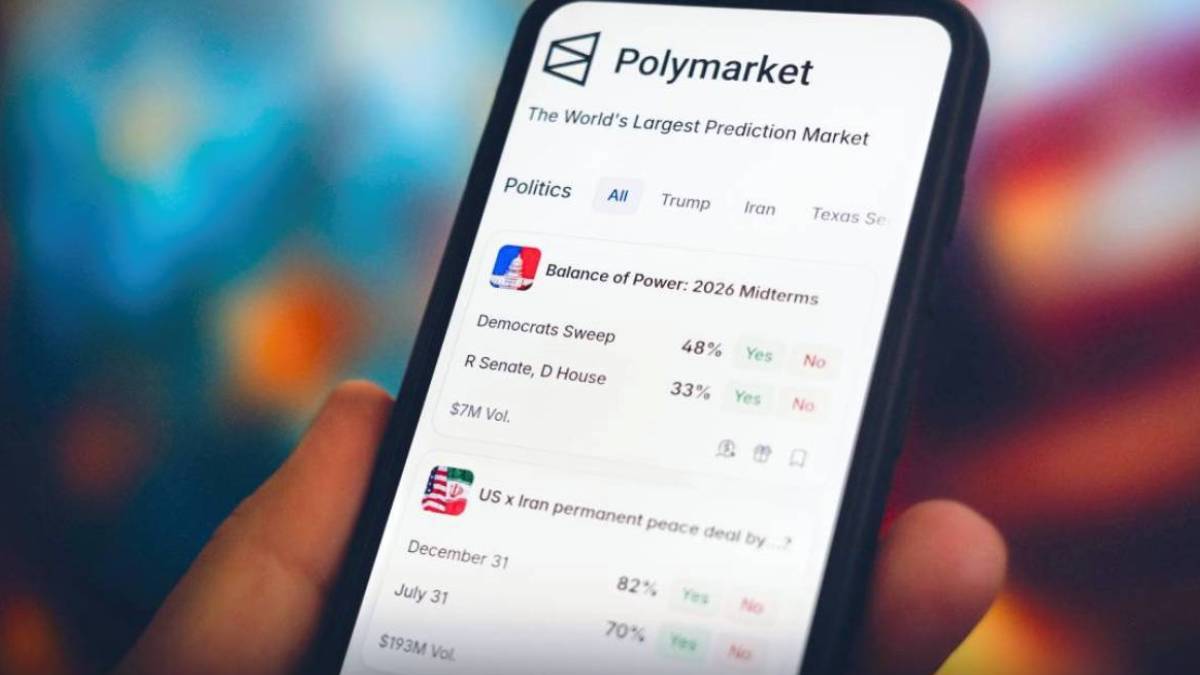
Companies such as Kalshi, plus Robinhood, and Crypto.com offer contracts are tied to real-world events, including sports games. But states argue that these products are simply sports bets operating outside state gambling rules.
The legal fight has now reached a critical point. Two federal appeals courts have issued opposite rulings on whether federal law protects these contracts from state gambling enforcement.
That split could eventually force the U.S. Supreme Court to decide who controls sports-related Prediction Markets: the federal government or the states.
What Are Prediction Markets?
Prediction Markets allow people to trade contracts based on whether an event will happen.
For example, a user may buy a contract that pays $1 if a certain team wins a game. If the team loses, the contract may pay nothing. The market price can move up or down before the event ends, reflecting what traders believe is likely to happen.
Supporters say these are financial products. In their view, people are trading on information and expectations, much like other markets that deal with future outcomes.
Critics see something different. They argue that when people put money on the outcome of a football, basketball, or baseball game, it looks like sports betting—even if the platform calls the product an “event contract.”
That disagreement is at the center of the current court battle.
The Federal Versus State Fight
Prediction market companies say their sports contracts are regulated under federal commodities law. Their platforms operate as designated contract markets, which are overseen by the Commodity Futures Trading Commission, or CFTC.
The companies argue that the Commodity Exchange Act gives the CFTC primary authority over these federally regulated markets. They also say their event contracts qualify as “swaps,” a type of financial agreement recognized under federal law.
If that argument is correct, state gambling rules may be blocked, or “preempted,” by federal law.
States such as New Jersey and Nevada disagree. They argue that sports-event contracts have the basic features of sports betting:
- A person risks money on the outcome of a sporting event
- The customer can win or lose based on that outcome
- The product may compete with state-licensed sportsbooks
- The platform may avoid state taxes, licensing rules, and consumer-protection requirements
States also worry about restrictions on betting involving college sports, problem-gambling safeguards, age checks, and the rules that apply to traditional sportsbooks.
Courts Have Reached Opposite Results
The dispute became more important in 2026 because two federal appeals courts came to different conclusions.
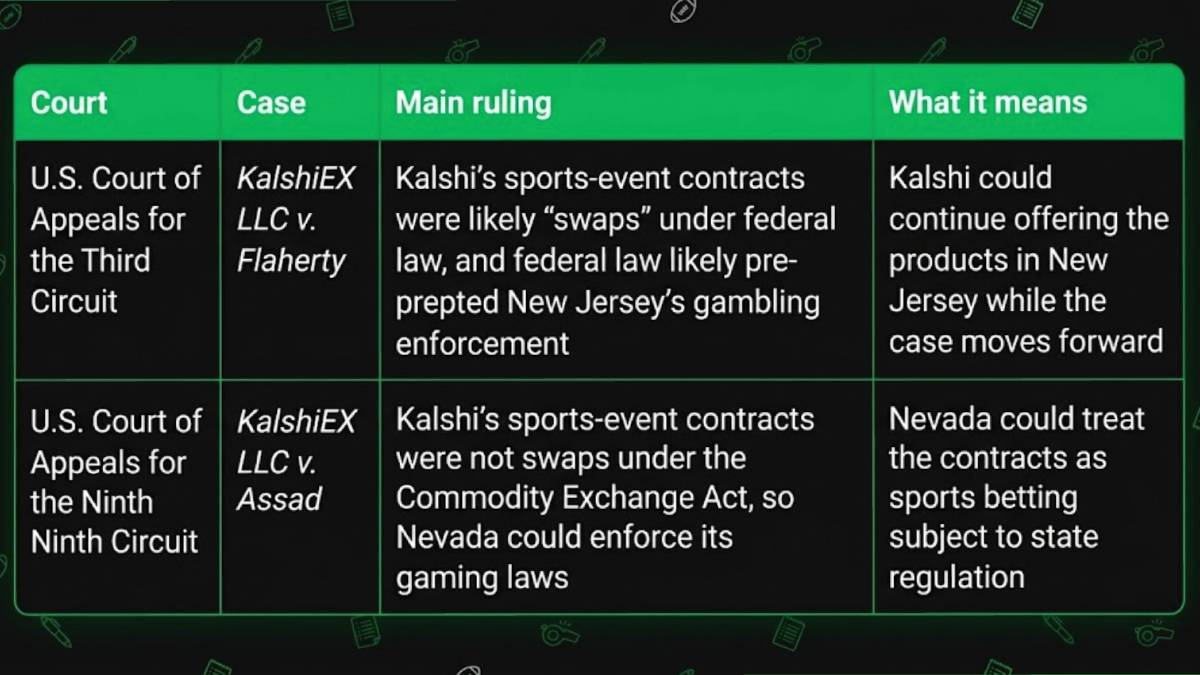
The Ninth Circuit reached the opposite result in late August 2026.
Its panel ruled that Kalshi’s sports-event contracts did not qualify as swaps under the Commodity Exchange Act. The court said Nevada could enforce its gaming laws, creating a direct conflict with the Third Circuit’s earlier decision.
Why the Circuit Split Matters
A circuit split happens when federal appeals courts interpret the same federal law in different ways. It can create uneven rules across the country.
For Prediction Markets, that could mean a company may be protected in one state but face enforcement in another.
For example:
- In New Jersey, Kalshi has had court protection based on the Third Circuit ruling.
- In Nevada, the Ninth Circuit’s decision allows state gaming regulators to apply Nevada law.
Other states may take different positions while lawsuits continue.
Companies may have trouble building one nationwide product if the rules change from state to state.
This uncertainty affects more than prediction-market companies. Traditional sportsbooks, casinos, tribal gaming groups, state regulators, consumers, and taxpayers all have reasons to watch the outcome.
A federal ruling in favor of the platforms could make it easier for Prediction Markets to offer sports contracts nationwide through federally regulated exchanges. A ruling for the states could require platforms to obtain gambling licenses and follow different rules in each state.

Is the Supreme Court Taking the Case?
Not yet.
New Jersey filed a petition asking the Supreme Court to review the Third Circuit’s decision in Flaherty v. KalshiEX LLC. The petition was filed on September 2, 2026, and docketed as Supreme Court case No. 26-299. Kalshi received more time to file its response, with the deadline extended to November 9, 2026.
At the same time, Robinhood and Crypto.com’s affiliated exchange have also pursued Supreme Court review related to the Ninth Circuit decisions.
The Court did not add a prediction-market case to its first announced group of cases for the 2026–27 term. That does not mean the issue is over. The justices could still accept review later, combine related cases, wait for more lower-court action, or wait to see whether the Ninth Circuit reconsiders its decision through an en banc review.
If the Supreme Court accepts the dispute, arguments could happen later in the term, with a decision possibly arriving in 2027. A longer delay is also possible.
What Happens Next for Prediction Markets?
The future of Prediction Markets may depend on one basic legal question: Are sports-event contracts federally regulated financial products, or are they sports bets that states can regulate?
The answer could reshape a fast-growing part of the sports-betting economy.
A win for prediction-market platforms could strengthen federal oversight through the CFTC and make it easier to offer the same sports contracts across state lines. A win for the states could preserve their power to license, tax, restrict, or ban these products under local gambling laws.
For now, the rules remain unsettled. The Third and Ninth Circuits have taken opposite positions, and the Supreme Court has not yet decided whether it will step in. Until that changes, Prediction Markets will continue to face a patchwork of legal rules across the country.


