


The fight over sports prediction markets may soon reach the U.S. Supreme Court, putting federal regulation and state gambling laws on a collision course.
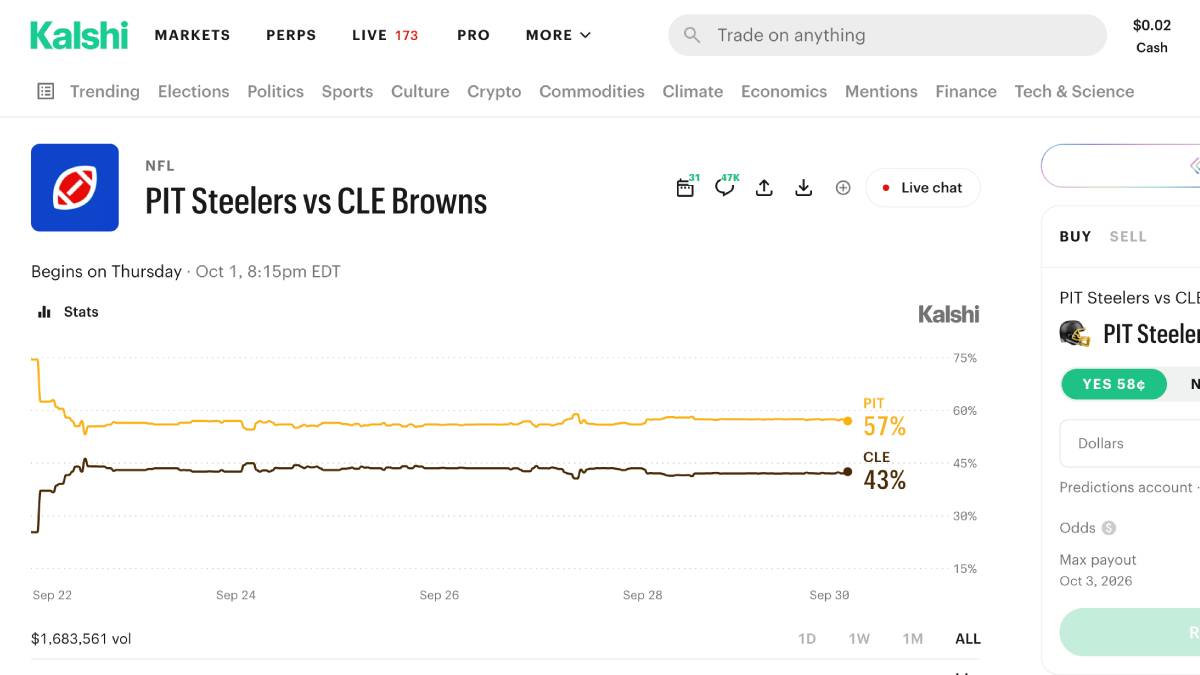
Platforms including Kalshi, Robinhood Derivatives, and Crypto.com’s North American Derivatives Exchange offer sports-related “event contracts.” These contracts allow users to buy positions on real-world outcomes, such as which team will win a game. Supporters describe them as federally regulated financial products. States argue they function much like traditional sports bets.
The legal question is simple but consequential: Does the Commodity Futures Trading Commission have exclusive authority over these products, or can states regulate them as gambling?
That issue now has divided federal appeals courts, making Supreme Court review increasingly likely.
What Are Sports Event Contracts?
Sports event contracts are typically binary products. A user takes a position on whether a specific outcome will happen, and the contract settles based on the result.
For example, a customer could purchase a contract tied to whether an NFL team wins a game. If the stated result occurs, the contract pays out at a set value. If it does not, the contract expires without value.
Kalshi and similar companies argue that these products are “swaps” under the federal Commodity Exchange Act. Kalshi is registered with the CFTC as a Designated Contract Market, and the company maintains that federal law gives the agency exclusive jurisdiction over its event-contract offerings.
Under that view, state gambling regulators cannot block or penalize federally regulated sports contracts. The CFTC has generally backed the argument that the Commodity Exchange Act gives it broad authority over qualifying derivatives products.
States Say the Products Are Sports Bets
State regulators see the issue differently. Nevada, New Jersey, Ohio, Tennessee, and other states have argued that contracts based on sports results are, in practical terms, sports wagers.
States say allowing federally regulated platforms to offer these products could weaken their sports betting systems, which include licensing rules, tax requirements, age limits, integrity controls, and responsible-gambling programs.
The concern is especially significant for states with legal sportsbooks. Licensed operators pay state taxes and comply with detailed gaming regulations. Prediction market platforms contend they operate under a different federal framework, while state officials argue that distinction should not allow companies to bypass gambling laws.
Tribal gaming interests and traditional gaming operators also have a major stake in the outcome, particularly where sports betting rights, compact provisions, and regulated-market protections are involved.

Federal Appeals Courts Are Split
The Supreme Court often accepts cases when federal appeals courts reach conflicting conclusions on the same legal issue. That is now happening in the prediction markets debate.
In April, the U.S. Court of Appeals for the Third Circuit sided with Kalshi in its dispute with New Jersey, which also wants a 9% tax rate on exchanges. The divided panel found that Kalshi was likely to succeed on its argument that sports event contracts are swaps subject to exclusive CFTC jurisdiction.
But the U.S. Court of Appeals for the Ninth Circuit reached the opposite conclusion in August in cases involving Nevada, Kalshi, Robinhood Derivatives, and Crypto.com. The court found that the sports contracts were closer to wagers than federally protected swaps and ruled that Nevada could apply its gaming laws.
Then, on September 25, the Sixth Circuit ruled against Kalshi in cases involving Ohio and Tennessee. The unanimous panel held that Kalshi had not shown its sports event contracts met the statutory definition of a swap. It also concluded that, even if they were swaps, the Commodity Exchange Act did not preempt state gambling laws.

Why the Supreme Court May Step In
Three petitions are now pending at the Supreme Court: New Jersey’s petition in Flaherty v. KalshiEX, LLC, Robinhood Derivatives’ petition involving Nevada, and a petition from Crypto.com’s North American Derivatives Exchange. The New Jersey case was docketed as No. 26-299, while the Robinhood and Crypto.com cases are Nos. 26-338 and 26-344.
No case has been accepted yet. Kalshi’s response in the New Jersey matter is due November 9, 2026, after the Court granted an extension. Garden State lawmakers
Still, the circuit split gives the justices a strong reason to intervene. A Supreme Court ruling could determine whether sports prediction markets operate under a single federal system or remain subject to a state-by-state patchwork of gambling rules.
For sportsbooks, casinos, tribes, regulators, and prediction market operators, the stakes could reshape the future of sports-related event contracts nationwide.


