


The most recent revenue report shows that casinos in Maryland generated a combined $168.1 million from slot machines and table games in March. This represents a 2.3% drop, or about $4 million less, compared to March of the previous year.
The Old Line State has six commercial casinos that offer slot machines (video lottery terminals or VLTs) and table games.
They are regulated by the Maryland Lottery and Gaming Control Agency, and their revenue directly supports state programs.

Maryland Casino Revenue: March 2026
Here's a breakdown of how the casino revenue was generated in Maryland last month:
Total Gaming Revenue (slots + table games): $168,088,833
- This was a 2.3% decrease ($4,016,799 less) from March 2025.
State Gaming Contributions: $72,359,944
- Down 2.9% (approximately $2.2 million) from the prior year.
Education Trust Fund Portion: $52,185,387
- Also down 2.9%, or about $1.6 million less than March 2025.
These contributions fund public education, local jurisdictions (where casinos are located), the horse racing industry, small/minority/women-owned businesses, and other programs.
Year-to-Date Figures: Fiscal Year 2026 (July 2025 – March 2026)
Total Casino Revenue: $1.4325 billion
- 2.2% lower than the same nine-month period in FY2025.
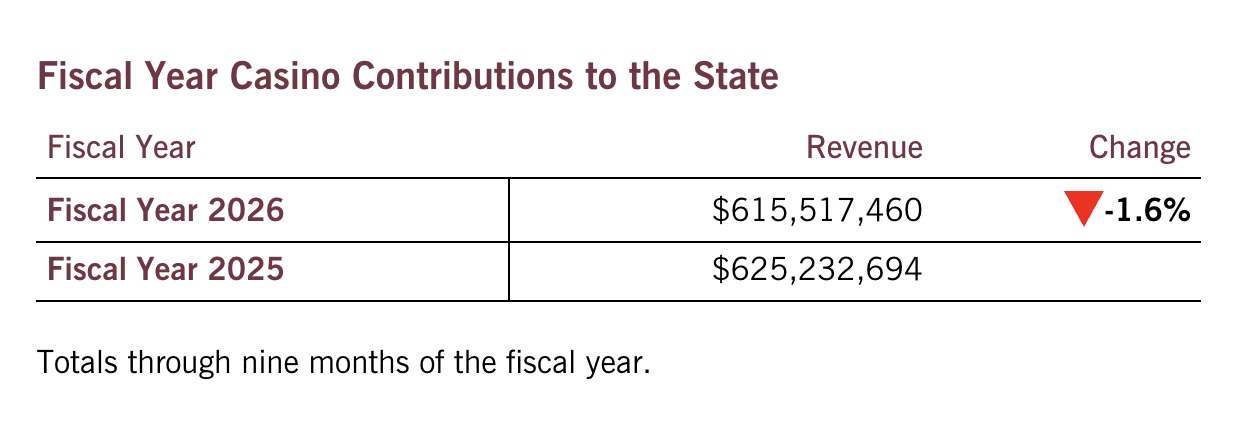
State Contributions: Approximately $615.5 million
- Down 1.6% year-over-year.
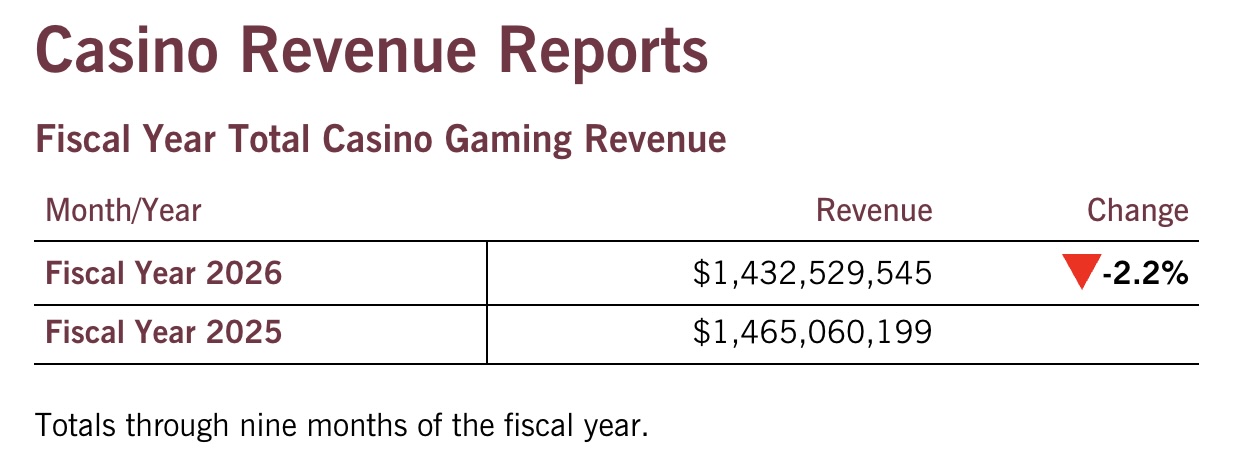
This reflects a modest downward trend seen in recent months. For example, February 2026 revenue was down 4.3%. In FY2025, casino revenue was approximately $1.95 billion—a slight decline from the previous year.
Why is Maryland Casino Revenue Declining?
There isn't a single reason for the revenue decline. It's important to note:
- The declines are relatively small but consistent across several months in FY2026.
- No major event like a storm or shutdown is cited for March. However, the weather was mentioned in some earlier months.
- Maryland has not legalized online casino gaming (iGaming). A bill (SB 761) was withdrawn last month due to budget concerns like a $1.5 billion deficit and pressure on gambling-related tax revenue.
Offshore online gambling is active but untaxed by the state. Sports wagering exists separately with mixed financial results.
Historically, casino revenue has been a key funding source for education in Maryland since the first casino opened in 2010, and the Education Trust Fund has received over $6.8 billion from casinos.

Comparing Casino Revenue with Neighboring States
Neighboring states such as Pennsylvania, New Jersey, Delaware, West Virginia, and Virginia show different trends based on data available for early 2026.
Pennsylvania: Strong growth driven by iGaming. January 2026 saw $590.6 million in gaming revenue, up 11.6% year-over-year.
New Jersey: Growth led by online casinos. February 2026 saw $520.8 million in total revenue, up 7.4%.
Delaware: Smaller market with three racinos showing flat to slight declines or modest gains. February 2026 revenue was $33.7 million, down 0.8% year-over-year.
West Virginia: Focus on iGaming growth, with revenue up 41.6% year-over-year in February 2026. Lower tax rates have attracted operators.
Virginia: Rapid growth due to new casinos, with February 2026 revenue at $95.2 million, up 26.6% year-over-year.
Key Regional Observations
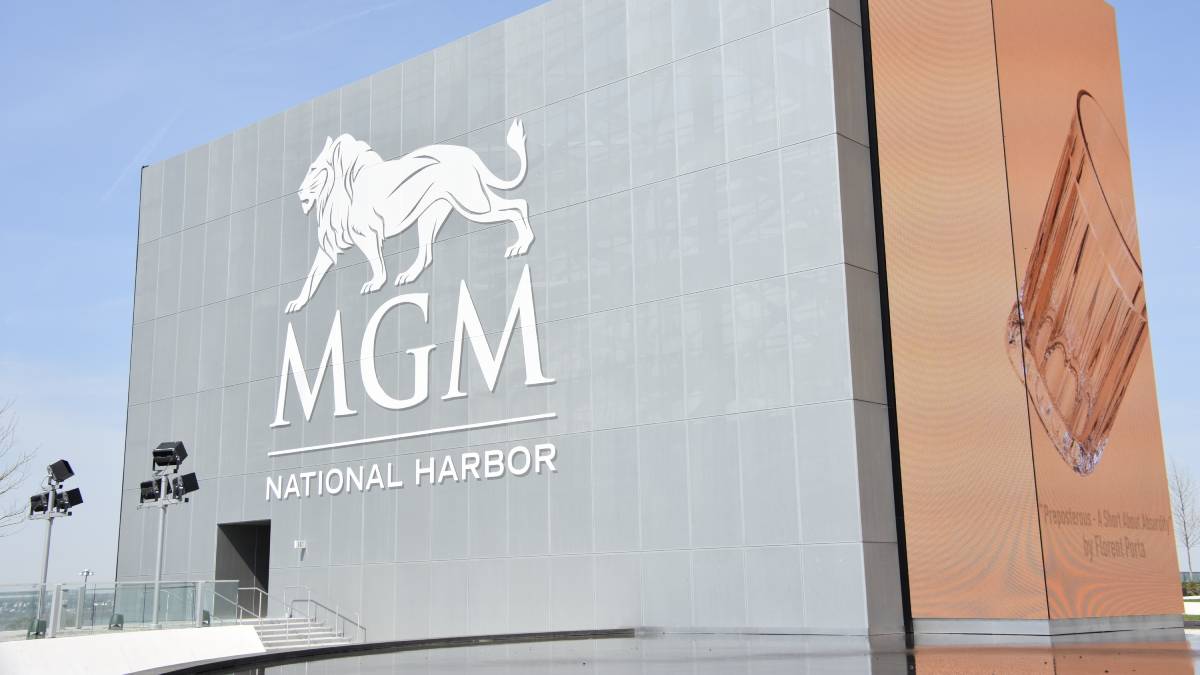
Maryland's MGM National Harbor often leads in-state and ranks highly nationally among non-Nevada properties, but the state shows overall revenue softness. Other trends include:
iGaming Advantage: States with legal online casinos generally show stronger growth, offsetting brick-and-mortar declines.
Expansion vs. Maturity: Virginia enjoys growth from new casinos, whereas New Jersey and Pennsylvania benefit from mature markets. Maryland faces competition without the same offsets.
Broader Mid-Atlantic Context
The region is highly competitive, with consumers often crossing state borders. National trends indicate modest growth in physical casinos, while iGaming is rapidly expanding.
These trends reflect data through February/March 2026, and come at the same time Maryland is trying to keep sweepstakes casinos from operating in the state.
Maryland's gambling watchdogs are keeping a closer eye on sweepstakes casinos. They've told Chumba Casino and LuckyLand Slots to stop what they're doing for the second time. According to the Maryland Lottery and Gaming Control Agency, these casinos continue to run illegal online games in Maryland despite being warned back in March.
Maryland's recent actions show that they are getting tougher on these types of games, especially the ones that use virtual money and promotional tactics to bypass the usual casino rules.


