


The future of NFL Prediction Markets may be growing quickly, but the NFL is not ready to rush into the space.
During a recent interview on CNBC, NFL Commissioner Roger Goodell made it clear that the league wants stronger rules before it signs partnership deals with prediction-market platforms such as Kalshi, Polymarket, Novig, and ProphetX.
The difference between traditional sportsbooks and prediction markets may not always seem obvious. Both can involve contracts tied to game outcomes, player availability, or other football-related events. However, the NFL sees important concerns around consumer protection, game integrity, and the types of markets available to users.
Goodell’s message is simple: the NFL does not need to be first. It wants to be certain the market is properly regulated before it puts the league’s name behind it.
What are NFL Prediction Markets?
Prediction markets allow users to buy and sell contracts based on whether a future event will happen. In sports, those events might include whether a team wins a game, whether a player appears in a matchup, or whether a certain event occurs during a broadcast.
Unlike most traditional sportsbooks, prediction-market platforms generally operate under federal oversight from the Commodity Futures Trading Commission, or CFTC. Sportsbooks, by comparison, are usually regulated state by state.
That difference has become a major issue for the NFL. The league believes sports-related contracts should have safeguards that are at least as strong as the rules applied to legal sports betting.
The concern is not necessarily about every market. Broad outcome-based markets—such as whether an NFL team wins a game—may carry different risks than a contract based on a single player, an official, or a broadcaster. The NFL’s focus has been on contracts that may be easier to influence, exploit, or misuse.
Goodell: "Stronger Regulations Come First"
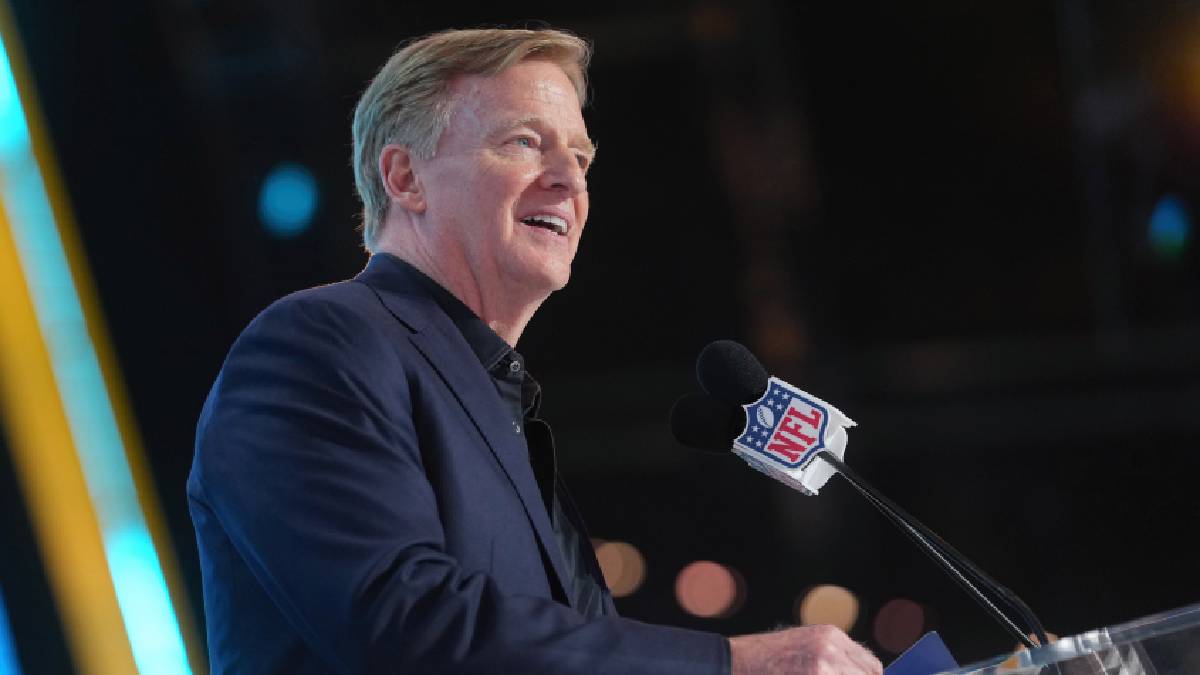
In the CNBC interview, Goodell said the NFL needs stronger regulation of prediction markets before partnerships become realistic. He emphasized two goals:
- Protecting the integrity of NFL games
- Protecting consumers who use the platforms
The commissioner also explained that the league is willing to speak with platforms about changes they could make. But he did not signal that an agreement is close.
“We don’t feel like we have to be first in this. We feel like we’re going to be right, and the best thing to do is be patient.”
That approach reflects the NFL’s strong existing business position. The league already has major official sports-betting relationships with companies such as DraftKings, FanDuel, and Fanatics. Because the NFL has established betting partners and substantial revenue streams, it has less incentive to move quickly into a newer and less settled market category.
For now, the league appears to believe caution provides more value than speed.
Why The NFL is Worried
The NFL’s objections focus on prediction-market contracts that could threaten trust in the sport. In March 2026, the league asked operators including Kalshi and Polymarket to avoid several categories of contracts it considered objectionable.
These categories included:
- Contracts that one person could potentially influence, such as a missed field goal or a highly specific player action
- Contracts tied to player injuries, fan safety, or player misconduct
- Contracts involving officiating, including the number of penalties called
- Events that may be known before the public can reasonably trade on them, such as some draft outcomes, coaching changes, or player-signing decisions
- Novelty-style offerings connected to broadcasts, celebrities, or announcers’ comments
The league renewed those concerns shortly before the 2026 season. Its compliance officials warned that some contracts the NFL had already flagged were still being offered.
The central issue is manipulation risk. A market involving the final winner of an NFL game requires an entire game’s result. A market asking whether one player will participate, whether a referee will throw a certain number of flags, or whether an announcer will say a phrase can depend on far fewer people and circumstances.
That distinction matters because integrity problems do not need to be real to cause harm. Even unproven allegations can damage public confidence in players, coaches, officials, and the league.
The NFL Wants Tougher CFTC Rules
The NFL has also pushed the CFTC to adopt more specific rules for sports-related event contracts. In its regulatory comments, the league argued that proposed federal protections did not go far enough when compared with safeguards in state-regulated sports betting.
Among the protections the NFL has sought are:
- A minimum participation age of 21 for sports-event contracts
- Clear limits or bans on contracts involving injuries, officiating, individual performance, first plays, coaching decisions, and roster moves
- Better consumer-protection standards
- Tighter advertising controls
- Stronger integrity monitoring and information-sharing practices
The league’s position is that sports markets should not be treated exactly like ordinary financial contracts. Football information can be sensitive, fast-moving, and unevenly available. Injury details, lineup changes, and insider knowledge can create special risks that do not apply in the same way to many other types of markets.
Recent developments show why the league wants clearer standards. Kalshi reportedly removed athlete-injury markets after CFTC intervention, while the regulator’s proposed framework identified injury-based contracts as raising concerns about medical privacy, manipulation resistance, and harmful incentives.
NFL Prediction Markets Versus MLB and NBA
The NFL’s cautious stance stands out because other major leagues have been more willing to engage with prediction-market companies.
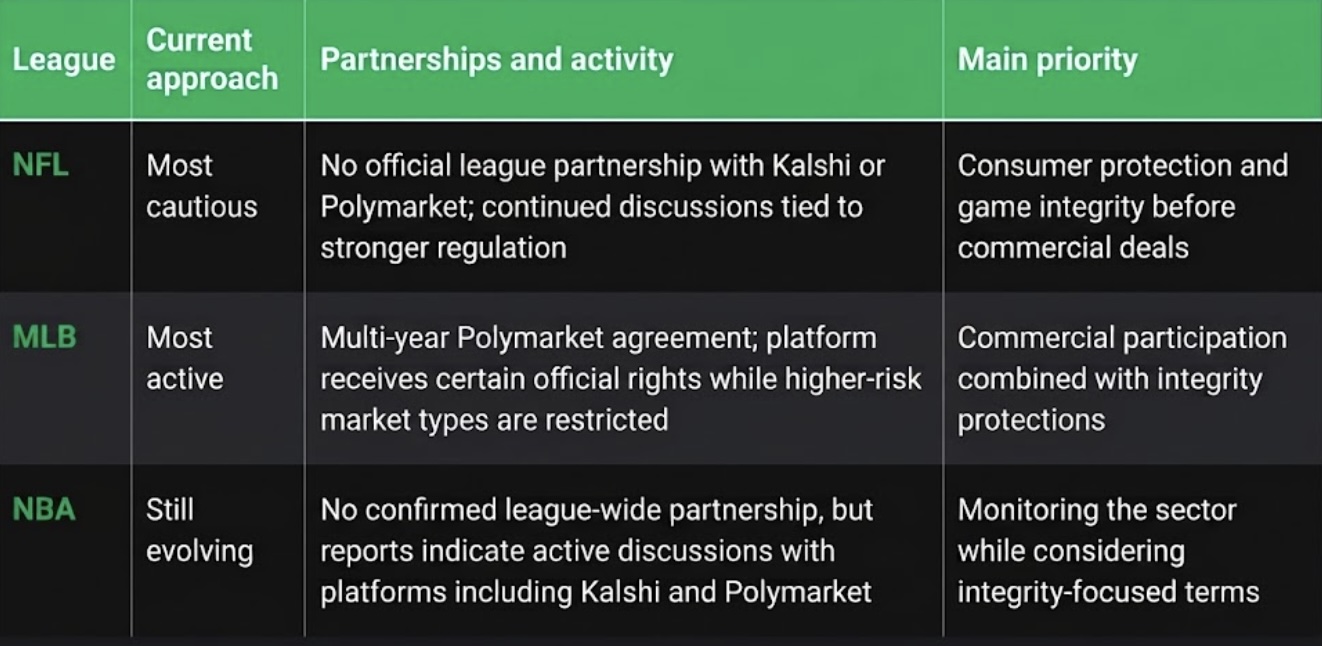
The NFL, MLB, and NBA have taken noticeably different approaches to prediction markets. The NFL remains the most cautious of the three leagues. It has not announced an official league partnership with platforms such as Kalshi or Polymarket, and it continues to tie any future discussions to the need for stronger regulation. The league’s main focus is protecting consumers and preserving game integrity before entering into commercial agreements.
MLB has been the most active major league in the prediction-market space. In March 2026, it took a significant step by reaching a multi-year agreement with Polymarket. The deal made Polymarket MLB’s exclusive prediction-market partner and gave the platform certain official rights. At the same time, the agreement included restrictions on higher-risk markets, particularly those connected to individual pitches, manager decisions, and umpire performance. MLB’s approach combines commercial opportunity with integrity protections.
The NBA falls between the NFL and MLB. The league has not yet confirmed a league-wide partnership with a prediction-market platform, but it has reportedly held discussions with companies including Kalshi and Polymarket. Rather than moving as quickly as MLB or taking as firm a wait-and-see stance as the NFL, the NBA appears to be monitoring the industry while considering possible agreements built around integrity safeguards.
What it Means for NFL Fans
For fans, the key takeaway is that NFL-related prediction markets are likely to remain under close scrutiny. The NFL is not saying partnerships can never happen. Instead, it is telling platforms and regulators that certain standards must be met first.
That could mean future NFL prediction products look different from some of the contracts available today. Platforms seeking a relationship with the league may need to avoid injury markets, officiating markets, highly specific player-prop contracts, and other offerings that create greater integrity concerns.
An example is a market asking whether a team will win a game versus one asking whether a specific player will leave because of an injury. The first reflects a broad competitive outcome. The second can involve private health information, public speculation, and serious concerns about unfair incentives.
The NFL appears more comfortable with a future where broad markets are monitored under clear federal standards than one where platforms can freely create high-risk contracts around sensitive football events.
What Comes Next For NFL Prediction Markets?
The Senate’s decision not to move the CLARITY Act forward left a key regulatory question unanswered: Can federally regulated prediction-market platforms offer contracts tied to sports outcomes without complying with state-level and tribal gaming laws?
The NFL’s message on NFL Prediction Markets is not anti-innovation. It is a demand for stronger protections before the league attaches its brand to a growing industry.
Roger Goodell’s patient strategy gives the NFL time to watch the CFTC’s rulemaking process, evaluate platform practices, and pressure operators to remove contracts the league considers risky. The league’s existing sports-betting partnerships also mean it can afford to wait rather than pursue a prediction-market deal simply because competitors are moving first.
For now, the NFL remains the most cautious of the major U.S. sports leagues. MLB has embraced commercial partnerships, the NBA is exploring its options, and the NFL is holding its position: stronger regulation, better consumer protections, and a clear plan to protect game integrity must come before any major deal.


