


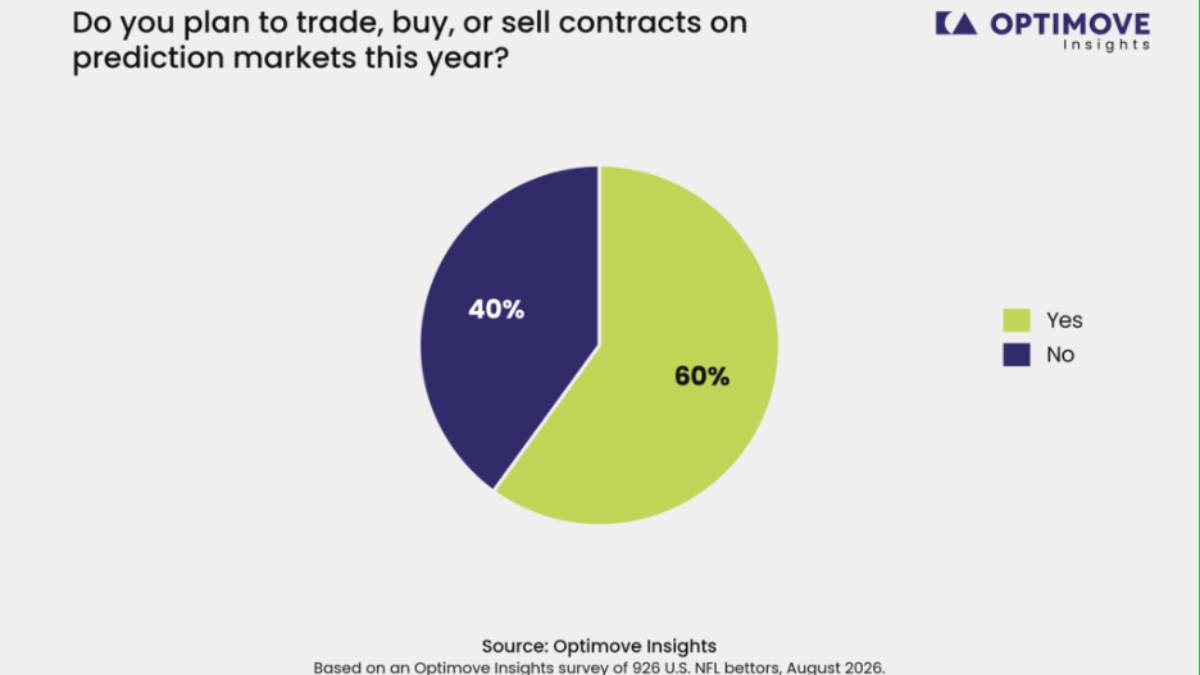
Prediction markets have crossed into the mainstream for NFL bettors. According to new data from the player engagement platform, Optimove, 84% of U.S. NFL bettors have heard of them, and 60% plan to trade event contracts this season.
The news breaks as a new prediction market platform, Novig, breaks onto the scene. It also comes in the wake of a decision by North Carolina lawmakers to tax prediction markets differently than sportsbooks.
What Is a Prediction Market?
A prediction market is an exchange where people buy and sell “event contracts” tied to real-world outcomes—like whether a team will win, a player will score, or a specific stat will hit.
- Contracts trade in cents (1¢–99¢), reflecting the crowd’s implied probability.
- Prices move as new information hits—similar to stocks.
- Major platforms include Kalshi, Polymarket, and others regulated by the CFTC, which allows nationwide access in most cases.
Unlike traditional sportsbooks where you bet against the house, prediction markets let you trade against other users on an order book.
By the Numbers: Awareness and Intent Among NFL Bettors
Optimove’s August 2026 survey of 926 U.S. NFL bettors shows how far prediction markets have come.
- 84% awareness: Only 16% of NFL bettors say they’ve never heard of prediction markets.
- 60% intent to trade: Six in 10 NFL bettors plan to buy, sell, or trade event contracts this year.
- 40% not planning to trade: A sizable minority still sits on the sidelines.
This shift means prediction markets are no longer a niche product. The question for operators is no longer “Will bettors try this?” but “How do we keep them coming back?”
Why Prediction Markets Feel Different From Sportsbooks
Prediction markets offer a different experience than traditional NFL betting.
- Trade, don’t just bet: You can enter and exit positions before an event ends.
- Transparent pricing: The market price shows the crowd’s view in real time.
- More markets, more often: From game winners to player availability and in-season milestones, event contracts cover granular outcomes.
- Federal framework: CFTC-regulated platforms can operate in states where sports betting is restricted, expanding access.
For many NFL fans, that flexibility and transparency make prediction markets feel more like trading than gambling.
The Education Phase Is Over—Retention Is the New Battleground
With 84% awareness, broad “what is a prediction market?” campaigns will reach an audience that mostly doesn’t need that definition.
Operators should pivot to comparative, specific messaging:
- Why the pricing is better than a sportsbook line
- How the experience feels when a price moves in your favor
- Why a specific platform is the best place to place your first trade—and your second
Education still matters, but it belongs inside the product: tooltips when opening a contract, explainers at settlement, and contextual help during a user’s first few trades.
The 16% who are unaware should be treated as a separate segment with tailored creative—not the group that sets the message for everyone else.
NFL Context in 2026: Leagues, Partnerships, and Regulation
The NFL has moved cautiously on prediction markets even as sports betting partnerships expand.
- The league announced official sportsbook deals with FanDuel and Fanatics, but excluded prediction market operations from those agreements.
- The NFL has no official partnerships with prediction market platforms like Kalshi or Polymarket as of late August 2026.
- Meanwhile, availability contracts—markets on whether a player will suit up—have become a hot topic heading into Week 1.
This cautious stance reflects ongoing regulatory and integrity discussions, even as federally regulated event contracts gain traction with bettors.
Practical Takeaways for Operators and Affiliates
For sportsbooks, prediction market platforms, and affiliates, the Optimove data points to clear next steps.
- Shift spend from awareness to conversion and retention: The addressable audience is already large.
- Highlight first-trade friction reducers: Fast KYC, clear settlement rules, and simple deposit flows matter more than generic education.
- Use behavioral triggers: Reward the second trade, not just the first. Build reasons to return after the season ends.
- Segment the 16%: Run distinct creative for the unaware minority without letting their needs dilute the main message.
Operators that treat prediction markets as a retention business—not just an acquisition story—will be best positioned to hold these customers into next season.


