


Las Vegas is showing early signs of recovery from the tourism downturn that defined 2025, but the comeback remains uneven. Visitor volume, hotel performance and casino gaming revenue improved in July 2026, while air travel continued to fall and convention attendance slipped for the month.
The latest Las Vegas Convention and Visitors Authority data show the market welcomed about 3.17 million visitors in July, a 2.7% increase from July 2025. That growth is meaningful after last year’s sharp decline, although it is still too early to call the Las Vegas tourism decline fully over.
We saw a similar rebound in June, so it's a sign that the numbers may finally be rebounding. The news comes on the day The Palms Casino Resort is opening a new smoke-free gaming space.

July Visitor Volume Increases 2.7%
Las Vegas welcomed approximately 3.17 million visitors in July, compared with about 3.09 million during the same month last year. The 2.7% year-over-year increase continued a recent pattern of small gains and near-flat monthly results after tourism volume fell sharply in 2025.
Through the first seven months of 2026, Las Vegas drew roughly 22.75 million visitors, up 0.5% from the same point in 2025. In practical terms, that means the destination has moved back into slight growth territory, but it has not yet returned to the stronger visitor levels seen before last year’s slowdown.
The comparison matters because Las Vegas finished 2025 with about 38.5 million visitors, down 7.5% from 2024. It was the region’s slowest visitation year since 2021, when the market was still recovering from the pandemic-era shutdowns and travel disruption.
With new attractions like The Mike Tyson Immersive Experience opening, analysts are hoping for stronger numbers in the future.
Hotel Occupancy and Room Rates Improve
Hotel data offered one of the clearer positive signs in July.
Overall occupancy reached 77.2%, an increase of 1.1 percentage points from a year earlier. Hotels also filled about 3.60 million room nights, up 2.3%, while the area’s weighted room inventory rose about 0.8% to roughly 150,600 rooms.
Room pricing moved higher as well:
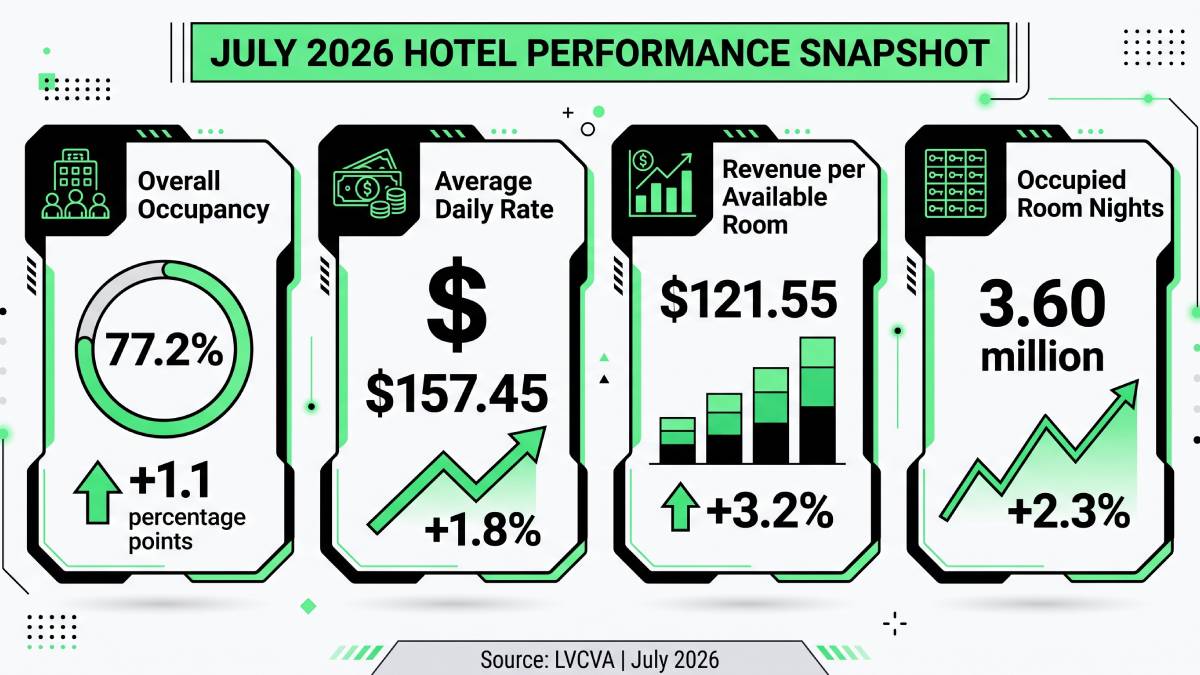
The Strip remained much stronger than downtown Las Vegas in hotel demand.
Strip occupancy was around 80.2%, while downtown occupancy was about 58.5%. That gap suggests the major resort corridor is benefiting more from leisure travelers, premium hotel demand, entertainment and high-value casino customers than some downtown properties.
The new Guitar Hotel is also on the way.
For the year through July, hotel occupancy averaged 81.3%, while average daily rates reached $188.04, up 3.0% from 2025. Revenue per available room, commonly called RevPAR, rose 3.2% to $152.88. Those figures suggest visitors who do come to Las Vegas are still spending at relatively healthy levels on lodging.
Convention Attendance Slips but Year-to-Date Demand Grows
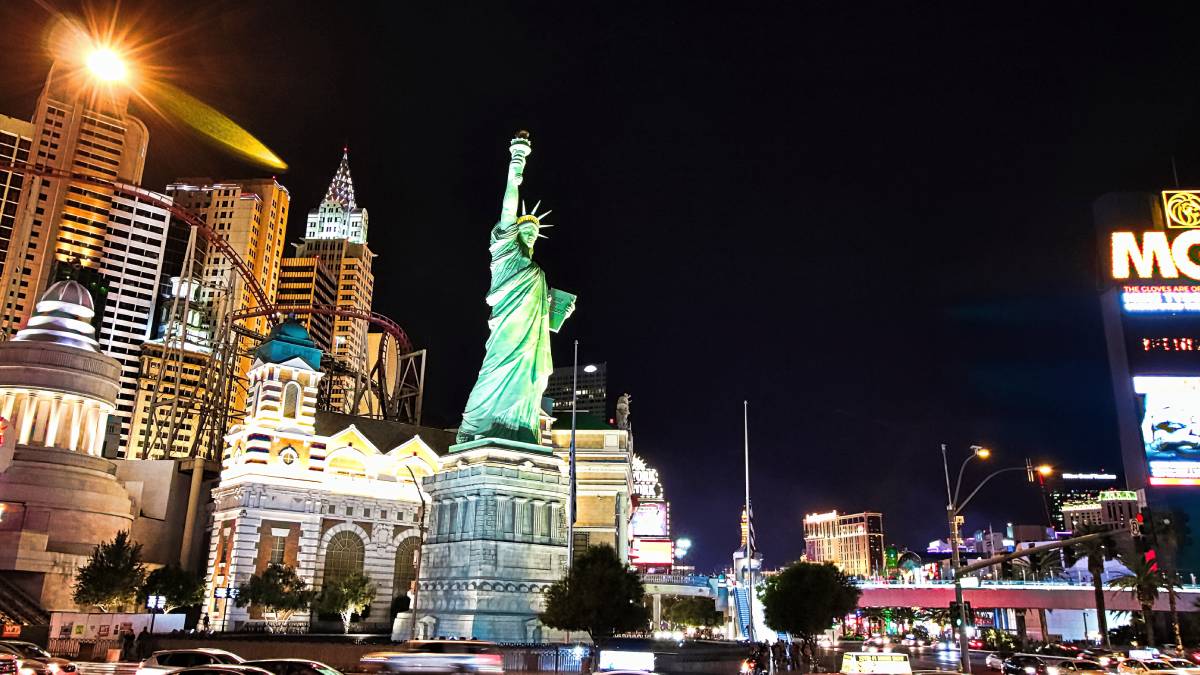
Convention attendance fell 5.6% in July to 262,700 attendees. However, a single-month decline does not necessarily signal a broader reversal in business travel or meetings demand.
The LVCVA attributed the July decline largely to normal show rotations and calendar timing. Las Vegas has a convention calendar that can shift substantially depending on when major trade shows are scheduled and how often they occur.
More importantly, convention attendance for the first seven months of 2026 reached about 3.91 million, up 11.2% year over year. That year-to-date increase is a major support for the broader tourism recovery because convention guests often book hotel rooms during weekdays, spend heavily on dining and entertainment, and help stabilize demand outside major holiday and event weekends.
Harry Reid Airport Traffic Remains a Weak Spot
The weakest July indicator was passenger traffic at Harry Reid International Airport. The airport handled about 4.41 million passengers, down 7.6% from July 2025. Year-to-date passenger traffic was down 6.9%.
A sustained decline in airport traffic matters because Las Vegas depends heavily on fly-in visitors from major U.S. and international markets. Fewer airline passengers can limit growth in leisure visitation, particularly among travelers who book resort stays, entertainment packages and higher-priced weekend trips.
Still, weaker airport traffic does not always translate directly into weaker total visitation. Drive-in travel from California, Arizona and other Western markets can offset some of the air-travel pressure. Las Vegas also appears to be getting support from convention travelers and higher-spending resort guests, helping hotels and gaming revenue perform better than the airport numbers alone might suggest.
Strip Casino Gaming Revenue Outpaces Visitor Growth
Casino results provided another encouraging signal in July. Clark County gaming revenue reached approximately $1.17 billion, up 1.5% from the prior year. The Las Vegas Strip accounted for $776.3 million in gaming win, up 3.6% from about $749.1 million in July 2025.
It's a far cry from the numbers we saw earlier this year.
Gaming win is the amount casinos keep after paying winning bets. It is not the same as the total amount wagered by customers.
July’s Strip growth was driven in part by table games. Table-game revenue climbed 6.2% to about $340.8 million, while slots rose 1.7% to $435.5 million. Blackjack was especially strong, with revenue up 38.8% to roughly $87.6 million. Baccarat revenue increased 2.3% to about $116.6 million, while baccarat wagering volume rose sharply.
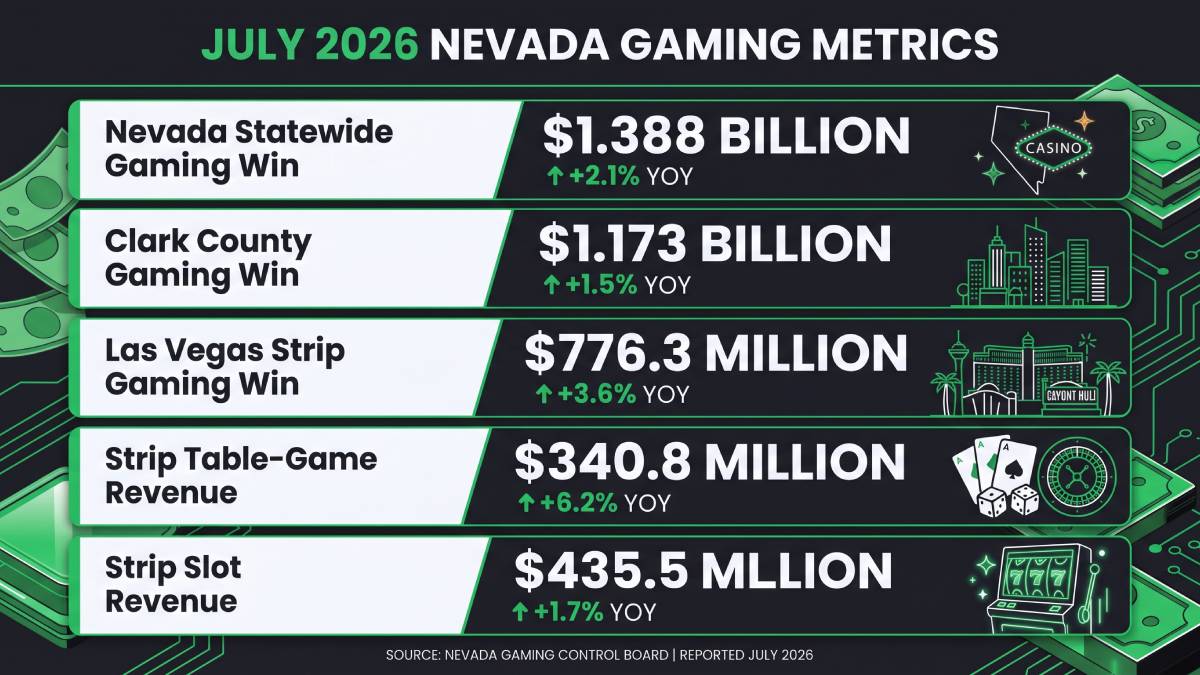
Through the first seven months of 2026, Strip gaming win was up about 3.3% from the same period in 2025. That is a stronger performance than the 0.5% gain in year-to-date visitor volume, suggesting casinos are generating more revenue per visitor, benefiting from higher-end play, stronger table-game activity or a more favorable mix of customers.
What the July Data Means for Las Vegas Tourism
The July numbers suggest Las Vegas is not experiencing a broad-based tourism boom. Instead, the market appears to be in a gradual and uneven recovery from the 2025 decline.
The positive side includes:
- Visitor volume returned to year-over-year growth in July.
- Hotel occupancy, room rates and RevPAR all increased.
- Year-to-date convention attendance rose 11.2%.
- Strip casino gaming revenue outperformed overall visitation growth.
Visitors continue to spend at relatively strong levels when they come to Southern Nevada.

The risks remain clear:
- Airport passenger traffic is still falling.
- Year-to-date visitor growth is only 0.5%.
- July convention attendance declined because of event-calendar timing.
- Downtown hotel occupancy and gaming performance remain weaker than the Strip.
- Las Vegas still has ground to make up after the 7.5% visitor decline in 2025.
Las Vegas tourism generated about $50.8 billion in visitor spending during 2025, down $4.3 billion, or 7.4%, from the prior year. However, average visitor spending remained relatively stable at about $1,318 per trip, indicating that the revenue decline was driven more by fewer visitors than by a dramatic reduction in spending per traveler.
That distinction is important for the rest of 2026. If visitor volume continues to inch higher, conventions remain strong and hotel rates hold, Las Vegas could recover part of the ground lost in 2025 even if air travel remains a headwind. But a full rebound will likely require more consistent gains in fly-in leisure traffic, not only stronger performance from conventions, premium resort guests and casino customers.


