


Could the Las Vegas tourism decline finally be ending?
Las Vegas has long been a hub for entertainment, gaming, and tourism, and recent data suggests that the city may be slowly reclaiming its vibrant identity. March brought some much-needed positive news for the city, with both tourism and gaming revenues showing promising growth.
Numbers have been down across the board on the Strip and at the airport for months. But last month's numbers flipped the script.
Using data from the Las Vegas Convention and Visitors Authority (LVCVA) and the Nevada Gaming Control Board, we’ll examine how March compares with previous years, as well as the key factors driving change and the broader implications for the city’s economy.

Key Las Vegas Tourism Figures from March 2026
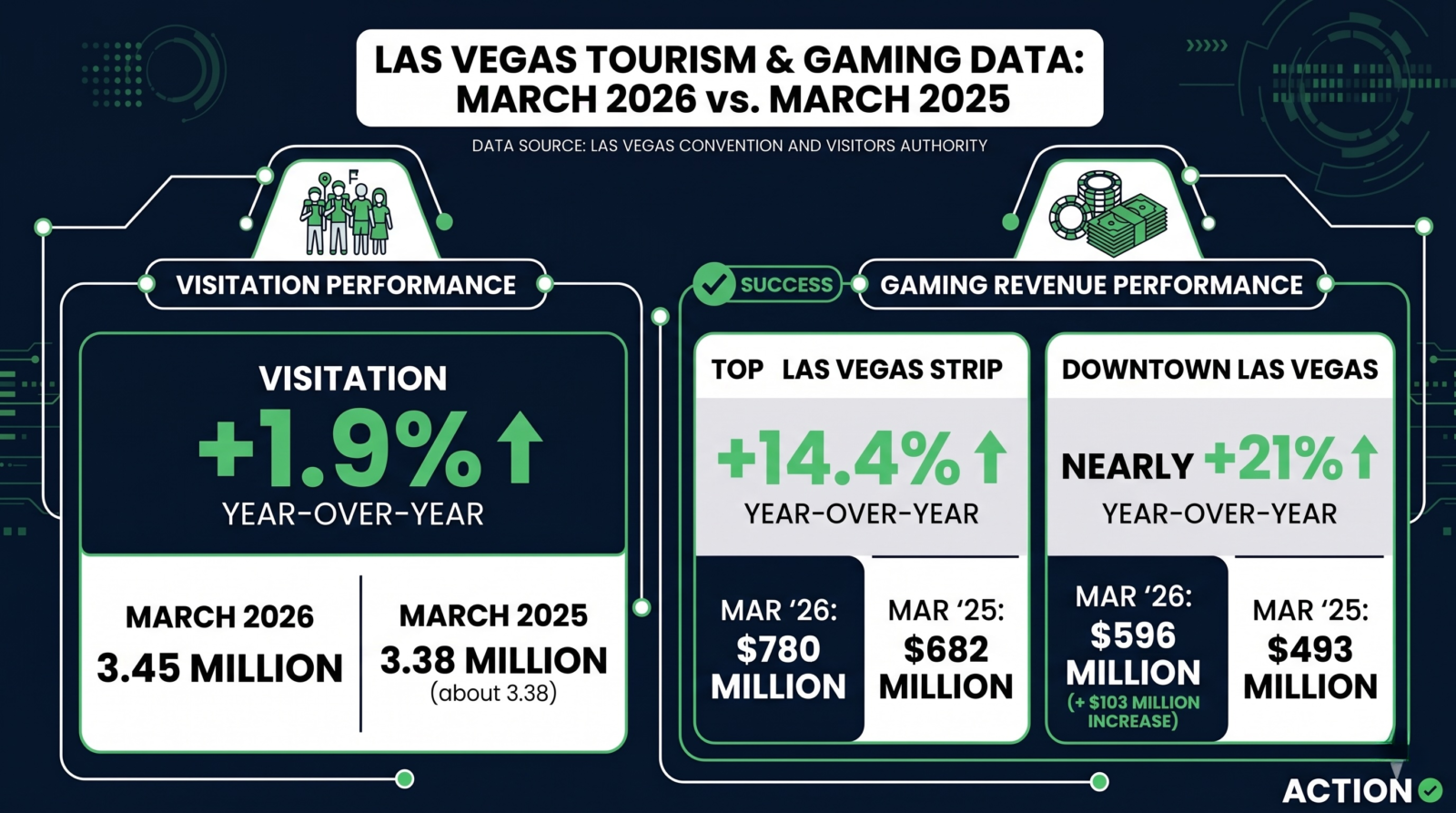
Visitation reached 3.45 million in March 2026, marking a 1.9% increase over March 2025’s tally of approximately 3.38 million. This marks the second consecutive month of growth following a period of slowdown.
Gaming Revenue:
- Las Vegas Strip: Gaming revenue reached around $780 million, reflecting a 14.4% increase from about $682 million in March 2025.
- Downtown Las Vegas: Revenues surged nearly 21%, reaching about $103 million.
Hotel Performance:
March was one of the strongest on record for Las Vegas hotels, driven by high demand.
The average daily rate (ADR) across the city hit approximately $207, the second-highest for March on record. Revenue per available room (RevPAR) also ranked among the top. On the Strip, ADR climbed 14% to $223.60, and RevPAR increased by 16.4%.
Downtown hotels saw similarly impressive gains.
What Drove the Gains in Las Vegas’s Tourism Numbers?
A packed sports and convention schedule was the main catalyst for these gains.
Major events like the NASCAR Pennzoil 400, college basketball conference tournaments, March Madness watch parties, and the massive triennial CONEXPO-CON/AGG trade show drew a diverse range of visitors. These events attracted both sports fans and convention attendees, boosting hotel occupancy, room rates, and spending.
Additionally, strong performance in games like baccarat, where luck favored the house, improved gaming winnings beyond what visitation alone might suggest.
The Las Vegas Tourism Decline Not Over Yet… But
2025 was challenging for Las Vegas, with total visitation falling to 38.5 million—a 7.5% decrease from 2024—and the sharpest annual drop outside the pandemic era. Contributing factors included:
- Economic Uncertainty
- Reduced Leisure and International Travel
- Shifting consumer priorities (such as rising costs limiting discretionary spending)
Despite a resilient gaming performance on the Strip, with revenue per visitor rising, other metrics like occupancy and room rates declined. While 2026 began with a soft start, particularly in the January visitation dip of around 2.2%, a positive shift emerged in February and March.
March’s results haven’t completely reversed 2025’s downturn, as visitation still lags behind previous peaks such as those in 2024. However, with a strong upcoming convention schedule and multiple sports and entertainment attractions, officials and analysts remain optimistic about 2026.
Las Vegas continues to rebrand itself as the “Sports and Entertainment Capital,” diversifying its appeal beyond just leisure gambling.
Why This Matters to Vegas
For the local economy, tourism and gaming are vital, driving employment, tax revenue, and related sectors like hotels, restaurants, and shows.
Strong hotel RevPAR and gaming revenues indicate healthier profits for operators, even as raw visitor numbers gradually recover. While factors like favorable calendar timing and gaming luck helped boost gains in March, sustainable recovery will likely depend on broader economic conditions, airline capacity, and ongoing event-driven demand.
If nothing else, the March figures offer a hopeful glimpse into Las Vegas’s recovery, driven by strategic events rather than a surge in everyday leisure travel. While the rebound is gradual, these building blocks signal a positive future for the city’s economy.


