


NFL betting is entering a pivotal 2026 season, with traditional sportsbooks and fast-growing prediction markets both vying for bettors’ attention.
Analysts expect a record level of football-related wagering through regulated sportsbooks, even as new yes/no-style trading platforms scale at a blistering pace. In fact, a recent study found 84% of U.S. NFL bettors have heard of prediction markets, and 60% plan to trade event contracts this season.
Citizens equity research analyst Jordan Bender projects $35 billion in regulated, football-related sportsbook handle for the 2026 season, up about 5% year over year. That broader “football” figure includes NFL and other football wagering and assumes roughly 2% same-state growth at mature books.
By contrast, the American Gaming Association (AGA) expects NFL-only handle to be essentially flat near $29.5 billion, marking the first time since 2018 that NFL betting growth stalls at domestic sportsbooks.
The gap between the two estimates comes from scope: Citizens’ number covers a wider set of football bets, while the AGA’s is strictly NFL.
What are NFL Betting Odds, and Why Do They Still Matter?
NFL betting odds are the prices sportsbooks set to balance action on sides, totals, player props, and futures. Whether you see -3.5/-110 on a spread or +150 on a moneyline, those odds determine your potential payout and reflect how books manage risk.
Even with prediction markets expanding, NFL betting odds remain the backbone of mainstream wagering because they’re simple, widely understood, and built into every major app’s interface. Most bettors still start their research by comparing NFL betting odds across books before placing a wager.
Prediction Markets Are Exploding
Prediction markets let users trade event contracts on real-world outcomes (for example, “Will Team A win?” or “Will Player X go over 75.5 yards?”) in a yes/no or share-price format. Bender’s team forecasts more than $400 billion in estimated prediction-market volume from the start of the NFL season through the Super Bowl, with a path toward roughly $800 billion in 2027.
That “notional volume” is not a 1:1 match to sportsbook handle because contracts can be traded multiple times before settlement, but it shows how quickly the category has scaled. Data from platforms like Kalshi and Polymarket already shows football-related trading surging year over year, with dedicated NFL hubs and deep liquidity on marquee games and futures.
Are Prediction Markets Stealing NFL Betting Handle?
Early fears of heavy cannibalization have moderated.
Bender’s research indicates only about 4% of onshore sportsbook handle has permanently migrated to exchanges, while dual users actually increased their sportsbook wallet size by roughly 27% in the six months after adopting prediction markets.
Prediction markets now represent about 11% of combined sports-betting plus prediction-market activity, up from near zero last year, but the impact appears manageable for operators that offer both products.
Operators like DraftKings, FanDuel, and Fanatics are insulated because they’ve launched their own prediction-market offerings, while pure-play sportsbooks without them could feel mild pressure.
At the same time, retail users tend to lose money faster on prediction markets than on traditional sportsbooks, and broader state-by-state sports-betting legalization may limit the addressable market for pure prediction platforms over time.
What Does This Mean for NFL Betting Odds and Bettors?
For bettors, the practical takeaway is choice.
You can still shop NFL betting odds at regulated sportsbooks for spreads, totals, and props, or you can trade event contracts on platforms such as Novig, ProphetX, Kalshi and Polymarket where prices move like shares.
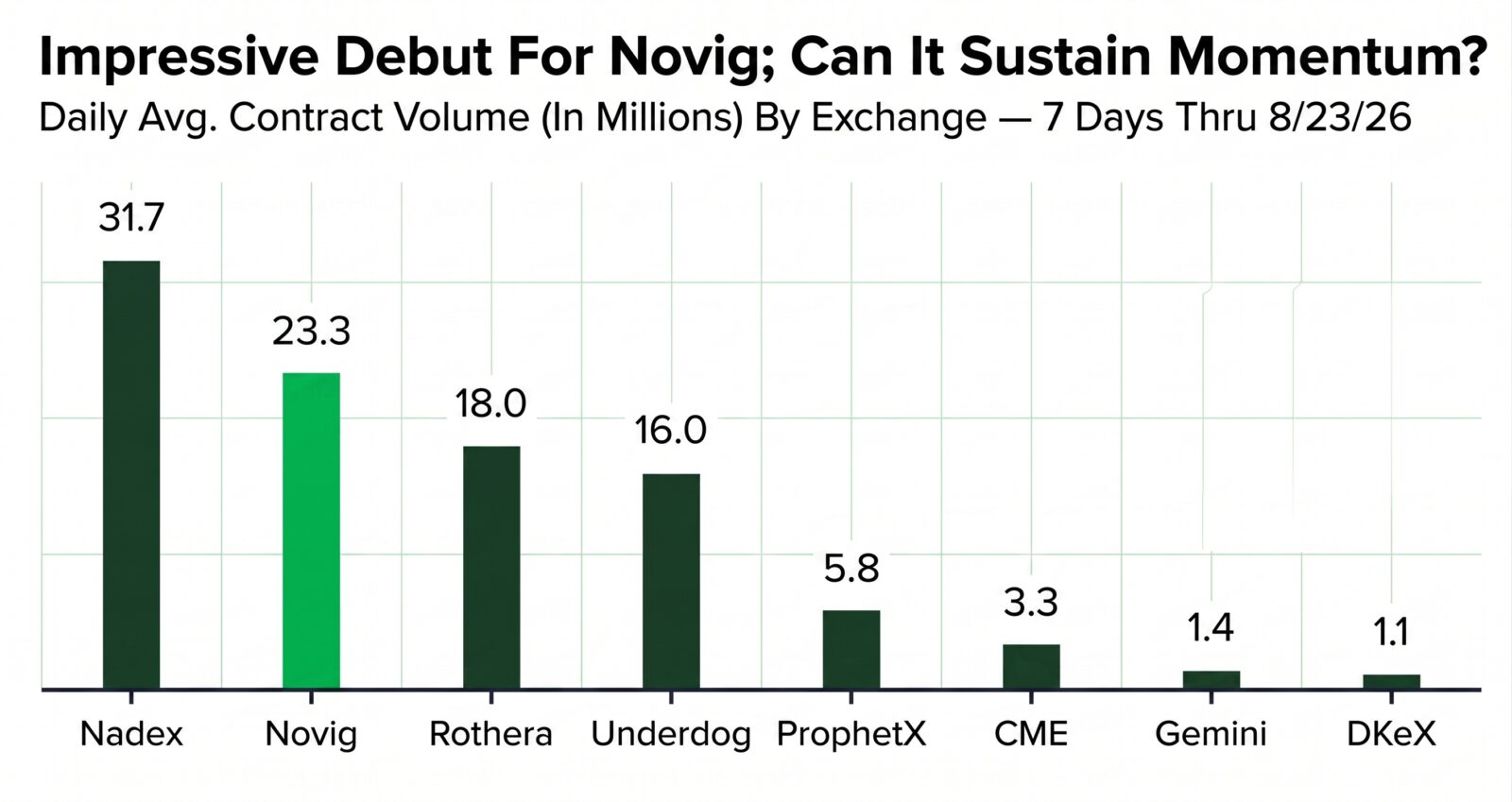
In fact, Novig is one of the most closely watched names in the U.S. prediction market sector. The sports-focused platform launched its real-money exchange last month. ProphetX is not trailing that far behind, as well.
Because prediction markets can list player-specific and micro-outcome contracts, they sometimes offer exposure that traditional books don’t, though availability varies by state and platform.
For the industry, expect sportsbooks to keep competing on price, promotions, and product features to defend NFL betting handle, especially in September when a lighter schedule and prediction-market adoption could pressure month-over-month growth. Over the full season, however, analysts still see a record football handle alongside explosive prediction-market volume.
FAQ: NFL Betting and NFL Betting Odds
Q: How much is expected to be bet on the NFL in 2026?
A: The AGA projects about $29.5 billion in NFL-only handle at regulated sportsbooks, essentially flat year over year, while Citizens projects $35 billion in broader football-related handle, up about 5%.
Q: What are NFL betting odds?
A: NFL betting odds are the prices sportsbooks set on spreads, moneylines, totals, and props that determine your potential payout and help books balance risk.
Q: How big are prediction markets for the NFL?
A: Analysts expect more than $400 billion in notional prediction-market volume from the start of the season through the Super Bowl, with a potential path to around $800 billion in 2027.
Q: Are prediction markets replacing sportsbooks?
A: Not so far. Research suggests only about 4% of sportsbook handle has permanently moved to exchanges, and many dual users increase their sportsbook spending after trying prediction markets.
Q: Where can I find the best NFL betting odds?
A: Compare lines across major regulated sportsbooks in your state and consider prediction-market platforms where legal, since prices and market types can differ.


