


Every December, TIME magazine reveals its Person of the Year, and every year, the months leading up to that announcement become a guessing game. In 2026, that guessing game has a price tag attached to it.
On Kalshi, the CFTC-regulated prediction market exchange, traders are already putting real money behind their picks, and the odds tell an interesting story about how the crowd's collective wisdom is reading the current moment.
Trade on Kalshi's wide variety of prediction markets when you sign up with the Action Network Kalshi promo code. When you and you can
How the Time Person of the Year Market Works
Before diving into the candidates, it helps to understand what Kalshi actually is. Unlike a traditional sportsbook, where you bet against a house that sets the odds, Kalshi operates as a peer-to-peer exchange. Like most prediction market apps, each contract is a binary "Yes" or "No" that settles at exactly $1.00 if correct and $0.00 if wrong. The prices you see are market-implied probabilities driven entirely by the supply and demand of other traders.
That means if a candidate's "Yes" contract is trading at 23 cents, the market is saying there's roughly a 23% chance that person wins the title. Traders can also sell their positions before the final announcement. If you buy a "Yes" at 10 cents and news breaks that pushes the price to 20 cents, you can exit and lock in a profit without waiting for December.
This market has serious stakes. Last year, people placed $19 million in trades on TIME's Person of the Year on Kalshi and $55 million on rival platform Polymarket. It's become one of the most-watched cultural prediction markets of the calendar year.
The Time Person of the Year 2026 Field: Who's on the Board?
Donald Trump: 27%

The current market leader is, perhaps unsurprisingly, the sitting president. Trump has won the title twice before, first in 2016, shortly after winning the election, and again in 2024 following his political comeback. The only other person to have won on three occasions is Franklin D. Roosevelt, who won in 1932, 1934, and 1941.
A third Trump win would be historically unprecedented in the modern era. But his dominance of the news cycle, thanks in part to the US military operations in Iran, makes him impossible to ignore. His "Yes" price of 29 cents reflects genuine market belief, not just reflexive name recognition. Whether tariffs, geopolitical maneuvering, or domestic policy define the year, Trump remains the gravitational center of the global political conversation.
AI: 14%
The presence of "AI" as a standalone candidate is a fascinating wrinkle. TIME has a long history of selecting non-human entities or groups if and when they define the year. The Computer (1982), Endangered Earth (1988), and The Architects of AI (2025) are notable examples.
The problem for "AI" as a pick in 2026 is that the magazine just went to that well last year. The Architects of AI won in 2025, so the magazine may look to name an alternative this time around. Still, at 12 cents, some traders clearly believe the technological revolution is too dominant a story for TIME to look elsewhere.
Pope Leo XIV: 21%
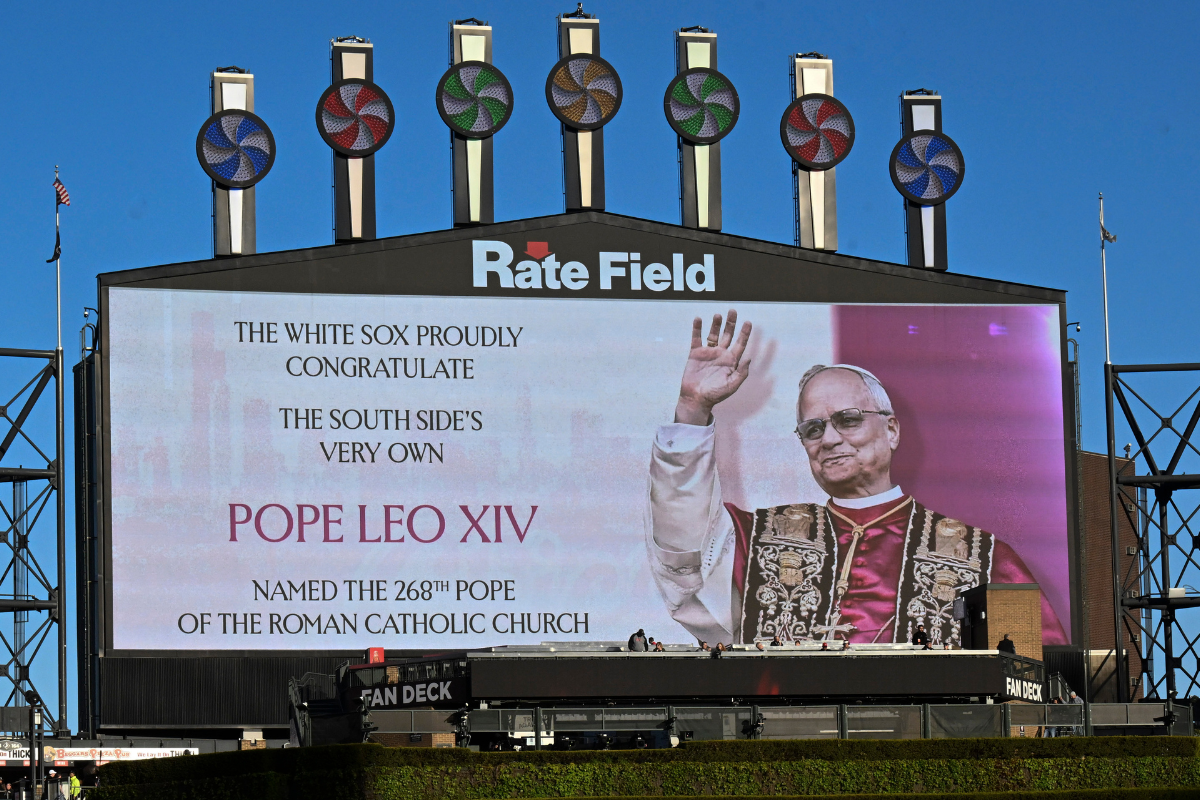
This is the most intriguing long shot on the board. As the first American-born Pope, Leo XIV is a genuine possibility for the cover. This is his first full year in power, and he's already made an impact with a focus on AI ethics and migrant rights. In July, Pope Leo XIV is due to accept the Liberty Medal during the U.S. 250th anniversary celebration, which could push his "Yes" price higher over the coming months.
A 20-cent price represents a market-implied probability of roughly 21%, which is low, but not negligible for someone who could legitimately claim to be among the most globally significant figures of the year.
Taylor Swift: 7%
Taylor Swift became the first person from the arts to be named Person of the Year when she won in 2023, selected for her commercial and artistic influence and her impact on the global music industry. The market is now pricing her at just 7 cents for a repeat, making the "No" side at 94 cents essentially a near-certain payout, albeit a modest one.
In prediction markets, value is about probability versus price. While Swift remains a global icon, TIME rarely chooses the same individual twice in close succession. For traders looking for a safe, low-yield position, the Swift "No" is about as reliable as this market gets.
Zohran Mamdani: 16%
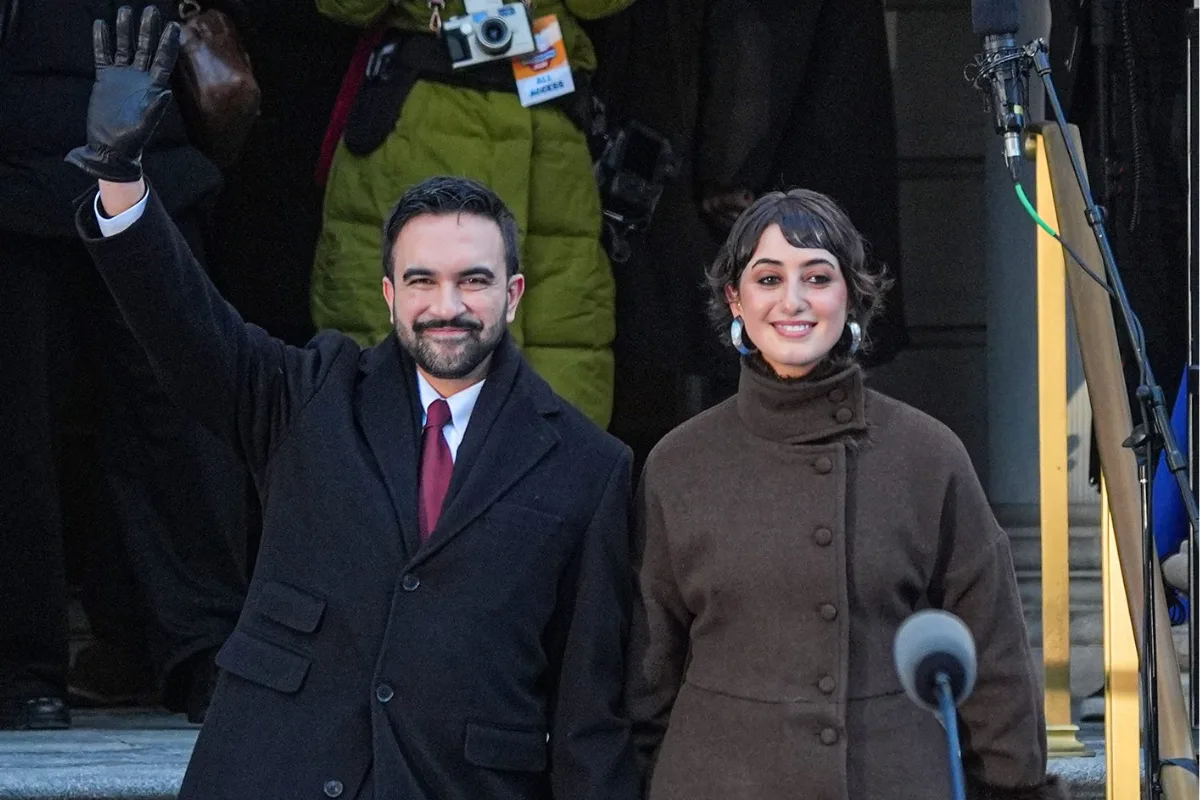
Mamdani's inauguration as Mayor of New York was a massive story in the U.S., but TIME usually reserves Person of the Year for figures with global geopolitical reach. Making the jump from NY Mayor to Person of the Year is incredibly rare and has only happened once before, when Rudy Giuliani won it after September 11th. At 84 cents for a "No," the market is essentially saying his profile, however rising, isn't quite there yet.
The Shadow of 2025's Controversy
Any article about this market has to reckon with what happened last year, because it left a lot of traders furious, and raised genuine questions about how prediction markets handle edge cases.
When TIME named "The Architects of AI" its 2025 Person of the Year, Kalshi and Polymarket reached diametrically opposed conclusions about how to settle contracts. On Polymarket, anyone who had traded on "AI" as a concept lost, because the reasoning was that the companies behind AI tools aren't "AI" in the literal sense. On Kalshi, anyone who had traded any of the Architects of AI individually, including Sam Altman, Elon Musk, Jensen Huang, Dario Amodei, Mark Zuckerberg, Lisa Su, and Demis Hassabis, won their trade.
The fallout was predictably messy. Traders who had picked "AI" as a category and lost were vocal in their frustration. The question of which trades should pay out ignited fury on both platforms, and by reaching diametrically opposite conclusions, the platforms underscored the indispensable role of human interpretation in settling event contracts, despite claims of automation.
This year's market exists in that context. Kalshi's resolution rules matter enormously, and savvy traders are paying close attention to the fine print on each individual contract before committing money.
What Time's Person of the Year History Tells Us
The Person of the Year is famously not a popularity contest. It's a measure of influence, for better or worse. This is why controversial figures like Adolf Hitler (1938) and Ayatollah Khomeini (1979) have been selected alongside figures like Martin Luther King Jr. and Pope Francis.
The award also tends to track the dominant story of the year, which can shift dramatically by autumn. A financial crisis, a major election, a war, a technological breakthrough, any of these can upend even the most confident predictions. Markets will likely reprice dramatically as the year develops, which is exactly what makes this an interesting space to watch (and trade) between now and December.
The Bottom Line
The 2026 Kalshi TIME Person of the Year market is, at this stage, a prediction for who or what will define the next eight months. Trump leads because he's everywhere in the news. The Pope is a dark horse with real upside. AI faces a recency problem after last year's win. And the safe money on the "No" side continues to pile up against candidates like Swift and Mamdani, whose influence, however real, is unlikely to reach the threshold TIME is seeking.
For traders: the market is still early, which means there's time for prices to move significantly before the December announcement. Watch for major news events, such as a geopolitical crisis, a landmark AI development, or a domestic political shock, to create the kind of volatility that prediction markets reward.


