


Voters in Allen, DeKalb, and Steuben counties face a major decision on November 3, 2026: whether to allow inland casino gambling in their county.
The vote could open the door to a new Indiana casino, but it will not decide exactly where the development goes. The three counties are competing for one license, and a county must first approve casino gambling to remain eligible.
The upcoming vote is the culmination of the passage of Indiana House Bill 1038 earlier this year.
Supporters see an opportunity to attract visitors, create jobs, and generate tax revenue. Opponents question whether those benefits would outweigh gambling-related problems and added pressure on local services.
What Does the Indiana Casino Ballot Question Ask?
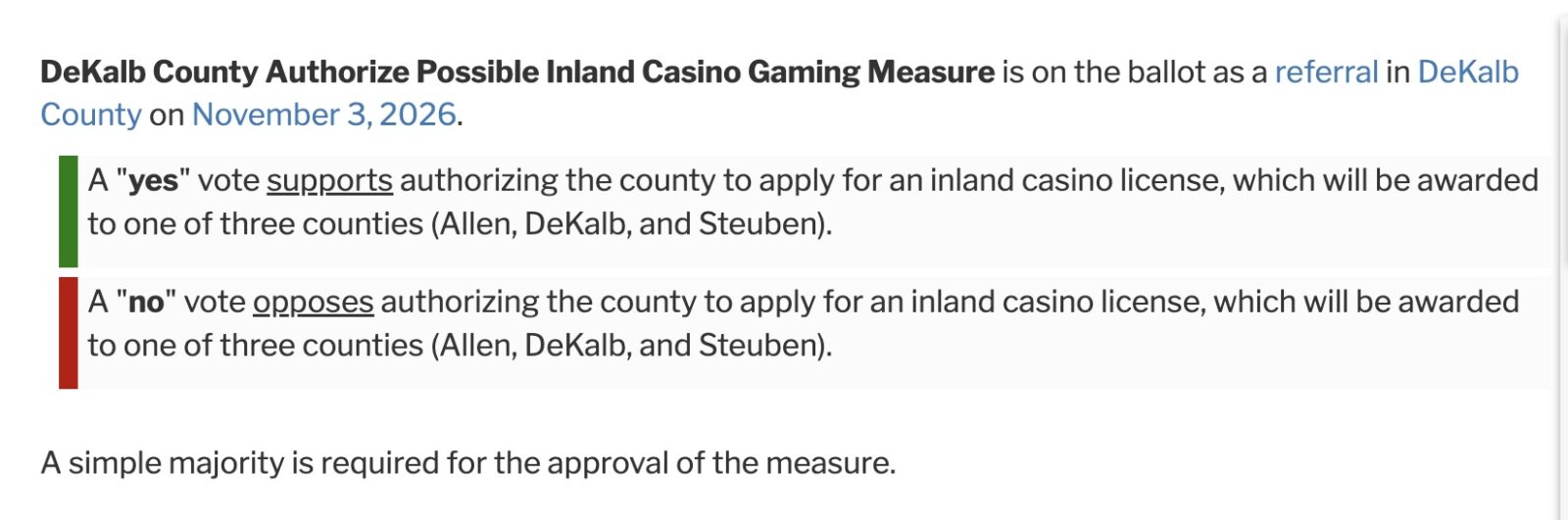
Each county’s ballot asks the same basic question, with the county’s name inserted:
“Shall inland casino gambling be permitted in [your county]?”
A yes vote means the county can be considered as a location. It does not guarantee that a casino will be built there.
The outcome depends on how all three counties vote:
- If multiple counties vote yes, casino operators would compete for the single available license through the Indiana Gaming Commission.
- If only one county votes yes, that county would become the only eligible location among the three.
- If all three counties vote no, the proposal would end under the process described.
The important distinction is between permission and selection. Voters decide whether their county can participate. The state’s licensing process determines which proposed project moves forward.

Why Is a New Casino in Indiana Being Considered?
The proposal follows House Enrolled Act 1038, which Gov. Mike Braun signed earlier in 2026.
The legislation establishes a path for a Northeast Indiana casino project through changes involving existing casino operations, including elements connected to Rising Star Casino in Ohio County.
That connection matters because this is more than a local development proposal. It also involves the state’s broader approach to casino licensing and the future of existing Indiana casinos.
The proposed development would require a substantial private investment. Reported requirements include a minimum investment of approximately $500 million, along with a significant one-time licensing fee.
Supporters emphasize that local governments would not use taxpayer dollars to build the casino. However, private construction funding and potential effects on public services are separate issues. Both have become part of the debate.

Steuben County Highlights Jobs and Tourism
Steuben County officials, tourism representatives, and economic development leaders held a public forum to discuss the proposal.
“Our goal is we’d like to be transparent and let people know what has been going on with the casino and to clear up any misinformation that might be out there that people want to know before they vote on November 3,” June Julien, Executive Director of the Steuben County Tourism Bureau, said.
Questions focused on employment, roads, zoning, tourism, and the possible effects of a casino on the community.
Estimates shared at the forum included approximately 800 employees and $14 million to $16 million in annual gaming tax revenue. For comparison, the county budget was described as approximately $40 million.
Those figures are projections, not guaranteed results. Actual employment and revenue would depend on the selected operator, the project’s size, and its performance.
Supporters also point to Steuben County’s location near the I-69 and Indiana Toll Road interchange. They argue that easy highway access could help draw visitors from Michigan and Ohio.
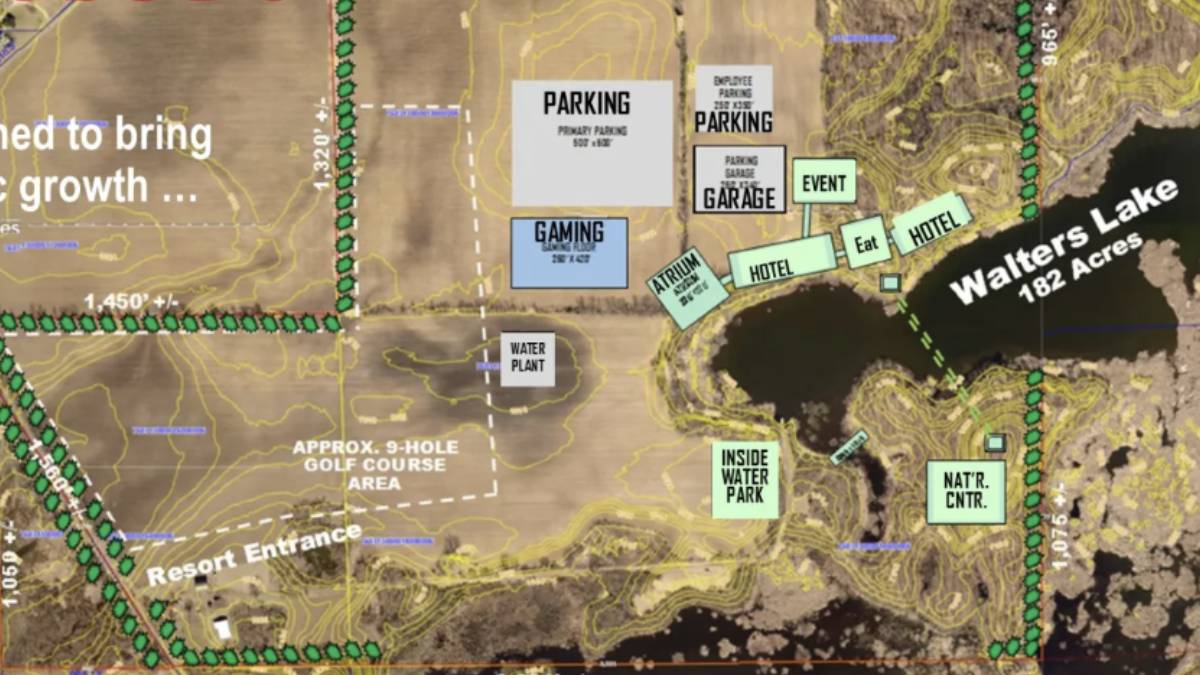
An area near Fremont and Walters Lake has appeared in earlier discussions. However, a location being mentioned publicly does not mean it has received final approval.
The Steuben Fun Wins political action committee is promoting a yes vote through signs and outreach.
Allen County Campaigns Present Competing Views
In Allen County, pro-casino groups such as Advance Fort Wayne and Yes for Allen are promoting the potential economic benefits.
Campaign claims include as many as approximately 2,000 permanent jobs and substantial annual revenue. These estimates should be understood as projections tied to proposed development scenarios, rather than promises that follow automatically from a yes vote.
Opponents, including the Coalition for a Better Indiana, have held public forums focused on possible social costs. Their concerns include gambling addiction, household financial hardship, crime, and increased demand for local services.
U.S. Rep. Marlin Stutzman also publicly opposed the proposal around October 8. He argued that casino gambling could burden low-income and fixed-income residents and would not serve the region’s best interests.
A mid-September poll reportedly showed a statistical tie among Allen County voters, suggesting a closely divided electorate at that point in the campaign.

Where Does DeKalb County Stand?
DeKalb County has had a quieter public campaign than Allen and Steuben counties, according to the information available for this overview.
Its vote still carries the same importance. Approval would keep DeKalb eligible to host the project, while rejection would remove it from consideration under the proposed process.
The amount of visible campaigning does not change the ballot question or the weight of the county’s decision.
What Happens After the November Vote?
If at least one county approves casino gambling, the next stage would involve operator applications and state review.
Some reports have identified an application deadline around December 1. The Indiana Gaming Commission’s review and selection could continue into 2027, followed by construction if a project receives the necessary approvals.
A yes vote therefore would not mean an immediate casino opening. It would allow the licensing and development process to move forward.
Early voting began around October 6. Campaign groups have also reminded voters to review the full ballot for the public question, including those who use a straight-ticket option.
The November 3 decision is ultimately about whether each county wants to remain eligible—not whether a specific casino project has already been selected.


