


The 2026 World Cup was more than a major betting event. The growing popularity of prediction markets helped push revenue to record-highs. In fact, Kalshi experienced massive volume during the tournament.
But it was also a proving ground for online gaming fraud, and the results show how quickly betting fraud can scale when promotions, live sports, and artificial intelligence collide.
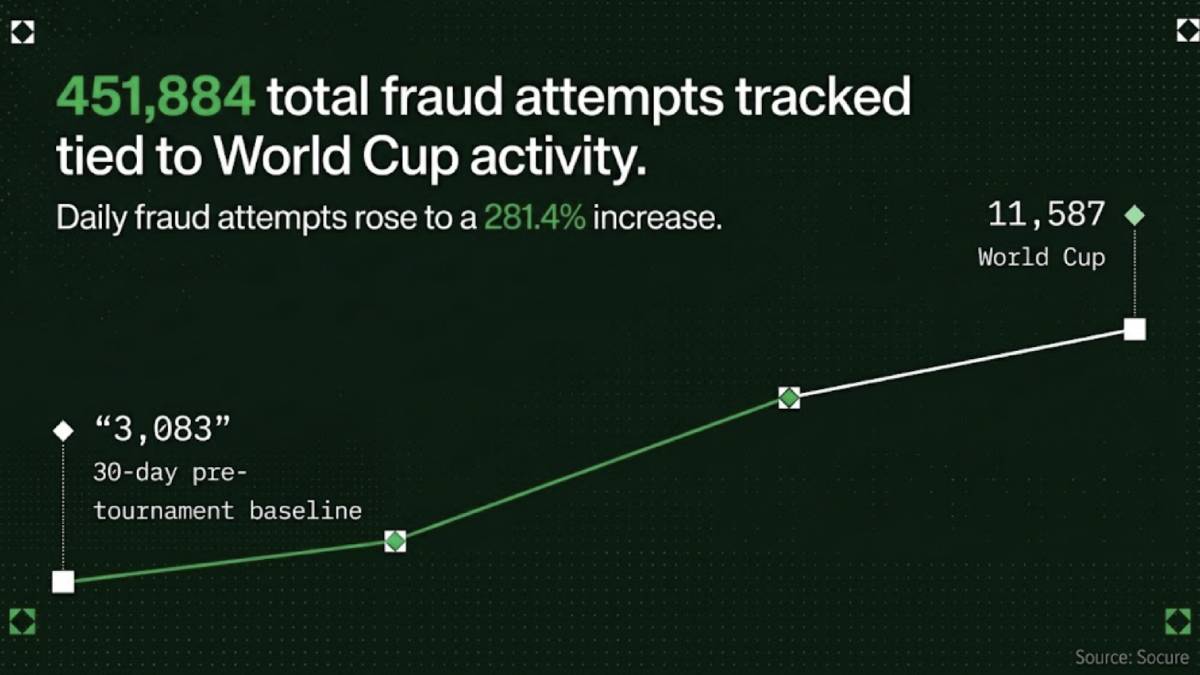
New research from identity-fraud company Socure found that daily fraud attempts tied to World Cup activity rose 281% compared with the 30 days before the tournament. Socure tracked more than 451,000 fraud attempts during the event, with more than 90% involving real consumer identities rather than completely fake profiles.
That last detail matters. Fraudsters are not only creating synthetic identities. Many are using stolen or real personal information to open accounts, claim bonuses, and move money through betting and gaming platforms.
Why Promotions Attract Fraud
Promotions can be powerful customer-acquisition tools, but they also create openings for organized fraud rings. During the World Cup, one operator accounted for 43% of the fraud Socure observed because its offers gave bad actors the richest opportunity.
Sign-up bonuses, referral rewards, and fast onboarding processes can attract legitimate customers. They can also let fraud rings create many accounts, collect small rewards across each one, and repeat the process at scale.
Socure says attackers used unique-looking email addresses, phone numbers, disposable domains, and proxy infrastructure to make coordinated activity harder to detect. In other words, each account may look normal on its own, but patterns emerge when operators analyze identity and behavior across platforms.
Sports Betting Fraud Rises with Big Events
Major sporting events create a predictable spike in traffic, deposits, and new-account activity. That makes them attractive moments for sports betting fraud.
Socure found that risky gaming transactions increased by more than 206% on Super Bowl Sunday compared with an average NFL playoff game. The company also reported that gaming and gambling were targeted by “AI-Fluent Fraudsters” at a rate of 31.7%, compared with 10.9% for traditional fraudsters.
The research describes a younger type of fraudster who is comfortable using AI tools. The average AI-fluent fraudster is under 30, and 41.8% said they committed fraud simply “to see if they could.”
That does not mean every fraudster is highly sophisticated. But AI can lower the cost and effort needed to create convincing accounts, fake documents, and large-scale attacks.

The Final Day Showed How Fast Online Gaming Fraud Can Scale
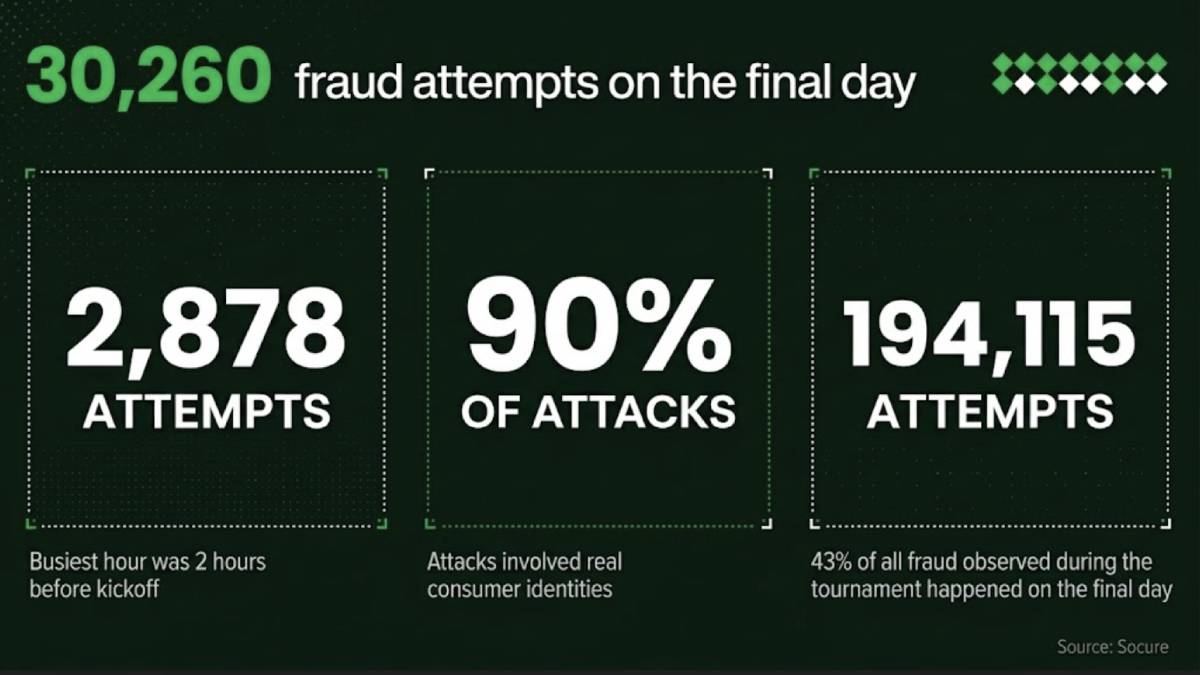
On the final day of the World Cup, Socure observed 30,260 fraud attempts, accounting for 43% of all fraud recorded during the tournament.
The busiest hour came just two hours before kickoff, when fraud activity peaked as bettors and gaming customers prepared for the event. More than 90% of the attacks involved real consumer identities rather than entirely fake accounts, showing how fraudsters increasingly use legitimate personal information to bypass basic security checks.
In total, Socure tracked 194,115 fraud attempts during the tournament, highlighting how quickly betting fraud and online gaming fraud can scale around major sporting events.
What Operators Should Watch
Mike Cook, Socure’s head of fraud insights, said major events create a difficult balance for operators. Fraud volume rises, but so does the number of legitimate customers. That can make the overall fraud rate look lower even when absolute fraud activity is climbing.
Cook recommends that gaming and betting companies tighten controls ahead of major events such as the Super Bowl. "We see the same fraud rings targeting the NFL season, the World Cup and the Super Bowl," Cook said. "They’re focused on high-velocity, large-scale attacks that make smaller amounts of money across hundreds of thousands of accounts."
His recommendations include lowering fraud-score thresholds and increasing authentication for more users, especially when an event begins and fraudsters are most active.
For operators, the goal is not to block every new customer. It is to identify risky behavior early without creating unnecessary friction for legitimate bettors.
Online Gaming Fraud is Spreading
The World Cup showed that online gaming fraud is no longer limited to obvious fake accounts or basic bonus abuse. Fraud rings can use real identities, AI-enabled tools, and promotional offers to attack betting platforms during high-traffic moments.
As the NFL season continues and election-related attention builds, operators should treat every major event as a fraud-prevention test. Strong identity verification, smarter risk scoring, and better monitoring of account behavior can help reduce betting fraud before it becomes expensive.


