


If you're into gambling or planning to hit the World Series of Poker (WSOP), there's something critical you need to know about: the “gambling winnings tax.”
A major change to the tax code in 2026 is shaking up the gambling world, affecting everyone from poker pros to sportsbooks.
The House Rules Committee just blocked an attempt to repeal the new law, and Senator James Lankford, a prominent member of the Senate Finance Committee, recently announced that he is openly opposed to efforts to reverse the tax policy. As a result, gamblers from every walk of life are facing an uncertain future.
With the Super Bowl and March Madness looming, casino operators could see a slowdown. Circa Resort and Casino CEO Derek Stevens told Yahoo Sports, “This could be fixed next year. The reality is that it needs to be done now. It’s already impacting wagering that goes into 2026.”

How the Gambling Winnings Tax Works in 2026
You can still deduct gambling losses up to your gambling winnings, but now that deduction is capped at 90% instead of 100%. Practically, your taxable gambling income in 2026 will be at least 10% of your total gambling winnings reported for the year.
For example, if you win $10,000 and lose $10,000, you may only deduct $9,000, meaning you pay tax on $1,000 even though you broke even. Similarly, if you win $7,500 and lose $10,000, you're limited to a 90% winnings deduction, so you can deduct $6,750 and pay tax on $750.
Professional gamblers in the U.S. are feeling the brunt of the gambling winnings tax. Previously, they could deduct losses from their winnings and only pay taxes on actual profit. Now, they have to pay taxes on total winnings, regardless of losses. For instance, if a poker pro wins $300,000 but loses $280,000 over the year, before 2026 they’d be taxed on $20,000. Now, they’re taxed on the full $300,000, placing them in a tough financial spot.
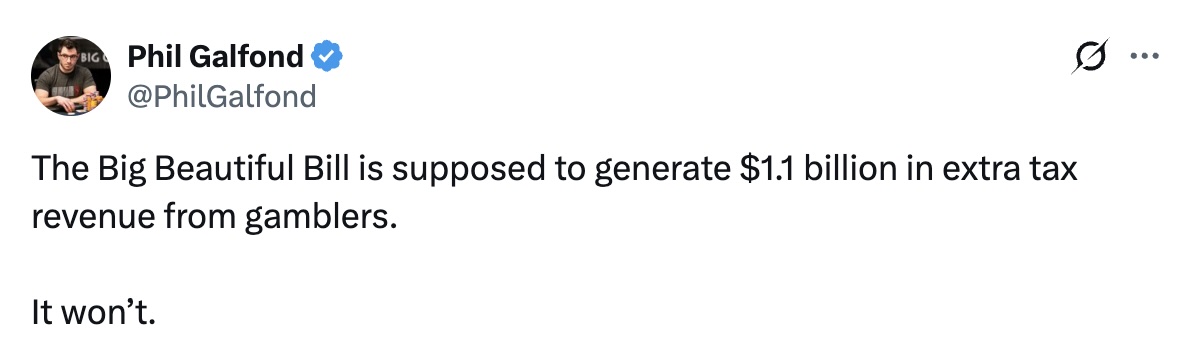
This change has sparked a debate over fairness. Critics call it a “tax on phantom winnings” that discourages legal gambling and could potentially boost illegal or offshore alternatives. The bottom line is that reporting gambling wins and losses has changed.
Impact on the World Series of Poker
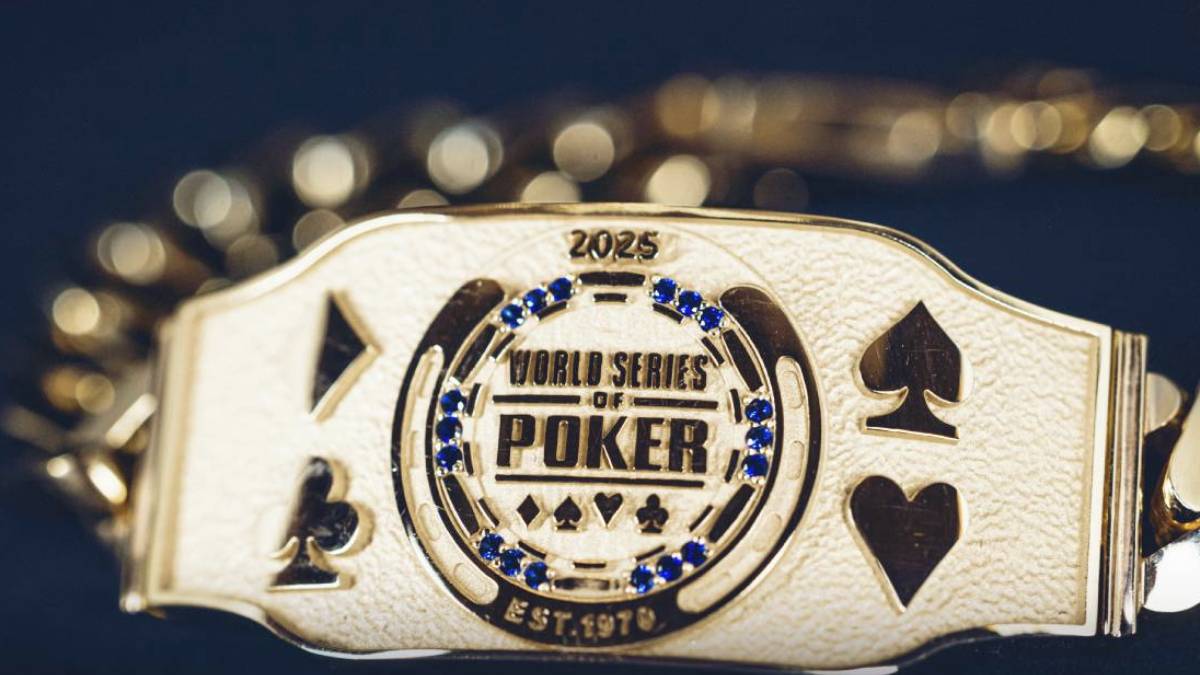
The WSOP, one of the most important events in the gambling world, is already causing concern due to this tax change.
Players, including Poker Hall of Famer Erik Seidel, have expressed worries that many professionals may skip events to avoid heavy tax burdens. Seidel told Rep. Dina Titus (D-NV), who introduced the FAIR BET Act, “I am kind of forced into retirement. I am playing less than 10% of the events that I was playing. Everyone who I’ve spoken to plans on either cutting back or stopping. They can’t continue with this tax.”
Fewer pros mean less excitement and smaller crowds, reducing income for Las Vegas casinos during normally quiet summer months. Additionally, Las Vegas is experiencing a tourism decline with no relief in sight.
Titus’ FAIR BET Act would restore the 100% deduction, but as mentioned above, it has already been blocked by the House Rules Committee.
Rep. Mark Amodei, Nevada’s only Republican in Congress, has vowed to work alongside Titus to restore the previous gambling loss deduction.
Consequences for Casinos, Sportsbooks, and Prediction Markets
The tax change impacts more than just poker players.
Casinos and sportsbooks are worried too, as high-stakes play might decrease, affecting profits. Sportsbooks also face uncertainty about how prediction markets will be taxed, which has become a major issue.
Prediction markets, which offer bets on outcomes like political elections, could face similar challenges if taxed like gambling. However, if treated under a different tax framework, they could gain financial advantages. Qualification under Section 1256 would allow more favorable tax treatment, creating a competitive edge over traditional gambling options.
Efforts to Repeal the Gambling Winnings Tax
Both Republicans and Democrats are interested in reversing this rule change, especially in Nevada, a major gaming hub. In addition to the FAIR BET Act, lawmakers are also working on related legislation tied to the 2026 federal budget.
- The WAGER Act is another piece of legislation aimed at changing how gambling taxes are handled.
- Other bills, like the FULL HOUSE Act introduced by Horsford and Miller, pursue the same goal.
- House Ways and Means Chair Jason Smith (R-MO) has also pledged a reversal following hearings held in Las Vegas.
While the timing remains uncertain, sources indicate that a fix would need to occur by April 2027 for tax purposes, likely applying retroactively or to future years. As of early 2026, no fix is in place yet, but momentum suggests that corrective legislation is forthcoming.

How Casinos Might Adapt
If the tax rule remains, casinos may employ strategies to retain interest.
Possible changes include more affordable tournaments, enhanced comps for long stays, and less emphasis on high-stakes events. Casinos may also lean into non-gambling attractions, like shows and restaurants, to boost revenue.
For sportsbooks, promotions such as bonus bets and odds boosts could help offset the tax impact. Operators may adjust product offerings to attract more bets, while lobbying efforts continue to establish tax parity between traditional gambling and prediction markets.
In short, the gambling winnings tax is a game-changer for the U.S. gambling industry. Whether you’re a player, casino, or sportsbook, adapting to these changes is crucial. We’ll see if Congress addresses the industry’s concerns before the impact deepens.


