


This is your guide to reshaping how you think about same game parlays so you can hit more, and hit bigger. It's not about shoving more legs into SGPs. It's about exploiting the relationships between certain bets and bet types.
The scale of what DraftKings, FanDuel, bet365 and other modern sportsbooks offer is too much to comprehend. They have to be ready to calculate millions of possible parlay combinations at once.
They simply can’t account for every angle and situation within these complex pricing models. They have to take “league-wide truths” and apply that math to every situation. That results in them pricing the relationships between every bet the same for every team and player.
Their odds aren’t necessarily wrong.
And the math creating the parlay prices isn’t wrong.
And books build in tons of cushion (aka hold).
But they have to take a few numbers and price thousands of markets off those assumptions.
Your job is to identify the situations in which you think the broad pricing infrastructure is missing something, and build your SGPs around that. And don't worry — I'm not recommending you only bet SGPs during black swan situations like Draymond Green taking the opening tip then sitting the rest of the game. These opportunities exist daily, especially in football, because football is such a complicated sport to model and price.
Even with hundreds of world-class engineers and data scientists, sportsbooks have an impossible task.
How could they ever factor in something unique about the way the Sacramento Kings play vs. the Utah Jazz, let alone Finnish soccer club FC Inter Turku?
And they don’t want to even attempt it — to offer SGPs on the NFL and the Bulgarian Second League and the NBA and Mexican women’s basketball, they have to create broad pricing infrastructure. And there will always be an arms race among sportsbooks to offer more.
Don’t take my word for it. Two industry experts wrote an entire book on it.
I've included examples of situations to look for, but hopefully you can take these learnings and start to identify holes in the SGP products as they open and close.
1. How to Think About Correlation (or Usually, Negative Correlation)
Correlation is foundation of the SGP revolution. Sportsbooks used to never let you parlay things from the same game — even on something as simple as betting the favorite and the over at a normal +260 price for a two-legger — because you you got the advantages of a parlay multiplier on something mathematically reliable.
In college football, the over hits 54% of the time when the favorite covers, because more points lead to bigger margins of victory. They don't want to give you full parlay prices for something that mathematically reliable.
Then sportsbooks figured out how to calculate the correlation/relationship between every bet at scale, charged you different prices depending on how strong those relationships are, and the modern SGP was born.
But because the scale of this math is so large, they can't account for every nuance. They have to price most relationships the same. This is where your advantages come into play.
Take this example below — Jordan Horston plays for the Seattle Storm, so if she goes under across the board, it's unlikely Seattle wins, right? Assuming she plays the number of minutes sportsbooks expect, sure.
But bet365 over-projected her usage, and suddenly the math on the correlation changes, because all the points and rebounds she doesn't get affect her team less. Because she wasn't on the floor. We'll get more into these usage examples below, which are some of my favorite SGP angles.
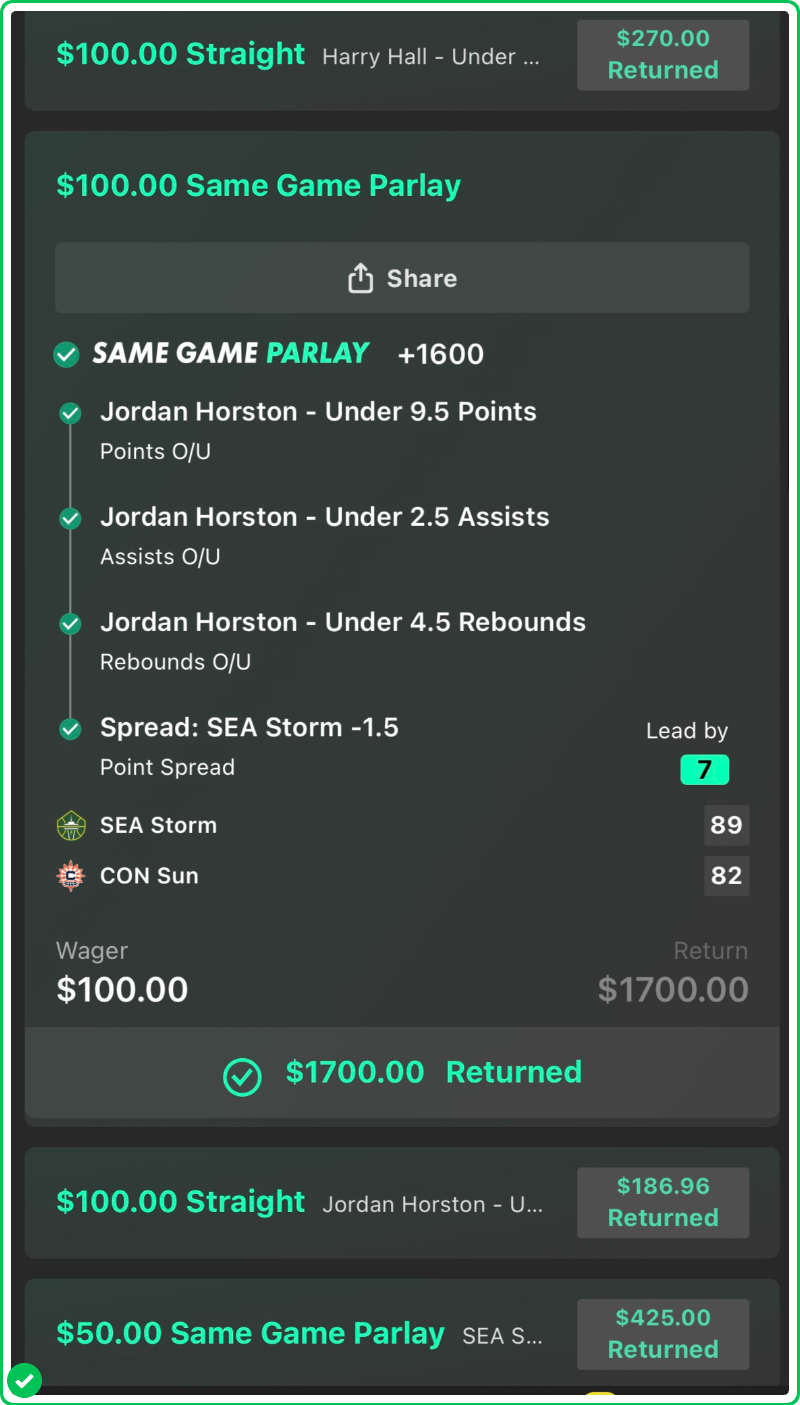
This doesn't mean you should broadly bet players to go under their point totals and their team to win. But when there are factors like this at play, it works.
Types of Correlation Advantages
I bucket these correlations into two main categories:
Mostly Unrelated Outcomes: These bets have some slight negative correlation so you’re getting a better price, but they still very much fall within the regular range of outcomes in a game.
- A favored QB going over his rushing attempts and the underdog covering.
- A basketball player with an increased role going over his point total but his team losing.
- A soccer game going under, but one or both teams going over their total shots (not shots on target, though). Certain offenses love to take low-quality shots, but are never actually a threat to score.
- A running back going over his rushing total but his team getting blown out and not covering.
Narrow Outcomes: The two things are truly adversary. The payouts will be juicy, but you need a fairly special situation.
- A big-player WR like Christian Watson going over his yardage but under his receptions. They’re pricing the relationship of those bets the same for Watson as they are for any other receiver.
- A pitcher going over his strikeout prop but under his total innings pitched.
- Auston Matthews scoring 2 goals for Toronto but the Leafs losing the game.
Correlation Edge Examples
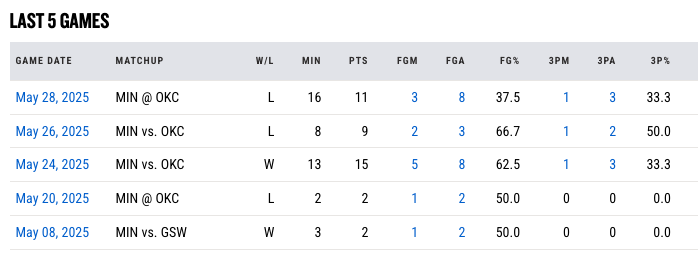
1. The Bench Player Blowout: In Game 5 of the 2025 Western Conference Finals, the Thunder beat the T'Wolves by 30, but one of the last guys on Minnesota's bench, Terrence Shannon, scored 11 points. His pregame total was 3.5. The sportsbooks have to assume that if Shannon hit his 10+ point prop at +500, it's more likely the T'Wolves covered, since that was 7-8 extra points they got out of an obscure bench player.
Well in this game, not exactly. Shannon scored 6 of his 11 points in the fourth quarter when his team trailed by almost 40 points. Due to his increased playing time in a blowout, he ended up taking shots away from the other players on his team. So his 11 points didn't end up helping Minnesota. Shannon scoring 10+ points and theThunder covering an alternate spread of -16.5 paid more than +3000.
Shannon only played significant minutes in two blowouts in that series:
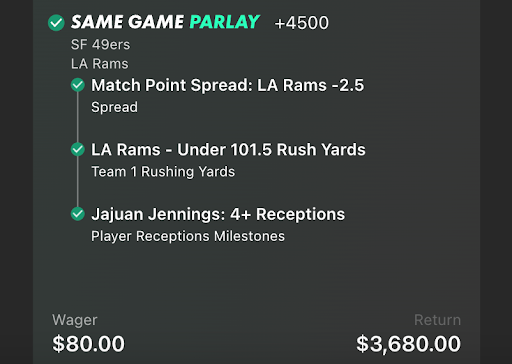
2. The Funnel: There's this idea in football that some defenses turn into pass or run "funnels" either by design or by strength. There are some teams that are so much better at defending either the pass or run that the other team has no choice but to try to exploit the other.
Sportsbooks believe — rightfully so — that you're not likely to win a game in which you don't run for a lot of yards, since winning teams are often running the ball in the second half. But in these "funnel" situations where a team is much better at one aspect of defense than the other, they're overestimating the relationship between these two bets.
This applies to a number of different sports and situations:
- Soccer teams that play tight boxes and force other teams to shoot from distance (leading to an increase in attempted shots, but not scoring chances).
- A basketball team that aggressively defends the 3-point line and limits 3-point attempts but gives up plenty inside.
- A football team that gives up plenty of yards but limits big plays.
- A football team with a great run defense and bad pass defense, and vice versa.
Across many sports — and in football especially — teams adjust their strategies and approach based on their opponents. Sportsbooks are using median and average outcomes that can't account for every minute detail, giving you an edge when constructing SGPs.
3. Cluster Stats & Medians vs. Averages: Angel Reese is the perceived queen of "cluster rebounds" — she can grab three or four boards at a time off her own misses, which means Reese's raw rebound totals overstate her possession-creation value. So the relationship between her huge rebounding games means less to her team than it would to another player's big rebounding games. Most players rebounds end a defensive possession, or create a new offensive possession, which has a huge impact on the likelihood of her team winning.
But this concept applies across many stats in many sports. Some players are simply more likely to have outlier performances (both good and bad) based on the way they play. But sportsbooks have to price the relationship between each stat for players the same.
- A big play wide receiver who can either put up 0-0-0 or 100+ yards.Colts WR Alec Pierce is one, as he led the league in average depth of target last year at north of 21 yards per target; Bills WR Khalil Shakir is the opposite, with his near league-low 5.48 aDOT among qualified receivers. They finished with nearly identical yardage totals but in very different ways, making Pierce a massive hit in some alternate receiving yard SGPs last season. The odds may be different, but the correlation between Shakir and Pierce going for 100+ yards and a touchdown is the same.
- A 3-point shooter who only takes 3s and never shoots 2s (Payton Pritchard).
- A hockey player who doesn't create offense on his own but cleans up rebounds in front of the net to score, scoring tons of goals on fewer shots than a true elite scorer (Chris Kreider).
4. Usage Changes (or books being incorrect about usage): We'll get more into usage changes below, but a huge correlation advantage is identifying spots where the sportsbook is wrong about projected usage, or when the usage shifts are unknown.
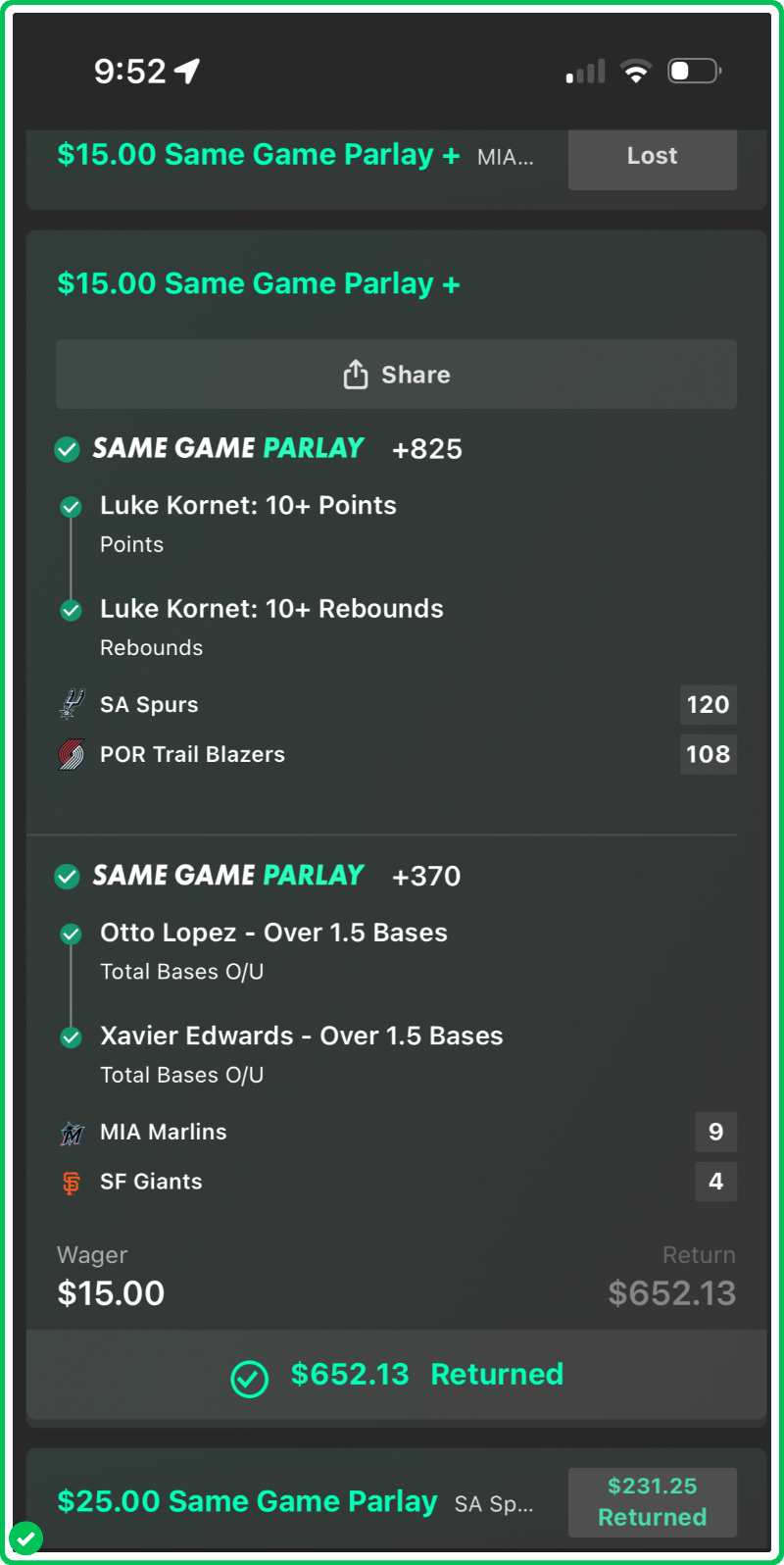
When Victor Wembanyama misses a game for the Spurs, Luke Kornet now gets most of his minutes.
Of course, sportsbooks knows when Wemby is set to miss a game. Kornet's pregame props will go up. But they can't know exactly how San Antonio will play without their superstar center. They're not going to give Kornet all his shots, and they're not going to run the offense through him.
But in this situation, they underestimated Kornet's minutes and usage. You can see in the FantasyLabs Game Flow tool that the Spurs rotation stays exactly the same with Wemby out for a full game, and Kornet in. There's upside in the longtail outcomes like alternate points and rebounds when we don't know how teams will change without key players in the lineup.
5. Uncertainty Is Your Friend
The guy at the water cooler who says he won’t bet something because “there’s just not enough information” and he “needs more data" is totally missing the point. I hear this about baseball a lot early in the season — there are many reasons to not bet baseball, but this is not one of them.
What, in a month, you’re going to have a bunch of data that other bettors and sportsbooks don’t have? Your biggest edge is that no one knows anything. Will you be wrong sometimes? Yes. Can you use this uncertainty to hit big? Absolutely.
Here's the 2024 college football season's three-week rolling average of Standard Deviation Spread Error — which measures how volatile/unpredictable the spreads were. As the year goes on, the spreads get sharper.
6. Longtail Outcomes
Remember when I said shoving together a bunch of stuff from the same team is a bad idea? Exceptions to the rule, or whatever.
Depending on the sport, there are certain things that can only happen within the perfect game environment. But when they do hit, they hit big. It’s most obvious in football, which even DraftKings’ engineers admit is the hardest sport to model.
In Week 5 of the 2024 NFL season, both Trevor Lawrence and Joe Flacco threw for 350+ yards. Several receivers also went off for huge totals as a result. If you bet alternate lines on almost any of them, you won big.
But those 700+ total passing yards weren't a steady trickle throughout the game. So many happened late in the game as teams traded the lead. Flacco threw for 134 yards (38% of his game total) in the final 3.5 minutes.
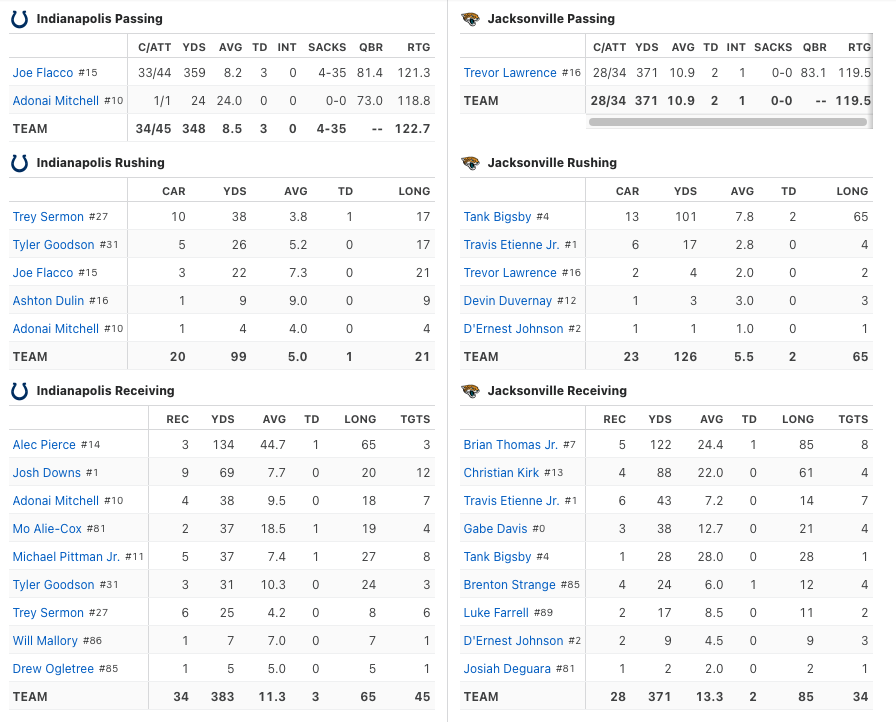
So this would not have been possible without:
- Both quarterbacks being good enough to throw the ball
- Both defenses being bad
- Both teams scoring enough that the other team needed to continue throwing
- The score being close enough at the end that the teams traded leads
- Bonus: Colts receiver projections were suppressed just a bit by four previous weeks of Anthony Richardson at quarterback.
There are certain game environments that set up for outsized returns, and when you think you have one, don't be afraid to push. A team winning in a blowout is often bad for SGPs.
Unfortunately, sportsbooks have really hampered your ability to take advantage of longtail scenarios in which you expect very little scoring. There are almost no more alternate unders available and many books don't let you bet a player not to score a touchdown or not hit a home run. It's really hard to capture the extreme downside.
There still are some outlier situations, like extreme weather, that can cause drastic gameplan changes, but you really need to be aggressive and include lots of legs.
FanDuel has also introduced "Your Way" in some states, which allows you to select any prop line
7. Usage Changes
Other than the start of a season, one of the best angles you can play on SGPs is on usage changes. Injuries, lineup adjustments, role changes, coaches wanting to play a different way. Even if you don’t know who will take the shot attempts left vacant by an injured point guard in the NBA, they have to go to someone.
Consider this hypothetical — if an NBA bench player projected for 7.5 points scores 15 points, it’s more likely that the game went over the total, right?
- Yes: If that bench player went 7/7 shooting.
- No: If that bench player went 6/14 (taking way more shots than expected) and took away 7 shots from someone else on his team.
This is just one example of how usage changes can allow you to get inflated prices on two things the sportsbook believes is contradictory.
Think of projecting games like a pie chart. The Memphis Grizzlies took 93 shots per game last season, and when Ja Morant was healthy, he took about 23 of them. So when he's out, those shots have to go elsewhere.
But the hard part for sportsbooks is that they can't just redistribute Morant's shots equally across the whole roster. Memphis may decide to play a little differently — smaller lineup, bigger lineup, a guy who never plays otherwise. They may slow their pace. They might speed up.
When Morant was out, the players who benefitted the most weren't point guards — the usage went to two big men, Jaren Jackson and Marvin Bagley. You can't just swap in a replacement.
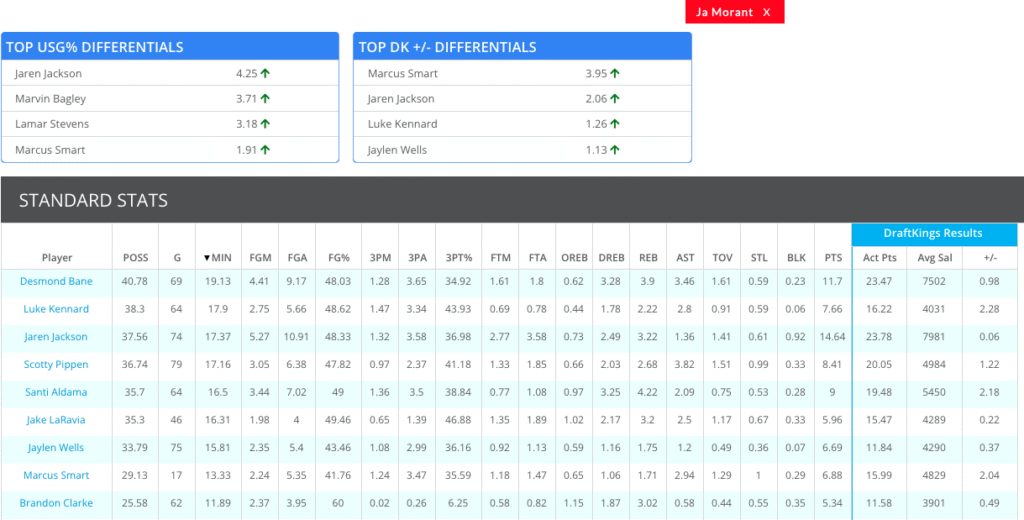
Alternate props are a great way to attack usage changes, because sportsbooks have to make educated guesses about usage, but they're often wrong, because no one really knows the answer.
Here's a winner from one of Caitlin Clark's first missed games for the Indiana Fever earlier this season. In Clark's last game before getting hurt, Kelsey Mitchell took 13 shots and Clark took 14. In this game, Mitchell took 24.
It's just so hard to accurately redistribute all of Clark's 14 vacant shots, especially when she runs so much of the offense. Again, no one really knows how it will play out, even sportsbooks.
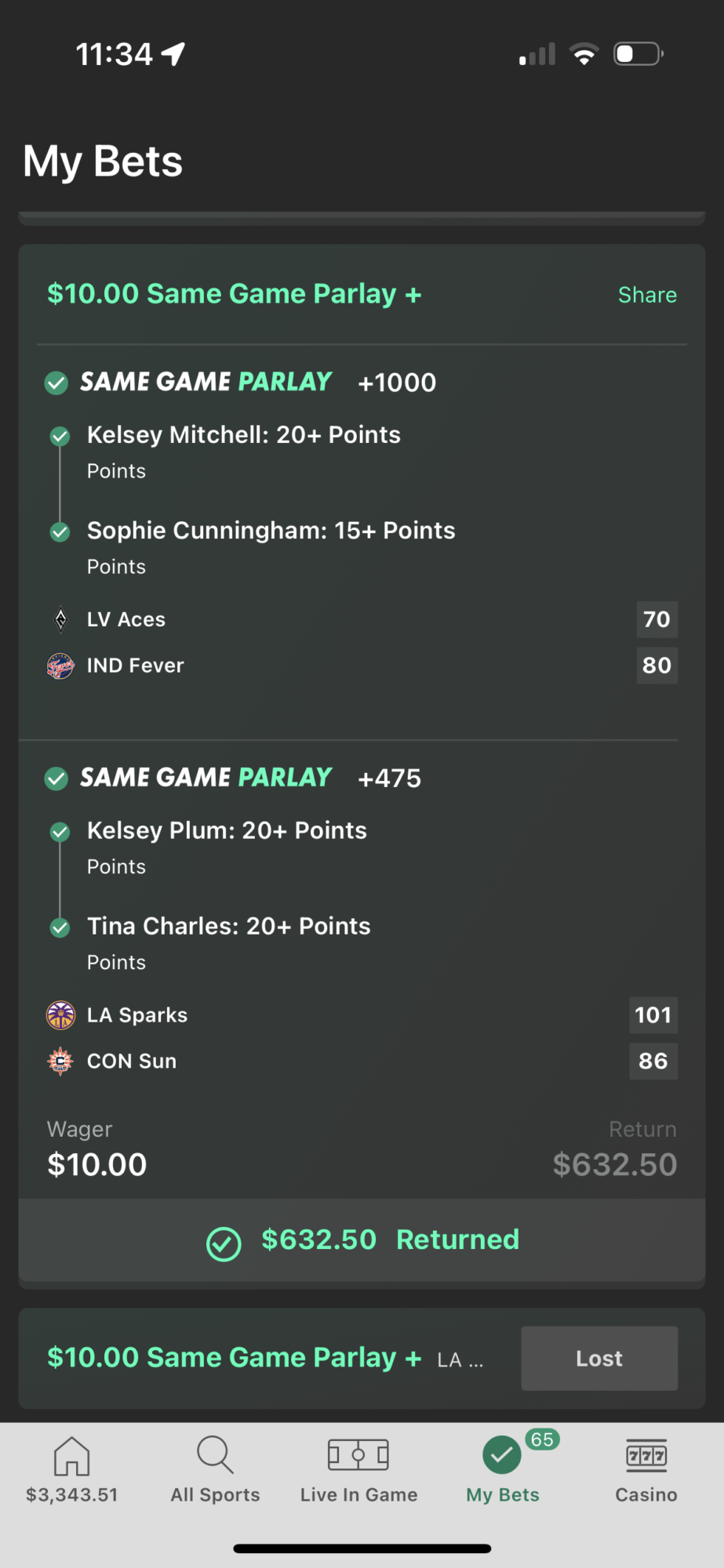
Of course you need some luck — Cunningham's usage didn't really end up increasing, but she had a brilliant shooting night, and Mitchell needed 24 shots to get to 20+ points. But the path to a big return was there.
This SGP dovetails nicely into my next tip:
8. SGPx > SGP, Usually
The more legs you add to a same game parlay, the more you’ll get squeezed by the sportsbook. Every bet comes with a correlation tax built in, even if there's no correlation between the two events.
Let’s look at the prices when you take two MLB players to hit a home run with identical odds — one SGP with two players from the same game (on opposite teams), and an SGPx with a player each from two different games.
The SGP: One Game with 2 HR Props (+2700)
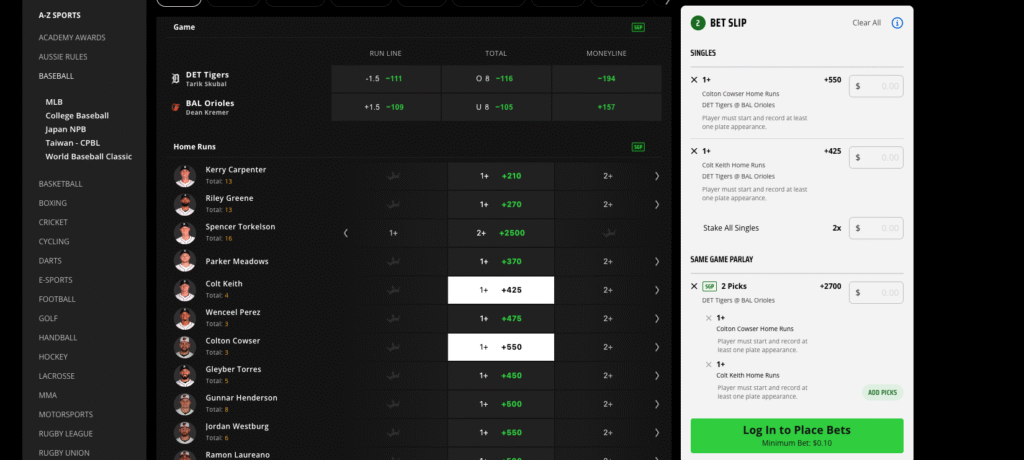
The SGPx: Two Games with One HR Prop Each (+3312)
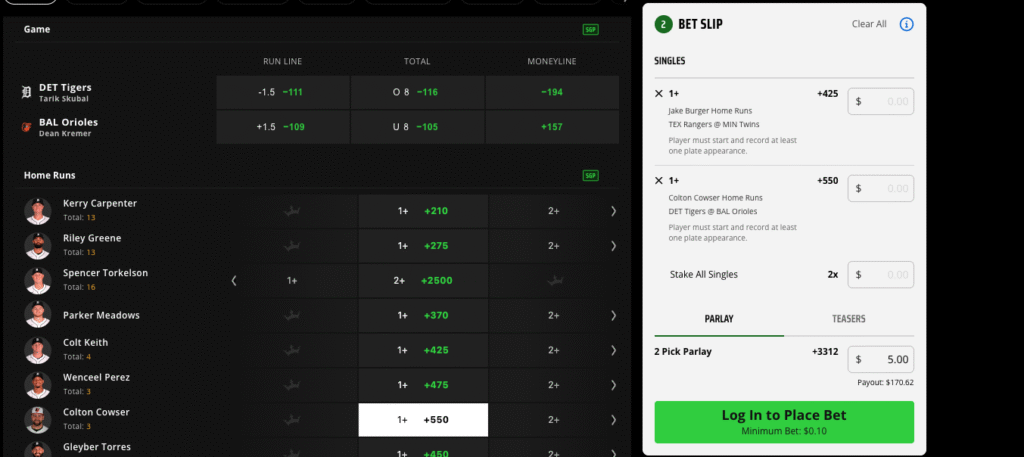
Just because they’re in the same game, you’re getting a much worse price despite identical odds on each player to hit a home run.
You could argue that if one homers, maybe something has happened that has caused home run conditions to improve (pitching, weather, etc.)
But home runs are independent for batters on opposite teams. If one pitcher implodes, sure, two Orioles may be slightly more likely to homer. But on offense, these guys are all playing a different game. They’re all facing different pitchers. The only argument I can make is the weather changing, but is that enough of a risk to lose more than 10% of your value?
And the sportsbook already told us the prices — +425 and +550. Any info about the opposing pitcher or weather is accounted for in those odds. So you're taking a 10% haircut because you're betting something in the same game.
Parlay more, smaller SGPs from different games together, instead of creating bigger SGPs.
9. Why Sharps Are Turning to SGPs …
Most sportsbooks will limit you quickly if you show signs that you may be decent at betting.
You don’t even have to win. You just have to beat the closing line (i.e. you’re betting props consistently at -110, and they’re often ending up at -140). That's the easiest way for sportsbooks to identify players who might be winners.
That’s why certain types of SGPs are turning into a weapon for sharp bettors:
- There is no closing line. You can make infinite parlay combinations, so they can’t track your CLV.
- SGPs are where they make great margins from most bettors, so your account will get far less scrutiny.
10. Ranking Every Sport's SGP Vulnerability
There are two things we care about when trying to find same game parlay flaws:
- How difficult the sport is to model
- How many different types of markets are offered
If a sport or league is impossible to model, sportsbooks just won’t offer it. But the most important thing to many modern sportsbooks is offering the best SGP products, so they don’t want to offer less. They want to figure out ways to offer more.
Modeling Difficulty
The SGP software looks at the game state (current score, time left, who has possession, etc.) and then uses its extensive formulas based on past data to spit out prices. It doesn���t really know much about what’s actually happening in the current game, other than the data points in the boxscore. If there’s something monumental, like a QB injury, they’ll take it off the board. But for most games,
The hardest sport to model by far is American football, because strategies change so much depending on the game state. DraftKings engineers even admit that modeling football is a massive challenge.
The easiest sports to model are net sports, like tennis. All you have to do is determine the ability of each player and do some basic math to price how likely it is that Player A beats Player B on each point. Then you can price hundreds of markets with confidence — Player A to win his next service game to love, Player B to win in straight sets, etc. The scoring is very linear, and there isn’t much left to chance.
Available Markets
When I say “available markets,” I don’t mean the sheer number. Pricing the Chiefs on every alternate spread all the way up to -99.5 just so you can see you have 100 markets does nothing for me.
I’m looking for diversity of markets:
- Can you bet on things happening (overs) and things not happening (unders)?
- Do they have alternate player props?
- Do they have specific, niche team stats (like total shots or corners; player fouls or turnovers; I don’t care that they offer First Team to 50 Points in the NFL).
1. NFL
Modeling difficulty: 4.5/5
Available markets: 4/5
The NFL is an SGP wonderland for several key reasons.
Football is super complex to model. Teams make large strategic shifts based on the lead and how much time is remaining. Player usage can vary greatly by game. There isn’t a huge sample of games and plays. This makes modeling difficult, and finding little edges much easier if you’re following the league and teams closely. In the U.S., there are tons of available markets — touchdown scorers, passing yards, rushing attempts, total team yardage.
Unfortunately, some sportsbooks have tried to eliminate many of their flaws by just removing vulnerable markets. DraftKings doesn’t let you bet rushing attempts in SGPs. The books will always try to steer you into overs. They don’t let you bet players to not score a touchdown. And so on.
2. International soccer
Modeling difficulty: 4/5
Available markets: 3.5/5*
Available markets will vary greatly by sportsbook and type of game (i.e. World Cup vs. CONCACAF friendly). In major tournaments, you can get some very beatable markets like throw ins, goal kicks and fouls.
Soccer isn’t a super complex sport to model, but International soccer data is far less consistent than a unified league like the NFL both in how it’s captured and what it’s capturing.
Opta, which is what Football Reference uses for its expected goal and more “advanced” metrics, only tracks matches in major events, and not in qualifying or friendlies for most countries. Other places do track xG, but depending on location, it may not get the same level of detail in shot tracking as a World Cup final will get.
Also consider that there aren’t a ton of matches to begin with. And the US national team trots out a completely different lineup for the Gold Cup than it does for Copa America. And in the Olympics, it’s mainly a U23 team.
The samples are small, and the upside is high.
3. NBA
Modeling difficulty: 3/5
Available markets: 4.5/5
Basketball is not a super difficult sport to model, because the scoring is linear. Teams trade possessions and it’s not hard to score. Every NBA team will get baskets. They have the same number of possessions per game.
Your edges are in player usage and roles.
NBA teams are just a pie chart of minutes and usage. When new players get inserted into the lineup (which is constantly in this league), the books don’t have the same clarity on that pie chart.
To reiterate an example I used earlier — a bench player going 6/6 from the field is different from going 6/12. Those six misses represent shots his teammates did not take. So if you believe that bench player is in line for an increased role, you can find edges.
4. NCAAF*
Modeling difficulty: 5/5
Available markets: 2.5/5*
*If you live in a state with college player props, the available markets will be higher, and it’s probably my favorite SGP sport. PrizePicks and Fliff are options in 30+ states each.
Modeling the NFL is a bit easier than college football because there are fewer teams, and they all more or less play the same type of game. Last season, 86% of NFL spreads were between 0 and 7.5. Almost 70% of totals were between 40 and 48.
College football is the opposite. You have 136 FBS teams now, and we’d make the best team (Alabama) a 53-point favorite over the worst team (Kent State). Totals range from 35 to like 78.5.
Teams also play very different styles. You’ve got Army running the ball on 85% of its carries, and Hawaii running on just 35%.
The sample size for college football is even smaller than the NFL due to games played and roster turnover. If a sportsbook is trying to model the talent/ability of 136 teams, they need to use recruiting data from 247Sports or Rivals because many players have never even seen the field in college. While these companies do a great job, it’s an impossible task.
Sportsbooks don’t offer props on every game, but they do for all midweek games, and marquee games on Saturday. It’s a gold mine, thanks for the lack clarity on injuries and role changes in CFB.
5. Major European soccer leagues
Modeling difficulty: 2.5/5
Available markets: 4.5/5
The modern sportsbook was built out of Europe, starting in about 2000. The same game parlay has existed there for a while — they call it a “Bet Builder.”
So there are lots of markets available for major domestic leagues like the EPL, though soccer isn't a super complex sport to model.
6. MLB
Modeling difficulty: 3/5
Available markets: 4/5
If NFL modeling is about assumptions, MLB is about hard data and events.
One MLB pitch has like a dozen data points. Scale that to an entire game, and you’re in the thousands. An entire season, and it’s incomprehensible how much data you’re dealing with.
The advantage for modelers and the disadvantage for bettors is that each at-bat is independent. You can string together parlays with the leadoff hitter to score a run and the second batter to get an RBI, but you’re going to pay for it. That situation is super easy for the books to model and price.
There are some “longtail” situations in baseball you can attack, like an offense matching up a truly horrendous starter and bullpen.
7. Tennis/Volleyball/Table Tennis
Modeling difficulty: 1/5
Available markets: 2/5
Most people aren’t clamoring for our volleyball plays anyway, but unfortunately, “net” sports are difficult to exploit.
You can only get one point at a time. The replay systems leave no room for error. There may be some small strategy tweaks, but the goal is to always score the next point. There’s never a situation like football where you can sit on a lead, or use a different type of offense, to ice the game.
8. NASCAR/Motorsports
Modeling difficulty: 3/5
Available markets: 2/5
There are lots of in-race strategies and track quirks that can make modeling NASCAR tricky at times, but NASCAR isn’t the NFL, so sportsbooks don’t feel the need to offer much. The eight people upset you can’t bet correlated top 10 parlays don’t outweigh the risk of getting burnt on them.
There are opportunities — DraftKings and bet365 both incorrectly priced top 10 markets for last year’s final race, not realizing everyone’s strategy would change — but the sportsbooks view something like this as an exploitation of their mistake, not a good-spirited same game parlay.
9. UFC/Boxing
Modeling difficulty: 3/5
Available markets: 1.5/5
There is a good deal of uncertainty in MMA, but the SGP engines don’t allow much room for exploitation. Think about it like this:
In the NFL, you can bet the things leading up to the outcome, like yards, catches, carries, etc. They of course impact the score because you can’t consistently score without moving the ball, but yards and catches don’t always lead to scores. In MMA, you can’t bet on much leading up to the outcome. You can only bet on things that are part of the outcome, like when the fight ends, or how it ends.
So yes, there are plenty of available bets at long odds in UFC, but they’re a little too narrow for our liking, and don’t leave much room for SGP manipulation.


