


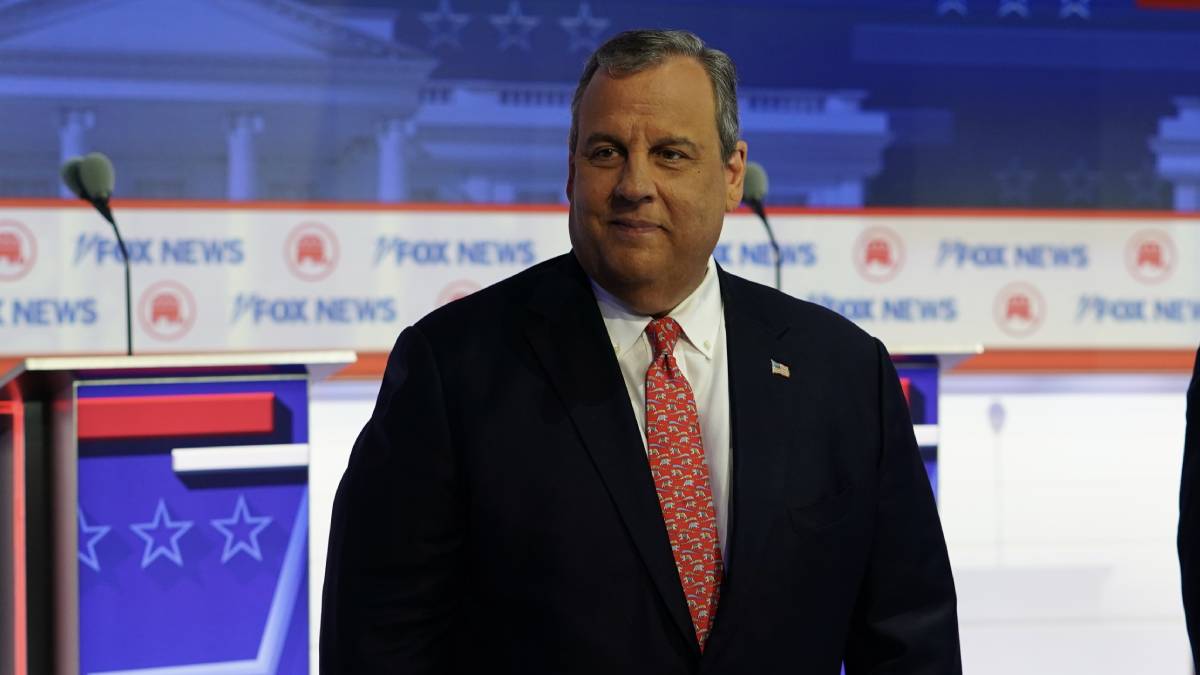
In a strategic move, former New Jersey Governor Chris Christie has stepped into the role of strategic advisor for the American Gaming Association (AGA), aiming to challenge the legality of sports event contracts regulated by the Commodity Futures Trading Commission (CFTC).
Christie argues that these contracts essentially operate as unlawful sports betting, bypassing state authority over gambling activities.
The decision comes on the heels of DraftKings and FanDuel both launching stand-alone sports prediction markets apps. Fanatics has also entered the sports prediction markets space.

Who is Chris Christie?
Christie, known for his staunch advocacy of state rights in sports wagering, is channeling his efforts toward persuading the CFTC and lawmakers to reconsider or revoke the operation of sports-related prediction markets.
His primary contention hinges on the belief that these markets offer contracts on the outcomes of sporting events, which he deems “clearly illegal” within the realm of sports gaming.
During his tenure as governor, Christie was instrumental in the legal battle leading to the Murphy v. NCAA decision. This landmark Supreme Court ruling effectively dismantled the federal prohibition on state-authorized sports betting, empowering states to legalize sports wagering on their own terms.
It is this precedent that Christie is now leveraging to counter the CFTC’s regulations, suggesting that allowing such contracts undermines state control by reintroducing federal oversight through financial derivatives.
What Are Sports Prediction Markets?
Sports prediction markets are platforms where people trade contracts based on the outcomes of sports events. These contracts pay out depending on whether a specific result occurs.
Core Concept
In a sports prediction market, users can buy and sell contracts asking questions like, “Will Team X win tonight?” or “Will Player Y score a touchdown?” The outcome is resolved with a simple yes or no answer.
Contracts usually trade between a set low and high price, such as 0 to 1. The price reflects the market’s estimate of how likely that outcome is to occur.
How They Work
Users trade with each other on a platform similar to a stock exchange, rather than betting against a bookmaker. Contracts can be traded up until the event starts, and sometimes even during the event.
If the predicted outcome occurs, “yes” contracts pay out at full value (such as 1), while “no” contracts drop to 0. If the outcome does not happen, the reverse is true. Profit or loss depends on the prices at which the contracts are bought and sold.
Difference from Traditional Sports Betting
In traditional sports betting, bettors place wagers with fixed odds against a bookmaker, who sets the odds and assumes the risk. In prediction markets, prices move based on how many people are buying and selling, driven purely by supply and demand among traders.
In the U.S., traditional sportsbooks are regulated as gambling by individual states. However, many prediction markets, including some involving sports, attempt to operate under federal rules as derivatives or “event contracts.” This has led to ongoing regulatory and political debate.
Why Is The AGA Leaning On Christie?
The AGA’s decision to retain Christie underscores a significant rift within the industry.
Prominent platforms such as FanDuel, DraftKings, and Fanatics have distanced themselves from the AGA to explore their prediction-market offerings, despite the AGA’s firm stance that these markets unregulatedly rival state-sanctioned sportsbooks.
AGA officials assert that the CFTC’s oversight lacks the rigorous scrutiny necessary to maintain the integrity and consumer protections associated with state-regulated sportsbooks. Christie emphasizes that there is a dearth of mechanisms to monitor irregular betting patterns, which are closely watched in licensed betting environments.
What Happens Next?
This collaboration between Christie and the AGA aligns with broader concerns raised by sports leagues like the NFL regarding the potential risks posed to game integrity and consumer safety.
Should this campaign gain momentum, it could lead to significant regulatory shifts, including potential changes to CFTC rules, redefined gaming classifications under the Commodity Exchange Act, or legislative actions to limit or eliminate these prediction markets.
Christie’s involvement with the AGA marks a critical juncture in the ongoing debate over the future of sports betting regulation, as stakeholders grapple with the implications of bridging the gap between financial markets and traditional sports gaming.


