


A tense diplomatic drama is unfolding in real time, and prediction market traders are betting real money on its outcome.
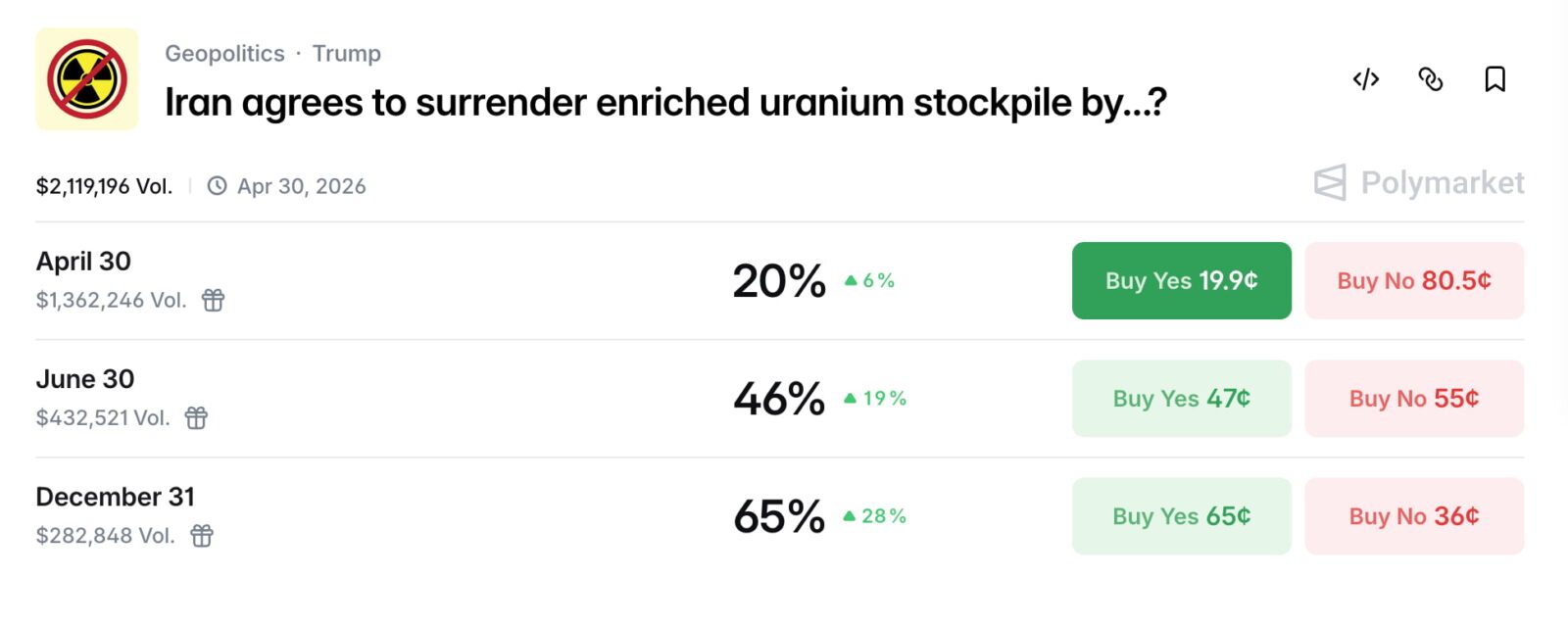
On Polymarket, a market titled "Iran agrees to surrender enriched uranium stockpile by…?" has attracted $31,555 in trading volume since opening on March 26, 2026, and its odds are reflecting the sharp deterioration in talks over the past week.
Use the Polymarket invite code Action to get early access and bypass 1 million+ people on the waitlist. Our Polymarket invite code also unlocks a trading bonus: Deposit $20, Get $20 Bonus!
When Will Iran Surrender Its Enriched Uranium Stockpile?
The market offers three outcome windows:
By April 30: 11% probability
By June 30: 31% probability
By December 31: 35% probability
The near-total dismissal of an April 30 resolution looks well-founded in hindsight. The ceasefire between the U.S. and Iran expired today, April 21, with no deal in place and Trump signaling he is unlikely to extend it. The June and December windows remain clustered, suggesting traders still believe a deal is possible in 2026 — but the optimism of last week has taken a serious hit.
How We Got Here
The market emerged following the February 28, 2026, U.S.-Israel airstrikes on Iran, including strikes on underground nuclear facilities. A temporary two-week ceasefire was announced on April 7, buying time for intensive diplomacy. What followed was a roller-coaster week of negotiations, competing narratives, and a dramatic breakdown.
A first round of talks in Islamabad, led by Vice President JD Vance, alongside envoys Steve Witkoff and Jared Kushner, ran for 21 hours before ending without agreement on April 12. The central sticking points were Iran's enriched uranium stockpile and the duration of any enrichment moratorium: the U.S. proposed a 20-year freeze, Iran countered with five years, and a more recent Iranian proposal floated 10 years, followed by a decade of low-level enrichment, all rejected by Washington.
The Collapse of Optimism
What transformed a difficult-but-moving negotiation into a near-crisis was a flurry of public statements from President Trump. Speaking to reporters and multiple media outlets between April 17 and 20, Trump claimed Iran had agreed to hand over its enriched uranium, calling it "nuclear dust." He told CBS News Tehran "agreed to everything," declared a deal imminent, and suggested a signing could come within days.
Iran denied the claims within hours. Iranian officials rejected Trump's characterization, and CNN reported that some Trump administration officials privately acknowledged the president's public commentary was damaging to the talks, given the sensitivity of the negotiations and Iran's deep mistrust of Washington. Iran's parliamentary speaker accused the U.S. of "imposing a siege and violating the ceasefire" and cryptically warned that Iran has "prepared to reveal new cards on the battlefield."
Meanwhile, a U.S. guided-missile destroyer fired on and seized an Iranian cargo ship attempting to breach the U.S. naval blockade in the Gulf of Oman — further inflaming tensions.
Where Things Stand Today
As of April 21, the ceasefire has expired. Trump told Bloomberg he is unlikely to extend it and won't reopen the Strait of Hormuz without a deal. The White House confirmed it remains open to a second round of talks, but nothing is scheduled. Pakistan has offered to host again. Mediators from Turkey and Egypt are still working the phones.
The core gaps are unchanged: the U.S. wants Iran to freeze enrichment and physically surrender its stockpile; Iran wants sanctions relief and control over the Strait of Hormuz. One regional source described the dynamic succinctly: "We are not in a complete deadlock. The door is not closed yet. Both sides are bargaining. It's a bazaar."
Why the Market Hasn't Moved Further
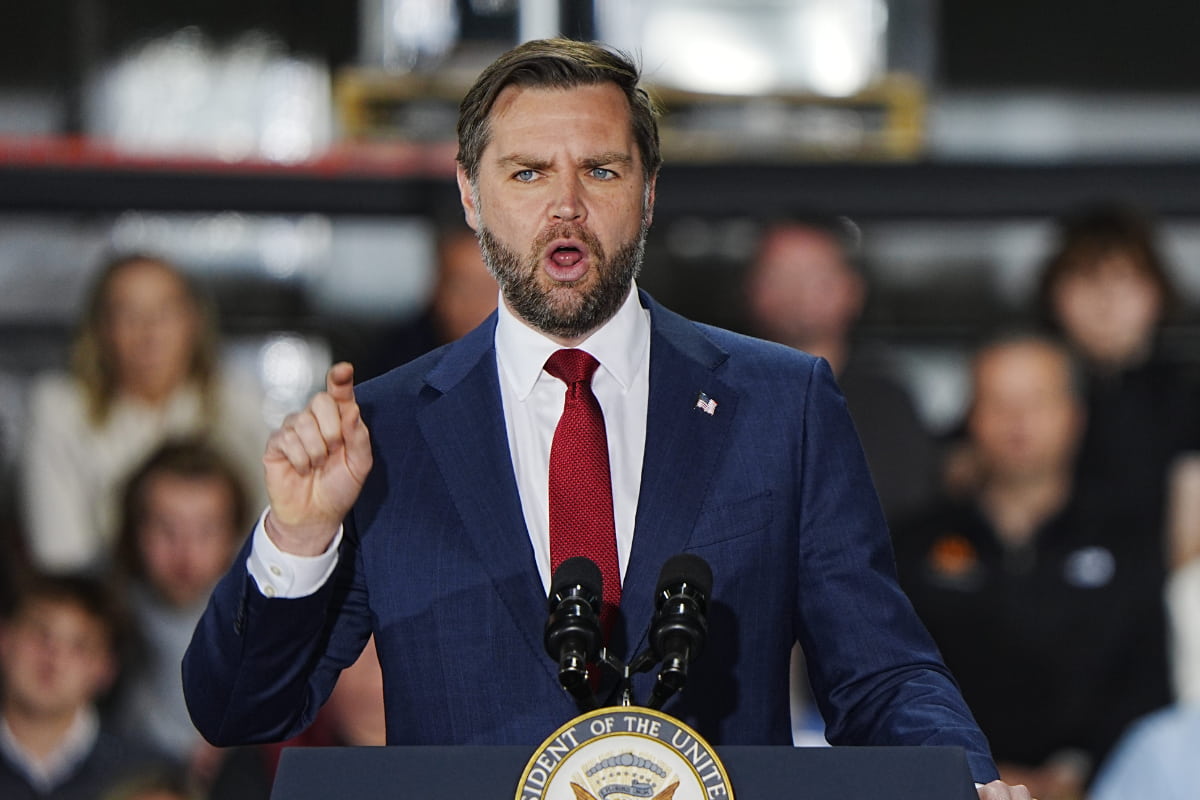
Given the breakdown, why do December 31 odds still sit at 35%? A few reasons. All parties still say a deal is possible. Iran moved meaningfully in Islamabad, and Vance acknowledged they "moved in our direction, but didn't move far enough." There are structural incentives on both sides: Trump officials are reportedly reluctant to resume full-scale war given rising prices and domestic unpopularity, while Iran desperately needs economic relief. Russia has also renewed an offer to take Iran's uranium stockpile as part of a potential agreement.
But the market's resolution bar remains high: Iran must publicly agree to surrender its stockpile, not merely cap enrichment or agree to vague principles. Trump's social media claims don't move the needle; Iran's public denial means this market is firmly unresolved, and the clock is ticking.


