


The 2026 WSOP Main Event is down to its final table, set for a high-profile three-day showdown that begins on Monday in Las Vegas.
The tournament started with 9,208 entrants—the fourth-largest field in Main Event history—the winner will claim $10 million, the iconic gold bracelet, and the title of World Champion of Poker.
The Event features a massive prize pool driven by the record-breaking field, with life-changing money on the line for the final nine. Every finalist is guaranteed at least $1 million, but the top-heavy payout structure creates huge incentives to climb the leaderboard.
- 1st: $10,000,000
- 2nd: $6,000,000
- 3rd: $3,750,000
- 4th: $2,750,000
- 5th: $2,250,000
- 6th: $1,750,000
- 7th: $1,500,000
- 8th: $1,250,000
- 9th: $1,000,000
Play resumes Monday, August 3 (Final Table Day 1), continues August 4, and concludes Wednesday, August 5, when the champion is crowned.
This delayed “November-to-August” style final table format builds hype and fits television scheduling, with coverage planned across ESPN networks and select international partners.
The Final Nine: Chip Counts and Seating Draw
Lucas Jumalon enters as a massive chip leader with roughly 35% of the chips in play, putting enormous pressure on the rest of the table. Blinds are expected to start around 1.5M/3M, based on the total chips in play near 150M–194M for the leader alone.
Here’s the official seating draw and stack sizes for the 2026 WSOP Main Event final table:
Seat Player Country Chips Big Blinds (approx.)
- Lauri Saaskilahti Finland 37,500,000 25
- Michael Gagliano USA 46,500,000 31
- Mario Boos France 44,000,000 29
- Greg Mueller Canada 48,500,000 32
- Jamie Shaevel USA 56,000,000 37
- Han Feng USA 25,000,000 15
- Rami Hammoud Canada 79,000,000 53
- Evagoras Evagorou Cyprus 22,500,000 15
- Lucas Jumalon USA 194,000,000 129
Player Profiles: Youth, Experience, and International Flavor
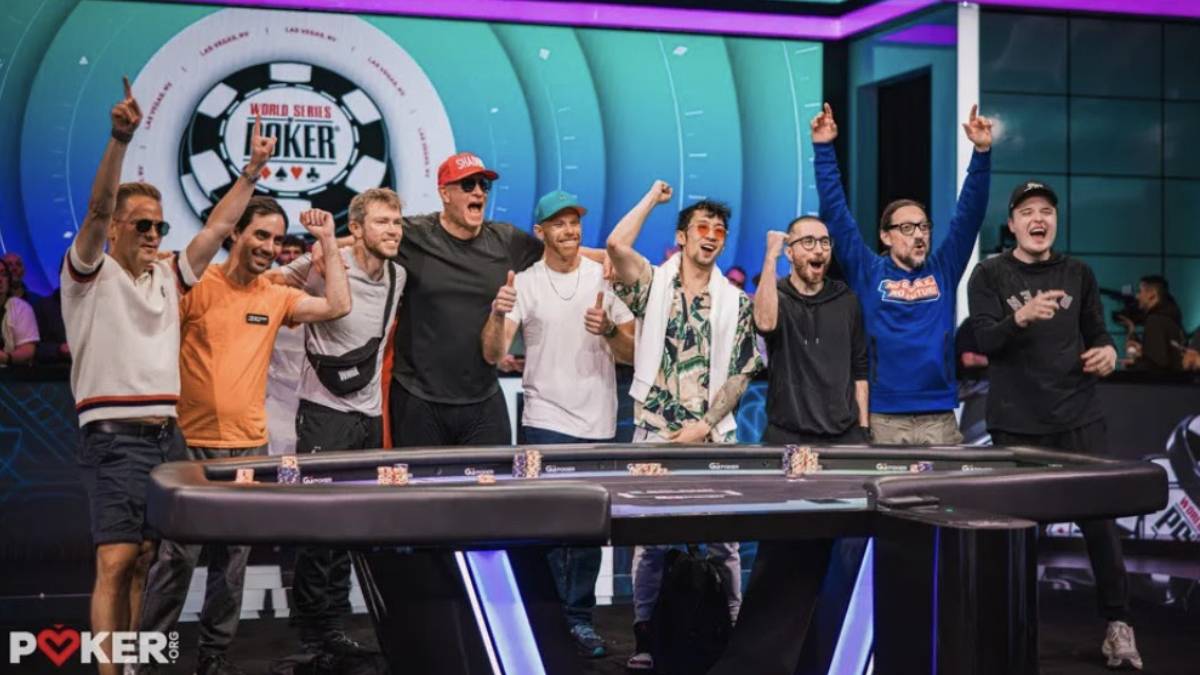
The 2026 WSOP Main Event final table blends breakout talent with seasoned pros, creating compelling storylines for fans and bettors alike.
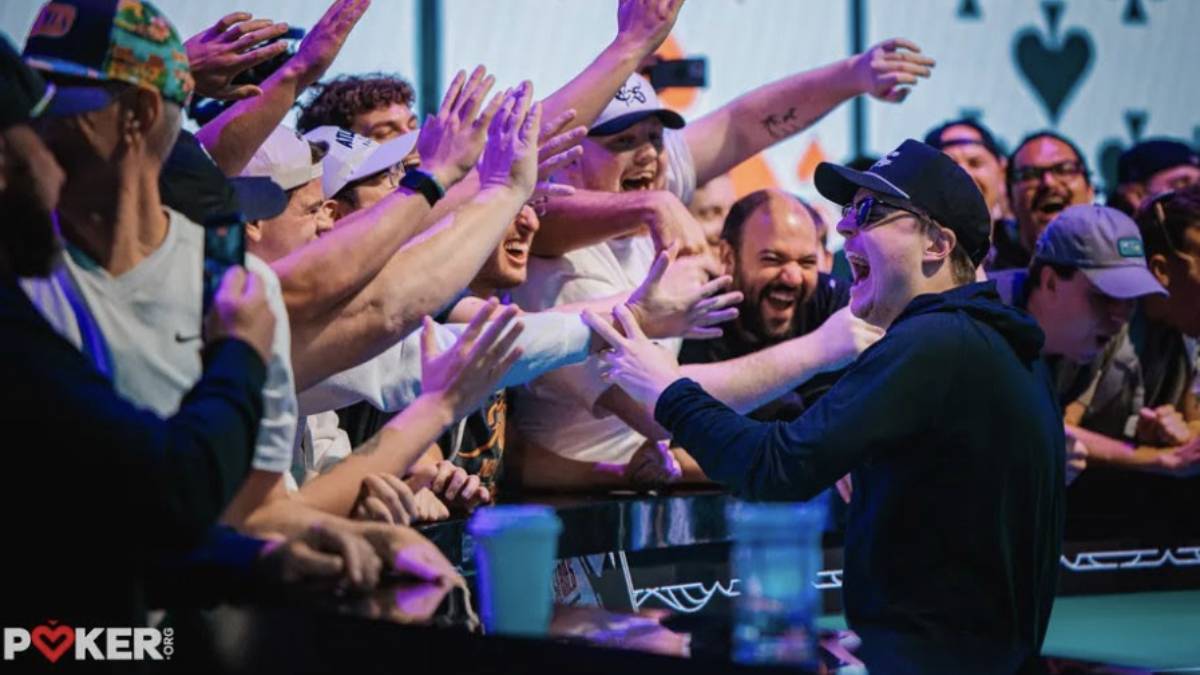
- Lucas Jumalon (USA) – The 22-year-old chip leader has limited prior experience but has made a stunning run. A win would make him one of the youngest Main Event champions ever.
- Rami Hammoud (Canada) – Second in chips with solid experience, Hammoud is well-positioned to challenge Jumalon early.
- Greg Mueller (Canada) & Michael Gagliano (USA) – Both are multi-time bracelet winners (three each) with deep final-table pedigree and millions in career earnings.
- Jamie Shaevel (USA) – A cash-game grinder with a strong stack, Shaevel is dangerous in late-stage No-Limit Hold’em.
- Lauri Saaskilahti (Finland) & Mario Boos (France) – European contenders looking to break through on poker’s biggest stage.
- Han Feng (USA) – A WSOP Circuit ring winner with experience navigating big fields.
- Evagoras Evagorou (Cyprus) – The shortest stack at the table; survival and doubling up will be the early goal.
With seven bracelets represented among the final nine (Mueller and Gagliano accounting for most), the “youth vs. experience” narrative is front and center.
Broadcast and Coverage: Where to Watch the 2026 WSOP Main Event Final Table
Fans can follow the 2026 WSOP Main Event final table across multiple platforms, with ESPN leading U.S. coverage.
- United States/International:ESPN networks (ESPN2 on Aug 3, ESPN on Aug 4, etc.), with prime-time windows such as 9 PM–midnight ET.
- Additional streams: WSOP YouTube (in select markets), Eurosport/TNT Sports in Europe/Asia, and PokerNews/PokerGO for reporting and live updates.
This multi-platform approach helps the WSOP reach both core poker fans and casual viewers during the three-day finale.
WSOP Bracelet History: Why the Gold Hardware Matters
WSOP bracelets are the most prestigious individual achievements in poker, awarded to the winner of each event at the World Series of Poker. They symbolize excellence across dozens of poker variants and have grown from a modest tradition into a global symbol of poker immortality.
The WSOP began in 1970 at Binion’s Horseshoe in Las Vegas, founded by Benny Binion. The inaugural event featured cash games in variants like five-card stud, razz, seven-card stud, and Texas Hold’em, with Johnny Moss voted champion and awarded a silver cup—no bracelet yet.
- 1971: The Main Event switched to a freezeout No-Limit Hold’em tournament format.
- 1976: Bracelets were introduced as the official prize for event winners (retroactively applied to earlier champions). Early bracelets had limited prestige—some legends like Doyle Brunson admitted they “didn’t mean anything” at first and didn’t even collect them all.
Over time, as the WSOP expanded with more events, international editions like WSOP Europe, and online bracelets, the hardware gained massive status. Winning one, especially the Main Event, can transform a player’s career, sponsorships, and legacy. The series now awards dozens of bracelets annually across live and online events, with over 1,000+ bracelets distributed historically as of mid-2026.
All-Time WSOP Bracelet Leaders
Phil Hellmuth dominates with 17 bracelets (first in 1989 Main Event; latest around 2023), holding the record for most Hold’em bracelets (14).
Top players (as of recent data):
- Phil Hellmuth (USA): 17
- Phil Ivey (USA): 11 (strong in mixed games/non-Hold’em)
- Erik Seidel (USA): 10
- Doyle Brunson (USA): 10
- Johnny Chan (USA): 10
Others with 9+ include Michael Mizrachi, Shaun Deeb, Benny Glaser, and Johnny Moss; Daniel Negreanu has 8, plus massive earnings and Player of the Year awards.
Records include:
- Most in Texas Hold’em: Hellmuth
- Non-Hold’em specialists: Phil Ivey and others excel in Omaha, Stud, Draw, Mixed games
- Multiple bracelets in a single series: Achieved by several players in strong years
Main Event Bracelet Highlights
The $10,000 No-Limit Hold’em World Championship (Main Event) is the crown jewel. Winners earn the bracelet plus life-changing money and fame.
Notable multi-time Main Event winners:
- Johnny Moss: 3 (1970, 1971, 1974) — inaugural champion
- Stu Ungar: 3 (1980, 1981, 1997) — only player to win three in freezeout format
- Back-to-back: Doyle Brunson (1976–77), Johnny Chan (1987–88)
Famous modern winners include Chris Moneymaker (2003, sparked the poker boom), Joe Cada (youngest at the time in 2009), and others like Daniel Weinman (2023, record prize). Fields have grown enormously—from single digits in the early years to thousands today.
Additional WSOP Milestones
Bracelets now reflect the WSOP’s international reach, with awards outside Las Vegas (first in Europe in 2007). Players from many countries have won, with the U.S. dominating historically but global participation growing.
- Youngest: Annette Obrestad (18, 2007 WSOP Europe)
- Women: Kristen Foxen leads with 5 bracelets
- Online: Bracelets now include online events
- WSOP Circuit: Separate rings for regional events, often a stepping stone to bracelets
Bracelets represent endurance across mixed games, deep runs, and adaptability. While cash earnings matter (some bracelet winners have modest totals due to game type), the hardware is what legends chase. Hellmuth’s longevity stands out, but players like Ivey are celebrated for versatility.


