


There's a new skill games battle developing in The Hawkeye State.
Fish Table Games have brought an underwater arcade experience to gas stations, liquor stores, and vape shops around the Des Moines area. Instead of spinning reels or playing cards, players use electronic controls to target virtual fish. These machines may look like casino entertainment, but their legal status depends on how they work and how operators award prizes.
That distinction sits at the center of Iowa’s debate. A machine described as a skill game still needs to follow the rules that apply to its operation. Meanwhile, local officials are weighing concerns about late-night activity and disturbances at some businesses that offer these games.
We just saw a similar battle over skill games play itself out in Pennsylvania. In that case, all of the skill games were removed from businesses and bars.

What Are Fish Table Games?
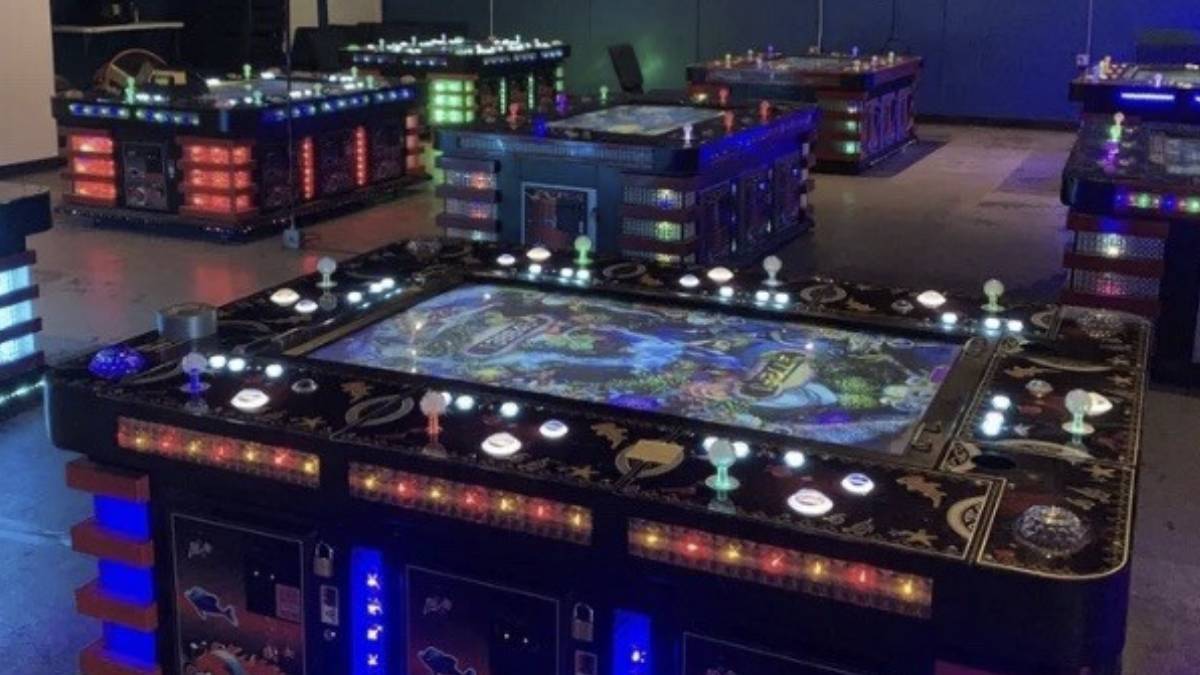
Fish Table Games are electronic arcade-style games built around catching or shooting virtual fish for rewards. Many use a table-shaped screen where players interact with an underwater game environment. Local reporting describes them as gambling-style video tables that allow players to catch digital fish for prizes.
Their appearance can make them easy to confuse with casino games. However, colorful graphics and prize opportunities do not determine a machine’s legal category. Iowa regulators look at whether the device meets the standards that apply to amusement games.
For players, the key question is not simply, “Does this look like an arcade game?” It is also, “What are the rules, and what can I actually receive if I win?”
What Makes a Fish Table a Skill Game?
The term “skill game” suggests that a player’s decisions and actions influence the result. Coverage of Iowa’s fish tables describes qualifying games as skill-based devices that cannot offer cash play or let players boost their odds of winning.
Still, a label is not proof of compliance. Calling a machine a skill game does not settle whether its design, prize system, and operation satisfy Iowa requirements. The Iowa Department of Inspections, Appeals, and Licensing, known as DIAL, oversees registration of electrical and mechanical amusement devices subject to state regulation.
This creates an important distinction: how a business advertises a game and how the state classifies it are not necessarily the same thing.
Are Fish Table Games Legal in Iowa?
Fish Table Games can operate as amusement devices when they meet the applicable requirements. That does not mean every machine, prize arrangement, or business offering them is automatically allowed. Local coverage notes that operators can face legal action when games fail to meet the required standards.
For the amusement devices covered by its guidance, DIAL lists several limits:
- Prizes must be merchandise worth no more than $50.
- Cash prizes are not allowed.
- Merchandise must be something the business normally sells.
- Prizes must be redeemed at the business.
- Devices cannot let players pay more to improve their chances.
These details matter because “noncash” does not mean “anything goes.” A reward still needs to meet the applicable merchandise and redemption rules. Players and business owners should not assume that a promise of store credit, by itself, proves compliance.
Why Des Moines Officials Are Concerned
The debate over Fish Table Games extends beyond the machines themselves. Des Moines officials have raised concerns about activity at some locations, including late-night gatherings, disturbances, and repeated calls for police service. Some establishments offering these games operate around the clock.
Axios reported that the Des Moines City Council requested a legal review of possible regulatory options. Those discussions included whether zoning, parking, or nuisance rules could address problems connected with certain locations.
However, reports of trouble at a business do not prove that the games caused it. Des Moines police told Axios that they did not specifically track fish-game complaints, although they suspected a connection between the machines and increased calls at some businesses. Police also said most operators were responsible, while a smaller group of locations had persistent problems.
That distinction keeps the issue in perspective: concerns about a particular venue should not become an unsupported claim about every player or operator.
Why State Rules and Local Oversight Can Overlap
State oversight and local enforcement address different parts of the issue. DIAL regulates covered amusement devices, while local officials may consider how a business affects nearby properties and residents.
A machine’s regulatory status therefore does not answer every question about the location hosting it. A business may still draw attention over parking, noise, or recurring disturbances. Des Moines officials have explored those local tools because state rules limit some of their options for directly regulating the games.
This helps explain why the public debate can continue even when a machine is operating within the amusement-device framework.

What Players Should Check Before Playing
Before spending money on a fish table, take time to understand the posted rules and prize terms. Iowa’s amusement-device guidance makes several questions especially useful:
- What merchandise can a player win?
- Is the prize value within the applicable limit?
- Does the business normally sell that merchandise?
- Must the prize be redeemed on the premises?
- Can a player pay extra to improve the chance of winning?
Treat a cash-prize offer as a reason to stop and check the rules, not as a standard feature of a lawful amusement device. DIAL’s guidance expressly prohibits cash prizes for the devices it covers.
Frequently Asked Questions
Are Fish Table Games the same as casino games?
Not necessarily. Although they can resemble casino entertainment, qualifying Iowa machines operate under amusement-device requirements. Their actual design and operation matter more than their appearance.
Can a fish table skill game pay cash in Iowa?
Cash prizes are not permitted under DIAL’s guidance for regulated electrical and mechanical amusement devices. The agency instead describes qualifying merchandise prizes subject to value and redemption limits.
Does calling a machine a skill game make it legal?
No. The name alone does not establish compliance. A machine must meet the rules that apply to its classification, and its prize system must follow the relevant restrictions.
Why are local officials reviewing fish-game businesses?
Des Moines officials have cited concerns about disturbances and recurring problems at some locations. Their review has included possible use of zoning, parking, and nuisance enforcement rather than treating every fish table as an illegal machine.
The Bottom Line on Fish Table Games
Understanding Fish Table Games in Iowa requires separating three questions: how the game works, whether it follows state amusement-device rules, and how the business hosting it affects the surrounding neighborhood.
A skill game label answers none of those questions on its own. Clear prize terms, compliant operation, and responsible business practices are what make the distinction meaningful.
This article provides general information, not legal advice. Consult DIAL’s current guidance about a specific device or prize arrangement.


