


The Venetian Las Vegas is changing how its poker dealers deliver cards—and the reason goes beyond style.
The resort has replaced traditional pitch dealing with slide dealing, a method designed to reduce the chance of private cards being exposed as they move across the table. The change makes The Venetian the first major poker room on the Las Vegas Strip to adopt the method throughout its room.
For visitors, the difference is easy to spot: instead of tossing cards through the air, dealers keep them on or close to the table’s surface. It is a small change in motion with an important goal: giving players greater confidence that their cards stay private.
The move comes less than a year after The Venetian paid out the largest table game jackpot in the history of the resort.

What Is Slide Dealing?
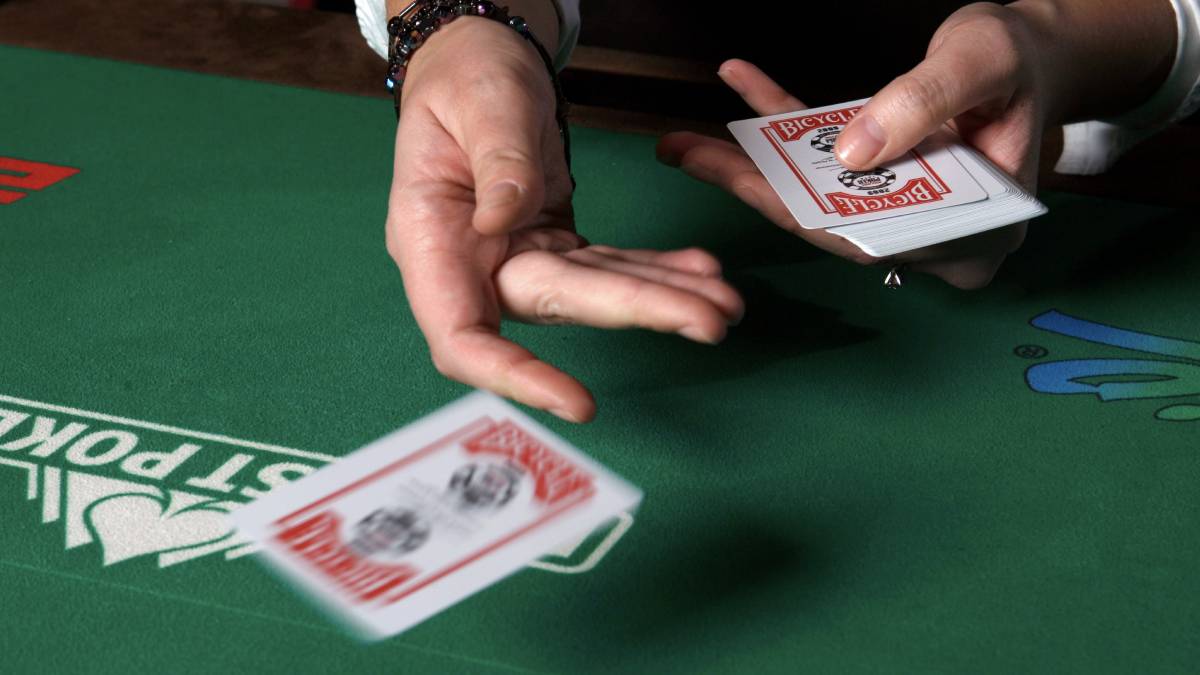
In a traditional pitch deal, the dealer flicks each card through the air toward a player. The cards should land face-down, but a card can tilt or lift during its trip. That brief movement may expose its face to another player or a hidden camera.
Slide dealing takes a different approach. The dealer pushes cards across the felt, keeping them low rather than sending them through the air. This reduces opportunities to see a card’s value before it reaches its intended player.
The Venetian also introduced smoother “speed felts” to support the new technique.
The basic difference is straightforward:
- Pitch dealing sends cards through the air, creating a possible window for exposure.
- Slide dealing keeps cards near the felt, reducing that window.
The goal is not to change poker’s rules. It is to better protect the information that players rely on those rules to keep private.
Why The Venetian Las Vegas Changed Its Dealing Method
Poker depends on incomplete information. Players make decisions based on their own cards, the shared cards, and what they believe their opponents might hold. An exposed private card can upset that balance.
According to Tommy LaRosa, The Venetian’s director of poker operations, traditional pitching can sometimes send cards high enough for another player or a hidden camera to glimpse them. Keeping cards near the table adds another layer of protection against that risk.
LaRosa said the poker room began evaluating slide dealing earlier in 2026 as part of its ongoing work to strengthen game protection. Before the rollout, the resort retrained its dealer roster and gave staff time to practice. It then introduced the method across the entire room rather than switching a few tables at a time.
That preparation matters. A dealing technique can look simple from a player’s seat while still requiring experienced dealers to adjust years of muscle memory.

What Poker Players Can Expect at the Tables
The most noticeable change at Venetian Las Vegas poker tables is the delivery itself: cards now travel across the felt instead of arriving with a familiar airborne flick. The smoother table surface helps support that movement.
For players, the intended benefit is greater card privacy. However, reducing exposure during the deal should not be confused with eliminating every possible form of cheating. LaRosa described the switch as an additional layer of game protection—not a complete replacement for other safeguards.
There is also an adjustment period to consider. Dealers must become comfortable with the new motion, and regular players must get used to a different rhythm. LaRosa said the transition had gone smoothly so far, with a mostly positive response from the room’s regulars.
That early response is encouraging, but it is not the same as measured evidence about long-term dealing speed or hands per hour.

WPT Fall Festival Gives the Change a Major Stage
The switch arrives just ahead of the WPT Fall Festival, scheduled for October 28 through November 15, 2026. The Venetian’s official schedule lists nearly $4 million in guaranteed tournament prize pools across the series.
A centerpiece is the $5,000 WPT Fall Championship, which runs November 5–10 and carries a $2 million guaranteed prize pool. Its opening flights are scheduled for November 5 and November 6.
The festival will put the new dealing method in front of a large tournament audience. Coverage of the change identifies the upcoming series as an important early test for slide dealing in the resort’s 50-table room.
For tournament players visiting The Venetian Las Vegas, the practical takeaway is simple: expect a different delivery method when the cards come your way.
Is Slide Dealing Becoming More Common in Las Vegas?
The Venetian is the first major Strip poker room to make the switch, but it is not the first in the wider Las Vegas market. South Point adopted slide dealing before The Venetian, making the Strip resort the second Las Vegas casino to move away from traditional pitching.
That distinction matters. The Venetian’s move brings the technique to a prominent Strip venue, where visiting players and tournament professionals can experience it firsthand.
Whether other rooms follow remains an open question. For now, The Venetian’s decision shows how a familiar part of live poker—the way a dealer moves a card—can evolve to address concerns about game security. The change may look modest, but its purpose is central to the game: keeping private cards private.


