


Everybody loves the No. 12 over No. 5 upset, which we saw twice (and almost three times) last season.
Meanwhile, No. 11 seeds actually have a winning record in the first round since 2010 (31-29 overall).
So, what about the teams seeded even lower?
Well, at least one team seeded 13 or lower has won a first-round game in 15 of the past 17 NCAA Tournaments.
Depending on the pool size or bracket contest you enter, your success will usually boil down to nailing the teams that make it through to the Elite Eight, Final Four, and the national title.
However, you can also improve your chances by picking some of the bigger upsets in the first two rounds.
While I wouldn't recommend picking any 16-seeds (two combined wins in tourney history, albeit both coming in recent years), we've seen much more success from the 13-15 seeds.
In fact, eight No. 13 seeds have won in the first round over the past nine NCAA Tournaments, with Yale's win over Auburn the most recent example.
If you want to get even crazier, we've seen a 15-seed make the Sweet 16 in three of the past five seasons after only one other 15-seed had ever previously advanced that far.
We even saw Saint Peter's become the first ever 15-seed to make the Elite Eight a few seasons ago — sandwiched in between Oral Roberts and Princeton making their runs to the second weekend.
If you can correctly pick one or two of those early upsets, it'll also increase your chances of nailing the teams that make it further.
For reference, here are the all-time records for 13-15 seeds:
- 13 seeds: 33-127 (20.6%)
- 14 seeds: 23-137 (14.4%)
- 15 seeds: 11-149 (6.8%)
Since I'm not entertaining the thought of a No. 16 seed winning — especially this season with a weaker crop — let's focus in on the 12 teams seeded between No. 13 and No. 15 by highlighting each of their chances of pulling off a stunner.
I have ranked them in descending order from least to most likely to pull off an upset.
These aren't simply ranked in the order of my projected lines. Instead, I'm focusing more on the variance of each game and the on-court matchup.
For example, a team that shoots and makes a high frequency of 3-pointers and/or can compete in shot volume usually has a better chance of an upset.
Interestingly enough, slower-paced teams have pulled off upsets at a lower clip, which might seem counterintuitive.
This is simply an exercise to help you pick an upset or two while also offering insight into some of the lesser-known teams in the bracket for betting purposes.
Historically, my strategy was to pick two upsets from this group each year and hope to get lucky. With that said, this is the widest disparity we've ever seen ratings-wise in terms of the 1-16, 2-15, and 3-14 matchups.
That's becoming a trend in this new era of college basketball, which means you have to take all of those historical numbers I referenced above with a grain of salt. There's certainly some nonstationarity in play.
As it stands at the time I'm writing this, every single top four seed is favored by at least 13.5 points.
How rare is that? Well, we've never seen the top-16 teams all favored by just 10 or more in the history of the tournament.
Sadly, early tournament upsets are likely to continue on their current downward trajectory as the gap between the high- and mid-majors widens. It's certainly not a coincidence that the top-16 seeds went 16-0 in their first-round matchups last year, with all of the victories coming by at least nine points.
On the bright side, the later rounds should become more exciting as parity grows at the top of the sport (although there's definitely a clear four favorites this year).
Based on this year's matchups, I'd say there's approximately a 55% chance we see at least one of the top-16 teams go down in their first game.
I wouldn't blame you for having them all advance, but I'm personally going to pick one to go down in flames.
Read on for my 2026 NCAA Tournament Bracket Busters.
| Game | Time (ET) | |
|---|---|---|
  | 7:35 p.m. (Friday) | |
  | 2:50 p.m. (Friday) | |
  | 9:25 p.m. (Thursday) | |
  | 10:10 p.m. (Thursday) | |
  | 1:50 p.m. (Friday) | |
  | 10 p.m. (Friday) | |
  | 10 p.m. (Thursday) | |
  | 4:25 p.m. (Thursday) | |
  | 4:05 p.m. (Thursday) | |
  | 9:45 p.m. (Friday) | |
  | 12:40 p.m. (Thursday) | |
  | 3:15 p.m. (Friday) |
#12 | No. 15 Queens +25.5 vs. Purdue
I don't really envision a No. 15 seed winning, but who ever does?
With that said, it's hard to see Queens pulling off an upset in their maiden trip to the dance.
The Royals play an up-tempo style and run a beautiful offense with shooters all over the floor who hoist from deep at a top-35 clip nationally. However, the defense (322nd in Adjusted Efficiency, per KenPom) is appalling.
I honestly don't know how they get any stops against a Purdue team peaking at the right time and now ranks No. 1 in overall Adjusted Offensive Efficiency, per KenPom.
The Boilermakers have also dominated on neutral sites all season, ranking first nationally, per Torvik, in such games after running through the Big 10 tournament with relative ease, in addition to 25-plus-point victories earlier this season over a healthy Texas Tech team and Auburn.
Queens has an elite catch-and-shoot offense (98th percentile frequency/95th percentile efficiency, per Synergy) with a few paths to the offense against the Boilermakers, but there's just no way they can generate enough stops against Braden Smith and company.
On the season, the Royals rank in the 7th percentile in post defense efficiency and 15th percentile vs. pick-and-roll ball handlers. They also should get sandblasted on the boards both ways in this matchup, which negates the hope of Purdue just missing every outside shot.
Matt Painter has suffered some infamous upsets in the dance, including one as a favorite in this same range against FDU that nobody saw coming (and also vs. Saint Peter's).
But it's hard to see Purdue stumbling here in what should just become a layup line and dunk practice, even if the shots aren't falling.
And for what it's worth, Painter actually boasts superb ATS splits in the first round and for the overall tournament (27-14). The Big 10 has also been on quite a roll in the first round. After going 8-0 ATS last season, the league owns a gaudy 36-20-1 mark (64.3%) since 2017.
Results vs. other tourney teams:
Queens has played five power conference teams this season (two of which didn't make the dance in Wake Forest and Auburn).
In those five contests, they allowed an average of 102.6 points per game. Every one of them scored at least 94, and now they must take on the highest-rated offense in the country. Good luck!
How an upset happens: Queens goes super nuclear from three, TKR's shoulder isn't right, and lots of prayers are answered.


#11 | No. 15 Tennessee State +24.5 vs. Iowa State
I'm not sure there's a viable path to an upset for the Tigers.
Head coach Nolan Smith has an uber-athletic bunch that plays at a high tempo (36th nationally).
It also features a very aggressive defense that will press (79th percentile frequency with 94th percentile efficiency) and trap to force turnovers (24th nationally), creating transition opportunities where they can utilize their athleticism.
Per Synergy, Tennessee State ranks in the 93rd percentile in transition possessions, which is by far its most efficient offense. On the season, the Tigers rank in the 79th percentile in transition efficiency compared to a poor 32nd percentile in the half-court.
Iowa State has had some turnover issues at times and hasn't seen much press this year (5th percentile), which could lead to some easy buckets for Tennessee State. However, Iowa State generally does a tremendous job of limiting transition chances (15th percentile).
Therefore, the OVC champs will have to operate frequently in the half-court, where they will struggle mightily to create consistent offense against the swarming Cyclone defense that opponents need to swing the ball to find open catch-and-shoot opportunities.
The Tigers rank 331st nationally in Assist Rate and 345th in 3-point attempt rate. And when they do get threes up, they aren't an elite shooting team, so there's not a ton of upside in that department for an offense that had the sixth fewest catch-and-shoot opportunities in the country.
In the half-court, they like to operate in isolation (96th percentile frequency), drive to the basket, and take tough mid-range jumpers. That's not an ideal formula against Iowa State.
The Tigers are a strong offensive rebounding team (top-50 nationally), so there could be opportunities to grab misses against that aggressive Cyclone defense. However, that will also lead to an abundance of easy buckets for Iowa State in transition.
It also doesn't help Tennessee State's chances that it has its own turnover issues against a defense that ranks fourth nationally in turnover rate. The Cyclones can also work through Jefferson in the half-court, whose passing ability from the post will come in handy against the trapping Tigers.
While Tennessee State can win games in the OVC with its athletic advantage, that obviously won't work against Iowa State, which isn't a great schematic matchup either.
It is worth noting that Iowa State has had major issues from the free-throw line, ranking in the bottom-25 in all of college basketball at just 67.2%.
I bring that up since Tennessee State's aggressive defense fouls at an astronomically high rate (317th), which means the Clones will likely have plenty of trips to the charity stripe. If they are bricking those attempts, that could certainly at least help the Tigers stay within the number.
With that said, I'd be more inclined to lay the big number with Iowa State (a shot volume monster), which re-gained its footing after a February slide that I believe was partly schedule-induced with a brutal travel stretch.
Plus, if you're looking for a potential sell-high signal, Tennessee State ranks No. 1 in Haslametrics' Momentum metric in large part due to a +10.4% 3-point shooting delta over the past month, thanks in part to 41.5% 3-point shooting mark.
Prior to that six-game stretch, Tennessee State connected on just 31.8% of its 3-point attempts on super-low volume.
Results vs. other tourney teams:
- L, 89-60 at Tennessee
How an upset happens: Iowa State misses a million free throws and can't handle the press, while Tennessee State somehow has an insane shooting day from the perimeter.
#10 | No. 14 Penn +24.5 vs. Illinois
Former Duke and Virginia transfer TJ Power put on an absolute show last weekend in Ithaca to lead the Quakers to a surprise victory at Ivy Madness. After coming back to beat Harvard in overtime, Power poured in 44 to upset top-seeded Yale (in overtime again).
All eyes will be on Power to see what he can do in an encore performance on an even bigger stage.
There's also some familiarity at play, with former Iowa head man Fran McCaffery getting to face an old conference foe. Maybe that familiarity can help lead to a better game plan.
Additionally, Penn could get back leading scorer Ethan Roberts, who missed last weekend with ongoing concussion issues. He practiced this week and has a chance to suit up, which could give the Penn offense a major boost.
With that said, I just don't see how they get any stops in this game against an elite Illinois offense that ranks second nationally in overall Adjusted Efficiency. If the Illini are making their threes (which they take at the 12th-highest rate nationally), they will likely get to 100.
It's worth noting they are probably overdue for a nuclear performance from behind the arc after shooting just 32.6% since Feb. 1. However, even if those shots aren't falling, Illinois should get whatever it wants at the rim and dominate the offensive glass.
On the season, Illinois ranks third nationally in offensive rebounding rate, which spells trouble for a Penn defense that ranks 183rd in that department. The inside-the-arc numbers for the Quakers are also extremely alarming — they rank 346th in 2-point shooting offense and 292nd in 2-point shooting allowed.
Penn excels at forcing turnovers, but the Illini offense ranks in the top 10 nationally in turnover percentage. It also doesn't turn the ball over, but Illinois literally ranks dead last in the country in forcing turnovers, which really neuters that strength.
Illinois can really go back to its strict drop defense here in order to just take away the 3-ball, forcing Penn into countless inefficient mid-range jumpers (where the Quakers rank outside the top-300 in shooting) in endless one-and-done possessions.
The Penn press won't work at all against Illinois, so maybe Fran just goes with a unique zone on defense for the entire game to induce Illinois to just bomb from distance, which it can do too much of at times.
However, that could get even uglier on the glass and lead to even more easy second-chance points against the horrid Penn rim defense.
Penn's best bet is to just pray for 3-point variance on both ends (which is scary since it has run a very fortunate +12.9% 3-point shooting delta over the past month) and somehow compete on the glass, while getting another monster performance from Power.
That's a very unlikely scenario against an Illinois team that is built to annihilate inferior clubs.
I'm actually considering laying the points with Illinois, which illustrates how little faith I have in Penn even having a puncher's chance.
Results vs. other tourney teams:
- L, 90-63 vs. Villanova (neutral)
- L, 77-60 vs. Hofstra
How an upset happens: TJ Power goes for 50, and Fran cooks up a genius game plan.
#9 | 14 Idaho +23.5 vs. Houston
On paper, Idaho matches up well with Houston.
The Vandals are good on the defensive glass (5th nationally), don't turn the ball over (62nd), and shoot a ton of 3s (34th).
Those are three critical areas whenever you are taking on the Cougars, who rank in the top-15 nationally in both offensive rebounding rate and turnover rate. You also need to beat their aggressive defense by swinging the ball and finding open shooters, and the Vandals certainly have a number of players capable of knocking those down.
Unfortunately for Idaho, this game won't be played on paper, and many of those metrics came against a very soft schedule that included zero tournament teams.
Plus, nobody in the Big Sky really hits the offensive glass (29th among all leagues), especially not with the ferociousness of Houston. That includes Idaho (237th), which will hurt in this particular matchup, as that is the one area you really need to exploit against Houston's overhelp defense, which ranks 196th nationally in defensive rebounding rate.
Additionally, Idaho likes to work frequently through the post in the half-court, which is almost impossible against the Cougars.
The athletic and physical differences between these two teams are stark and will likely prevent Idaho from keeping this close.
With that said, Houston can go through extended droughts on offense due to a horrid shot diet (364th in average 2-point shot distance), but that should work just fine against Idaho's defense, which mostly limits looks at the rim.
But no team in the entire country had a lower offensive rim rate than the Cougars, who will have free rein in this matchup to live in the mid-range where they are most comfortable.
While Houston does have some red flags for a No. 2 seed (352nd in Adjusted Tempo, 336th Away From Home, 329th Consistency), this is simply too much of a talent and physicality mismatch for a realistic upset chance by the Vandals, who played one single top-100 team all season (15-point loss to Notre Dame).
Under Kelvin Sampson, Houston has generally dusted inferior opponents in the first round (3-0 ATS as a 20-plus point favorite with a +12 average cover margin).
Conversely, Big Sky teams have failed miserably when stepping up in class in the dance (5-15-1 ATS since 2005, failing to cover by an average of over 4.5 points per game, with the last outright victory coming over 20 years ago).
That's not a very promising combination.
Results vs. other tourney teams:
- N/A
How an upset happens: Idaho goes ballistic from 3, and Houston has multiple extended scoring droughts in addition to major foul trouble in a very low-scoring affair that will be played entirely in the half-court.
#8 | No. 14 Wright State +18.5 vs. Virginia
Head coach Clint Sargent did a tremendous job with this very young Wright State club that starts four underclassmen.
However, the Raiders did not get a friendly first-round draw with Virginia.
To me, this simply boils down to Virginia completely shutting down Wright State at the rim.
The Raiders have some capable 3-point shooters (49th nationally in 3-point shooting), but they rarely take 3-pointers (305th in 3-point attempt rate).
Instead, they prefer to get to the hoop whenever possible with a top-50 near-proximity rate and 95th percentile rim rate.
That won't work against Virginia's elite interior defense, which ranks fourth nationally in near-proximity shooting allowed and ranks in the 94th percentile in rim PPP allowed.
Defensively, Wright State will throw out a press at times, which could potentially give Virginia issues (37th percentile efficiency) if Sargent goes that route.
Meanwhile, Wright State's press offense (which will be needed against Virginia) actually grades out in the 93rd percentile, per Synergy. The Raiders also excel in half-court possessions after being pressed and late in the shot clock, which is the goal of Virginia's pressure.
The Raiders' defense is nothing to write home about, and they will be at a severe talent disadvantage. However, they do at least excel at limiting catch-and-shoot opportunities, which is key against the Hoos, who don't really operate out of the post with great frequency or efficiency (which will be a relief for Wright State's porous post defense).
With that said, with Wright State's rim access completely shut off, I'm not sure how they can score consistently without some aberrational outside shooting display.
Wright State is a very respectable two-way rebounding team, but that strength will likely be completely neutralized by Virginia's outstanding rebounding and superior size.
Results vs. other tourney teams:
- N/A
Wright State played only two power conference teams this season, Cal and Butler, and lost by a combined 35 points on the road.
How an upset happens: Bomb away from 3 and hope to match Virginia 2s with 3s and find a way to compete on the glass, while winning the turnover battle with better press efficiency.
#7 | No. 15 Furman +20.5 vs. UConn
This game might be higher on the list than where most would have it.
However, I see this more as a 14 vs. 3 than a 15 vs. 2.
In my opinion, Furman is a bit underseeded, as the Dins dealt with key injuries during the season before peaking in March after fully getting healthy.
Meanwhile, UConn profiles as more of a No. 3 seed based on where I have the Huskies power-rated following a regular season full of head-scratching results in a very down year for the Big East.
Take a look at some of these results:
- Home loss to Creighton
- Two wins over Georgetown by a combined six points
- OT wins over Providence and Villanova
- Loss at Marquette
We have seen the ceiling of this Huskies squad with wins over Kansas (in Lawrence), Illinois, and Florida in the non-conference.
However, the dominant UConn teams of recent seasons would never have that many bizarre results, especially at home against inferior teams.
There are definite flaws for a No. 2 seed. The Huskies foul too much on defense (while never getting to the line themselves), and the offense just doesn't look as smooth for long stretches because of a lack of creators and too many turnovers.
Meanwhile, there are some things to like about Furman. The Paladins are very well-coached under Bob Richey and boast high-major size (fifth nationally in Average Height).
They also have a super-talented freshman point guard in Alex Wilkins, who is capable of going for 30-plus but can also shoot 1-for-10 from 3 while turning the ball over eight times. He's very inconsistent and still maturing, but certainly has the talent and upside to go off in a one-game setting, which introduces more variance into this game.
Furman also has a very good big man in Cooper Bowser, who could potentially get Tarris Reed into foul trouble.
The Paladins are also a very strong defensive rebounding team (51st nationally), which is a requirement against UConn. They also launch from 3 from a top-40 clip, which will introduce more variance, even if they aren't a great outside-shooting team (210th in 3-point shooting).
However, in the half-court, UConn should score pretty easily against a Furman defense that really struggled in ball-screen coverage, off-ball coverage, and post coverage against a very weak schedule (290th SOS).
Those are three areas UConn can fully exploit, especially since Furman won't force any turnovers.
Unfortunately for Furman, the Dins are shot-volume losers, as they turn it over too much and never force turnovers (which will be music to Hurley's ears). That makes a major upset very unlikely, given the large talent gap between these two squads.
Plus, are you really going to bet against Hurley, who has remarkably covered 14 straight games in the NCAA tournament?!
It's hard to see the Huskies being in any danger, as I'm sure you'll get a fully focused group after a blowout loss in the Big East championship.
However, it wouldn't totally shock me if Furman hangs around in what should be a half-court battle — that is, if Wilkins plays well from start to finish.
Results vs. other tourney teams:
- L, 97-51 vs. High Point (neutral)
- L, 64-61 vs. Troy
- L, 70-54 at Northern Iowa
- W, 90-79 vs. Queens
How an upset happens: Alex Wilkins plays the best game of his season, and the 3s are falling against a UConn team that gets into foul trouble and plays sloppily.

#6 | No. 14 Kennesaw State +21.5 vs. Gonzaga
Give Antione Pettway a ton of credit for getting the Owls to the dance, especially after starting point guard Simeon Cottle (and presumed best player) got kicked off the team in January.
Sophomore RJ Johnson has stepped up in Cottle's place and filled in admirably for a Kennesaw team that has outstanding length, athleticism, and depth.
It will come across as a cliché, but the Owls play as hard as any mid-major I've seen this season, which is one of the reasons they rank in the top-10 nationally in offensive rebounding rate.
They do play very fast (top 20 nationally in tempo) with a quick-hitting drive-and-kick offense that usually results in a look at the rim or spot-up opportunity from the perimeter. They aren't overly efficient in either area, but they compensate for those deficiencies with second-chance opportunities and frequent trips to the line (seventh nationally).
The Owls also have an outstanding transition defense, which is always key against the Zags.
Unfortunately for Kennesaw, Gonzaga's defense completely shuts off rim access (third percentile frequency allowed) and excels at limiting catch-and-shoot opportunities (29th percentile frequency, 95th percentile efficiency).
The Zags are also a dominant defensive rebounding squad (18th nationally), so the second chance looks that Kennesaw relies on in C-USA might not be there.
As a result, they will, in all likelihood, lose the shot-volume battle and not be able to contain Graham Ike in the post. Gonzaga is a shot volume behemoth, which makes them much less vulnerable to any shenanigans.
Gonzaga has lost to Portland, which shows some of its increased vulnerabilities without injured Braden Huff.
The Zags also don't take many 3s while allowing a high rate of outside shots. So, if Kennesaw can just find a way to get hot from the perimeter, there's a path to keeping this close, especially if Gonzaga is missing free throws (274th in the country in FT%), as it will certainly get to the line against Kennesaw, which fouls at one of the nation's highest rates.
I could see Kennesaw (which won't be intimidated) keeping this close for a while, but Gonzaga has too much talent. Plus, it's death, taxes, and Mark Few winning his first-round game, which he has done in 16 straight NCAA tournaments.
Few hasn't lost in his first tourney game since a guy by the name of Stephen Curry dropped 40 on Gonzaga in 2008.
Results vs. other tourney teams:
How an upset happens: Graham Ike gets in major foul trouble, and Kennesaw's effort level and depth are allowing them to compete on the glass in addition to some hot three-point shooting, and Gonzaga struggles at the line.
#5 | No. 13 Hawaii +15.5 vs. Arkansas
With very good interior size, Hawaii plays an extreme version of drop coverage defense where the Bows almost never help off shooters. That has resulted in one of the lowest 3-point attempt rates and assist rates allowed nationally.
Maybe Arkansas just isn't fully prepped for this unique scheme. We've certainly seen Calipari teams look completely lost in the first round against various mid-major defenses.
For what it's worth, Calipari is just 2-8 ATS in the tourney as a 15-plus point favorite. He's also gone 4-9 ATS (30%) with a -4 average cover margin when his teams have a seven-or-more seed differential in the first round. He's the second-least profitable coach of all-time in that spot (behind Mark Few, oddly enough).
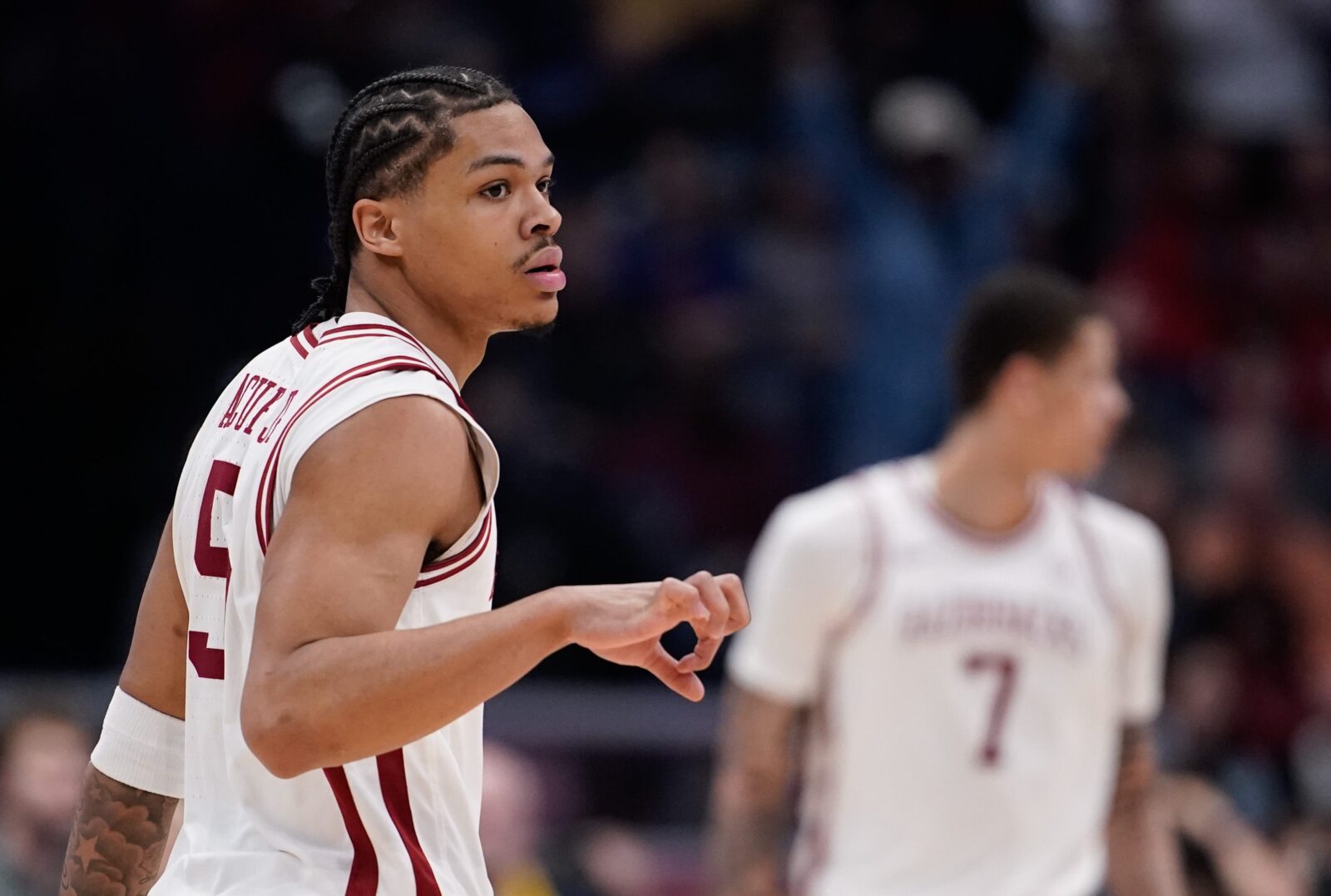
However, I'm not sure how prepared Arkansas will really need to be, since star point guard Darius Acuff can just torch Hawaii's guards in isolation, where Arkansas is extremely comfortable operating with great efficiency.
Plus, on the other end of the floor, Hawaii won't exploit the Arkansas bigs in the post. And while Hawaii does have an excellent transition defense on paper (and does see some very transition-reliant teams in the Big West), Arkansas is in a different class in that regard (99th percentile efficiency). Hawaii has major turnover issues (317th nationally), which could lead to countless runouts and subsequent easy buckets for the Hogs.
It's not the best matchup for Hawaii, but I wouldn't be totally stunned if Arkansas lost this game outright (or won by 30) for a few reasons.
For starters, this could be a tricky spot for the Razorbacks out on the West Coast, with an early tip time and travel after a run of three games in three days to win the SEC championship, with severe depth issues. It's possible they come out a little flat.
Additionally, there's maybe a chance Hawaii throws out some wrinkles on defense. Could they potentially go zone here (which would, in turn, slow the game down, which I think would be beneficial)? They did at least take that approach for most of the game against Fullerton, so it's definitely in the cards.
Lastly, there's significant potential for 3-point regression that could work in Hawaii's favor. Over the past month, Arkansas has benefited from a 10.2% 3-point shooting delta thanks to a ridiculous 44.5% clip from beyond the arc (and an even hotter 48.5% in the month of March).
Arkansas is an elite 3-point shooting team, but some of its poor shooters have been uncharacteristically hot of late. If I'm Hawaii, I'm showing some different looks on defense and helping off some of those poor shooters, hoping they have a very off (and potentially overdue) day from the perimeter in a new venue.
Conversely, over that same span, Hawaii has run at a -7.9% 3-point shooting delta. The Warriors have shot just 28.5% from three over the past month, while opponents have connected on over 36% of their outside looks.
I could see Hawaii catching Arkansas off guard early and potentially taking a lead into halftime, but Arkansas' talent will likely eventually overwhelm the Warriors, especially in transition off turnovers.
Plus, at any point, the Arkansas elite backcourt can just go nuclear.
Results vs. other tourney teams:
- N/A
Hawaii played one of the easiest non-conference schedules in the country, but did face two games against power-conference teams: Arizona State (lost by seven at home) and Oregon (lost by one on the road).
How an upset happens: Hawaii throws out curveballs on defense, Arkansas comes out flat, and all of the 3P regression hits like a brick in favor of Hawaii. Some Arkansas foul trouble (with no depth) would also help Hawaii's chances.
#4 | No. 14 North Dakota State +16.5 vs. Michigan State
North Dakota State is a hard nut to crack, since we don't really have any data points this season against quality competition, which creates some added uncertainty that could work in its favor (or end in disaster).
On paper, the Bison are a shot-volume darling that excels on the glass and in the turnover department on both ends of the floor. And while Michigan State is a dominant rebounding team, the Spartans can cough up the rock too much at times (212th nationally) and rarely force turnovers (302nd).
That could be problematic against the heavy pressure of the NDSU defense, which likes to press and double-team. Therefore, North Dakota State could realistically compete from a shot volume perspective, which would give it a puncher's chance.
Then again, maybe the Bison can't rebound against Sparty's size and physicality.
North Dakota State also does a tremendous job limiting transition opportunities (11th percentile frequency allowed), which is mandatory against a Michigan State offense that thrives in transition (as usual under Tom Izzo) but can get stuck in the half-court.
Additionally, there should be plenty of 3-point shooting variance in this game. NDSU will work inside-out on the offensive end to hunt 3-point looks against a Michigan State defense that allows a very high rate of perimeter looks (344th nationally).
Similarly, North Dakota State's aggressive defense allows for plenty of open looks from 3 (327th nationally). While capable, Michigan State doesn't have the scariest outside shooting outfit in the country. Plus, the Spartans are probably overdue for a cold shooting spell after hitting on over 41% of their 3-point attempts over the past month.
In fairness, opponents have been scorching hot from 3-point range against Michigan State over that span (38%), which is rare against a Tom Izzo defense.
Meanwhile, North Dakota State has benefited from a great deal of 3-point shooting fortune over the past month on both ends of the floor with a +8.4% 3-point shooting delta. Over that stretch, the Bison have made 37% of their triples (which isn't that crazy), but opponents have made just 28.6% of their attempts from deep on the second-highest volume nationally.
However, if all of that potential regression holds off for one game and the Bison can actually battle on the boards with the Spartan bigs, they may have a shot to pull this off.
Results vs. other tourney teams:
- N/A
The Bison didn't play a single power-conference opponent (or a top-100 team) all season.
How an upset happens: NDSU can actually compete on the glass, it wins the turnover battle by a wide margin, and gets plenty of 3-point variance.

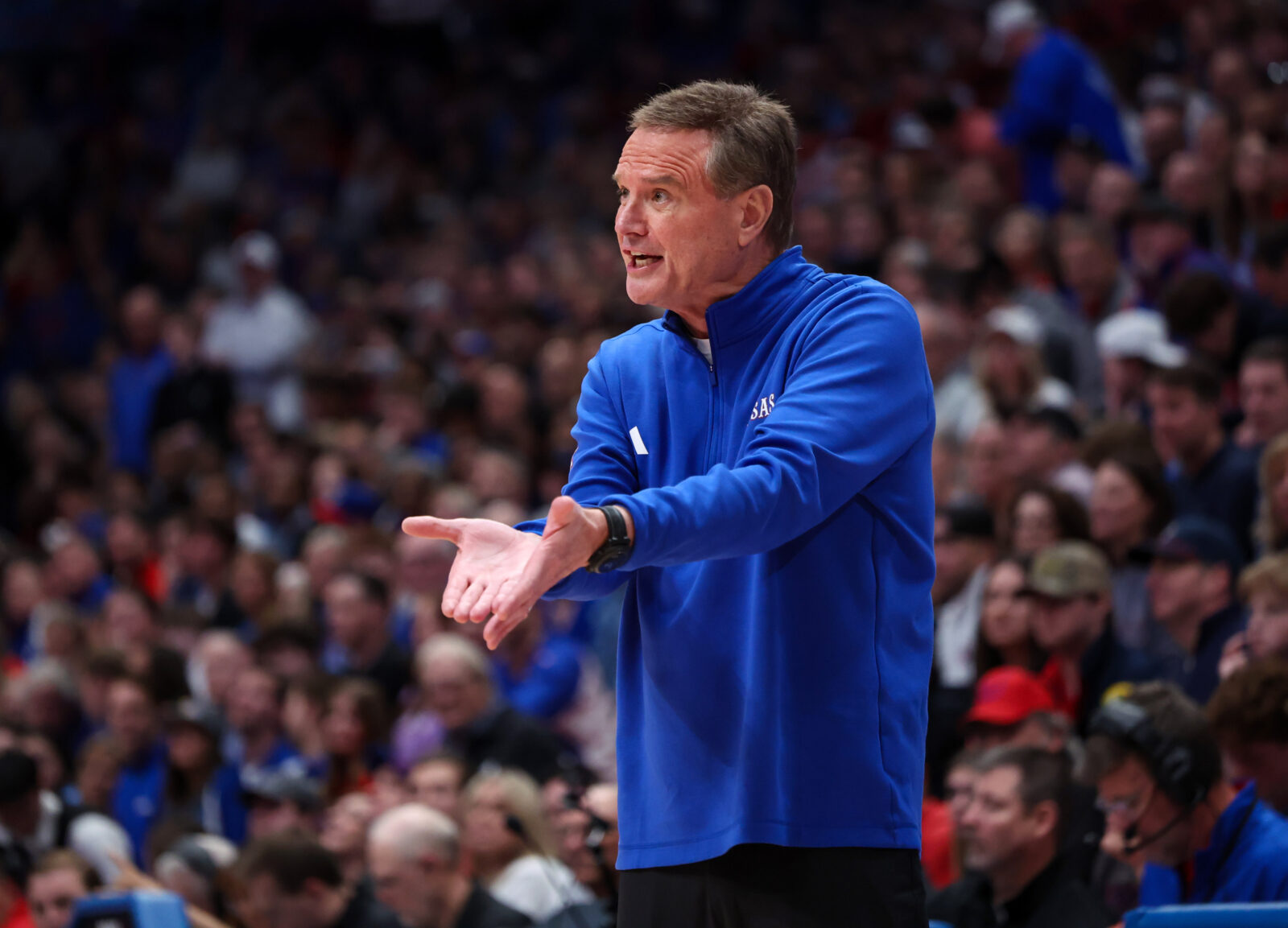
#3 | No. 13 Cal Baptist +14.5 vs. Kansas
When this matchup got announced on Selection Sunday, I immediately said Kansas is going to destroy Cal Baptist.
For starters, the talent gap is monumental, but this is also a very easy scout for Bill Self, who just needs to shut down Cal Baptist star guard Dom Daniels — one of the highest-usage players nationally.
Outside of Daniels' creation in pick-and-roll, there isn't much else reliable offense, and the Jayhawks have the length to suffocate the 5-foot-10 Daniels.
I also expected Kansas to come out with its hair on fire after getting blown out in the Big 12 conference tournament, with Self sending multiple obvious messages in the second half.
Historically, backing teams in that spot off 20-plus point losses has been extremely profitable (61%). Additionally, Cal Baptist has a major 3-point shooting regression on the horizon, with a +11.3% net 3-point shooting delta since Feb. 15.
Over that span, the Lancers have shot 38.8% from 3 and held opponents 26.9% (albeit on super low volume in their drop coverage). For reference, they shot just over 32% from deep in their first 26 games. If those outside shots dry up, I'm not sure how they'll find consistent offense against an elite Kansas defense, especially given that Cal Baptist ranks 290th in 2-point shooting allowed during the same span.
However, the more I pondered this game, the more I could see a potential upset if Daniels goes off (he scored 47 in a game against Utah Valley earlier this season).
Why, you may ask?
For starters, Kansas has not been the same team away from Lawrence (348th nationally Away From Home, per Haslametrics). The Jayhawks are also shot-volume losers, since they aren't great on the glass and never turn teams over (337th).
Meanwhile, Cal Baptist is an excellent two-way rebounding team that could win the shot volume battle and slow this game down.
The turnovers are really worth monitoring. While Kansas never forces them, Cal Baptist coughs it up frequently (278th nationally). Can Kansas actually force them on Friday, allowing the Jayhawks to get out in transition and let their massive talent and athletic advantage shine?
Lastly, this is a late-night tip on the West Coast. That's certainly more beneficial to Cal Baptist.
While Cal Baptist does have good interior size and an excellent defense on paper, this is still a big step up in class. And Daniels might not be able to handle the Kansas length.
If that's the case, the Jayhawks cruise. But if he can, this could stay interesting for a bit, especially if Kansas comes out slow.
Results vs. other tourney teams:
- L, 91-60 at BYU
The Lancers also lost by eight and six on the road at Colorado and Utah, respectively.
How an upset happens: Dom Daniels goes for 40-plus, and Cal Baptist wins the shot volume battle after a slow start from Kansas.
#2 | No. 13 Troy +13.5 vs. Nebraska
Prior to the bracket reveal, I had Nebraska circled as a potential major upset candidate for a few reasons.
For starters, Cornhusker games feature a ton of 3-point variance. The Huskers rank 11th nationally in 3-point attempt rate, while allowing the fourth-highest 3-point attempt rate.
Additionally, they aren't going to overwhelm any mid-major with their athleticism. Nebraska is simply a very well-coached team that runs a beautiful offense and a very well-schemed defense that actually ranks seventh nationally in overall Adjusted Efficiency.
With that said, I don't love the matchup for Troy since the Trojans aren't a great shooting team and are super reliant on the offensive glass (Nebraska really limits second-chance points).
They also thrive in transition, but Nebraska doesn't turn it over and allows no transition buckets. Troy has a very intriguing frontcourt (that will likely get Theo Seng back from injuury) that could give Nebraska some issues, but I don't think the Trojans will hit enough shots.
Additionally, one of the strengths of the Troy defense under Scott Cross is its frequent mix of looks, with one of the highest zone and press rates among all teams in the field.
Unfortunately for Cross, Nebraska's offense grades out in the 92nd percentile against man, 97th percentile against zone, and 98th percentile against the press.
Troy does at least grade out well defensively against cutting action and off screens, which is paramount against Corn.
While Troy is unlikely to win a 3-point shooting contest against Nebraska, this is a one-game scenario, so Cooper Campbell and company could get hot from deep (while Nebraska is cold and doesn't get offensive rebounds) to make this very interesting.
In that case, all of the pressure would fall squarely on the shoulders of the favorite seeking the first tournament win in program history.
Results vs. other tourney teams:
- W, 64-61 at Furman
- W, 79-69 vs. Akron
The Trojans also won on the road at San Diego State (in triple overtime) and took USC to double overtime.
How an upset happens: Lots of 3P variance.
#1 | No. 14 Hofstra +11.5 vs. Alabama
My numbers show a little better than 50% chance that one 13-15 seed pulls off an upset this season.
As I mentioned above, I'll pick one in my bracket.
This is the one.
For starters, Alabama is a super vulnerable high seed due to its questionable defense (67th nationally in Adjusted Efficiency) and complete clown car shot volume profile, as the Tide struggle on the defensive glass (292nd) and never turns teams over (362nd). In fact, they have one of the worst shot volume profiles of any top 4 seed in the history of the tournament.
The offense is electric as usual under Nate Oats, but it is a group that is super reliant on 3-point shooting (leads the country in 3-point attempt rate).
That introduces some extreme variance in a one-and-done scenario. If the Tide are super hot from 3, Hofstra probably gets blown out.
However, if they are off or even just have an average shooting performance, the Pride will have a chance to pull off this upset, especially now that it looks like Alabama will be without one of its two stud starting guards in Aden Holloway.
Not only is he the Tide's second-leading scorer, but he's also a deadly marksman from the outside (43.2%) and could have cooked the Hofstra drop defense off the dribble.
Labaron Philion should still cook in that regard, but there's a decent drop-off from Holloway to the next man up.
Plus, Hofstra features an elite rim defense (99th percentile efficiency), which is key against the Alabama rim-and-three attack.
On the other end of the floor, Hofstra has its own pair of electric guards in Cruz Davis and Preston Edmead, who are both capable of exploiting the soft Alabama drop coverage. If they are hitting their jump shots, look out.
Results vs. other tourney teams:
- L, 82-78 at UCF
- W, 77-60 at Penn
- L, 92-84 at Akron
The Pride also won on the road at both Pittsburgh and Syracuse.
How an upset happens: Hofstra's guards out-gun Alabama's.


