


Happy Valley Casino reported $2.04 million in gaming revenue in September, its lowest full-month total since opening in April.
The result placed the Nittany Mall property last among Pennsylvania’s 18 land-based casinos, even as three Penn State home football games brought visitors to the region.
It's a trend we've been following all summer long.
Figures released by the Pennsylvania Gaming Control Board show the casino generated $2,042,124 from slot machines and table games. The September results add to the early challenges facing the new property near State College.
Developers had higher hopes when the venue opened. But skill games were just recently deemed illegal in The Keystone State, so maybe that will have an impact.
Happy Valley Casino September Revenue Breakdown
Slot machines provided most of Happy Valley Casino’s September gaming revenue. The property reported the following results:
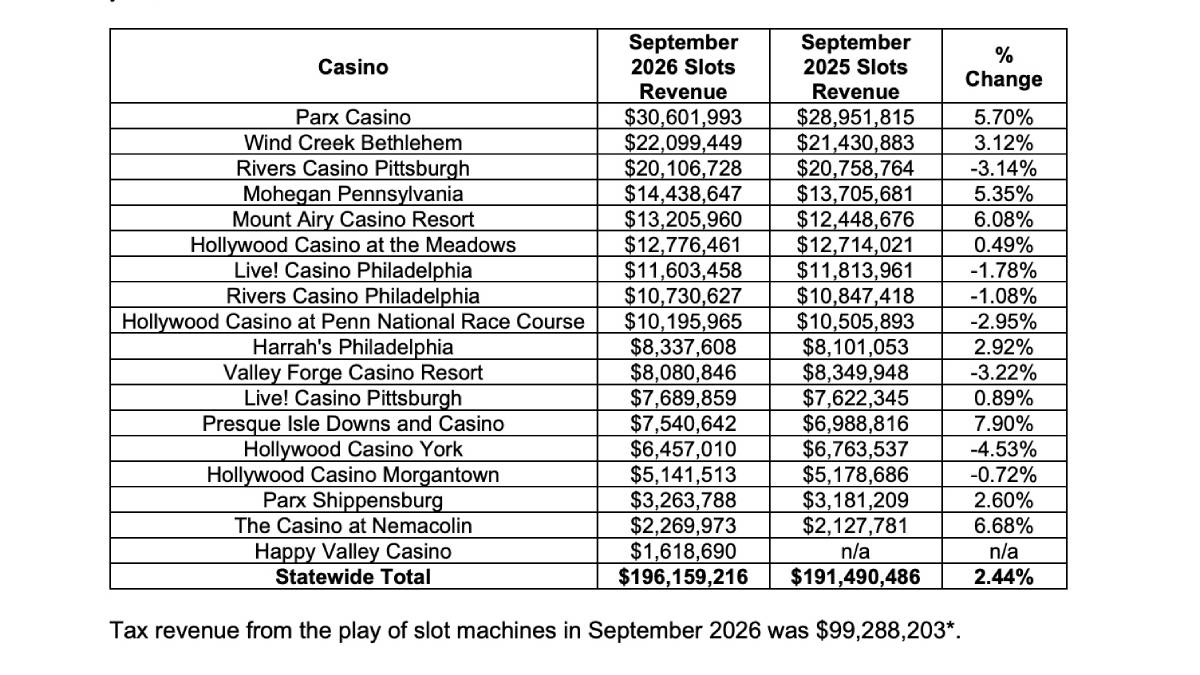
Happy Valley Casino revenue breaks down this way:
- Slot machines: $1,618,690
- Table games: $423,434
- Total: $2,042,124
Happy Valley also recorded the lowest slot revenue among Pennsylvania casinos. Its table-game revenue, however, exceeded the totals at Parx Shippensburg and The Casino at Nemacolin. That distinction shows the property’s last-place overall ranking did not apply to every part of its gaming floor.
The casino opened in April at the Nittany Mall, taking over the former Macy’s department store space. The roughly $120 million project operates as a Category 4 property, commonly called a mini-casino.

How Happy Valley Compares With Other Pennsylvania Casinos
Pennsylvania has five Category 4 casinos. In the PGCB’s combined revenue report, Happy Valley finished behind the other four in September. Parx Shippensburg was the next-lowest property at about $3.54 million, while Hollywood Casino York led the group at nearly $10.59 million.
Those headline totals need context. The PGCB’s combined report includes sports betting revenue where applicable, including online wagering revenue reported under a casino’s license. Happy Valley’s September total consisted entirely of slots and table games.
A comparison limited to those two gaming categories provides a more consistent view:
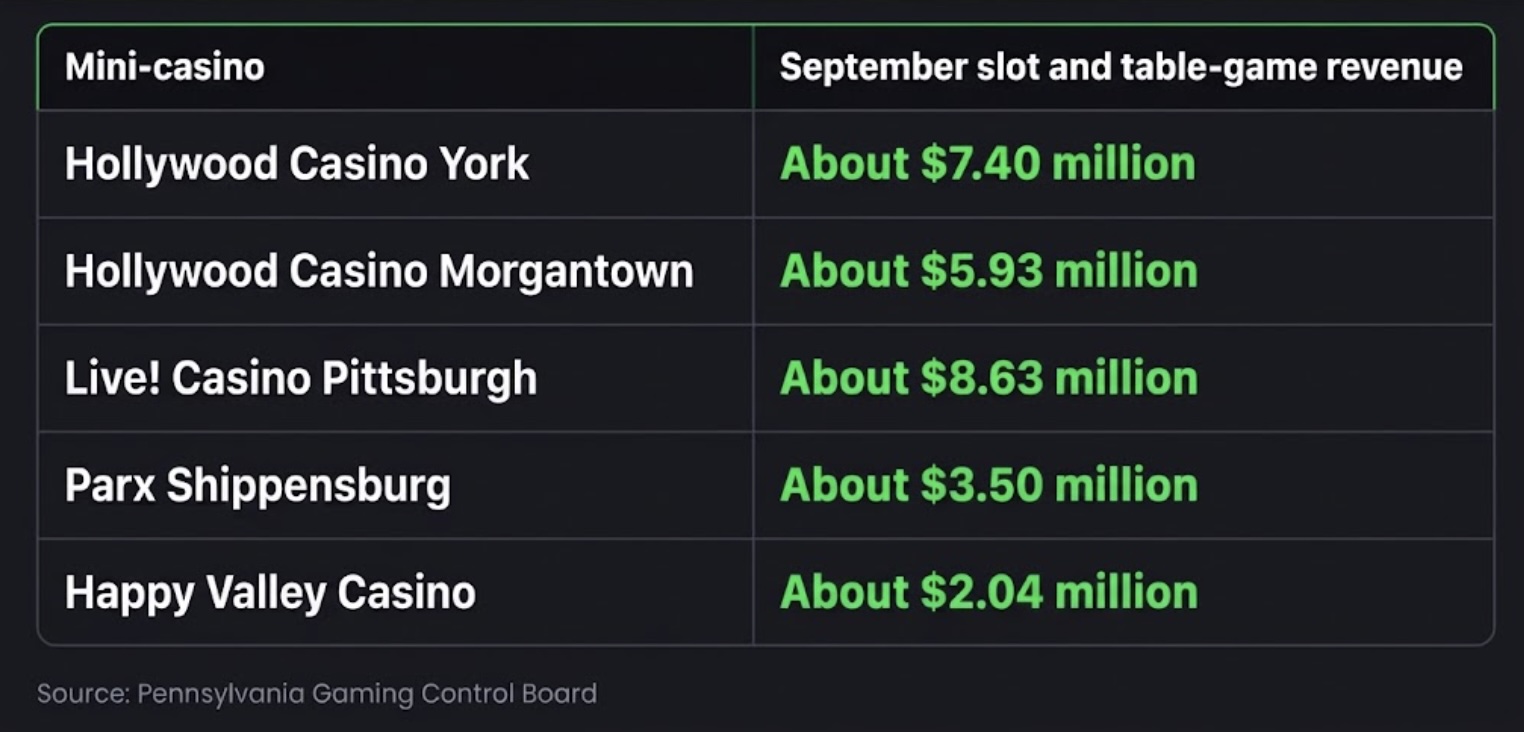
Figures above combine each property’s retail slot and table-game revenue from the PGCB report and exclude sports betting. Happy Valley still ranked last among the five mini-casinos on that basis.
Penn State Football Traffic Did Not Prevent a Revenue Low
September offered a chance for Happy Valley Casino to benefit from football-season tourism. Penn State hosted three home games during the month, including homecoming, bringing large crowds to the area. Despite that activity, the casino recorded its weakest full month of gaming revenue.
The result shows that a busy local event calendar does not automatically produce stronger casino revenue. However, the monthly report does not identify how many football visitors entered the property or how much they spent. It therefore cannot establish why the expected increase in play failed to appear.
Happy Valley’s general manager, Peter Longi, told StateCollege.com that the property was focused on developing consistent, sustainable performance by listening to guests and adapting to their needs, according to reporting republished by CDC Gaming.

Early Results Trail an Earlier Revenue Projection
Happy Valley Casino’s September performance also fell well below an earlier forecast tied to the project.
According to Casino.org, a study commissioned by College Township projected about $66.1 million in first-year gaming revenue. That would work out to roughly $5.5 million per month—well above September’s $2.04 million result.
That gap provides context, but it does not represent a completed first-year result. The casino had only been open since April, and a single month cannot determine whether it will eventually meet its long-term revenue goals.
Pennsylvania Gaming Revenue Rose, but Retail Results Were Mixed
The casino's weak September came as Pennsylvania’s broader gambling industry posted year-over-year growth.
Total statewide gaming revenue reached $555 million, up 4.07% from September 2025. That figure includes online casino games, sports betting, retail casino play and other regulated gambling categories. It is not a measure of land-based casino performance alone.
The retail casino results were more uneven:
- Slot-machine revenue increased 2.44% to about $196.16 million.
- Table-game revenue declined 18.07% to about $60.16 million.
- Online casino revenue increased 6.82% to about $249.31 million.
Those figures show why statewide growth can occur even when individual Pennsylvania casinos struggle. Gains in online gaming and other categories can offset weaker results on physical casino floors.

What the September Report Does—and Does Not—Show
September establishes a clear early benchmark: Happy Valley Casino generated less gaming revenue than any other land-based casino in Pennsylvania during the month, despite a busy Penn State football schedule.
What the report does not establish is profitability. The PGCB release provides gaming revenue figures, not a complete picture of the casino’s operating costs, debt payments or other income. It supports a conclusion that gaming revenue remains below earlier expectations—not a claim that the property is losing money or facing closure.


